
Nairobi’s 80-year metro plan moves toward implementation after county approval, Ruto backing
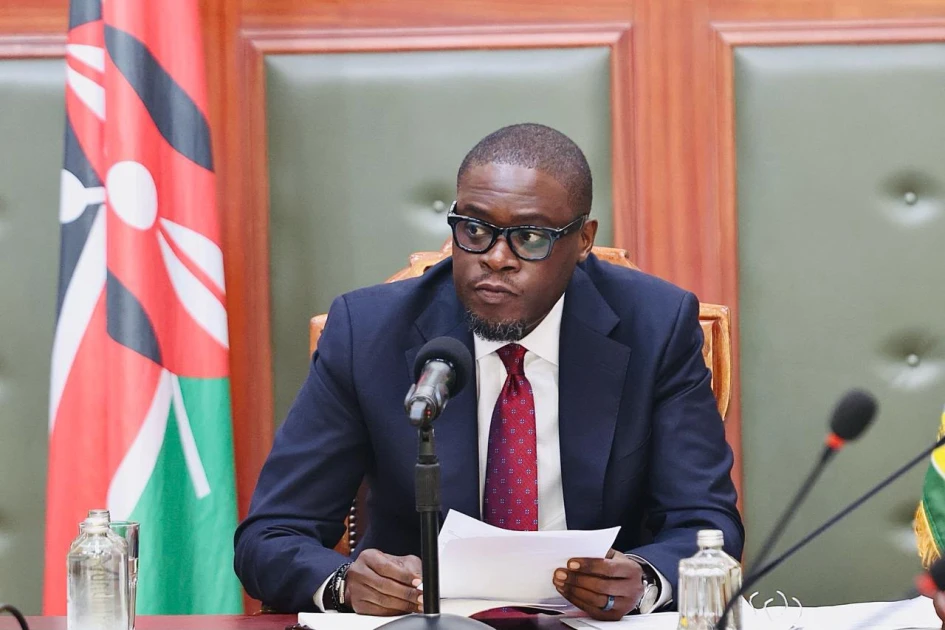
Nairobi Governor Johnson Sakaja. PHOTO| FILE

Audio By Vocalize
Governor Johnson Sakaja said the Nairobi Metropolitan Mass Rapid Transit System (NMMRTS) had progressed beyond the planning stage, with the county and national governments now working on a framework for financing and implementation.
Speaking during the launch of his digital podcast, Nairobi, Let’s Talk, Sakaja said the project was intended to address the city’s persistent traffic congestion through an integrated public transport network.
“Traffic congestion in any city requires an infrastructure injection that has never been done over the years. A mass transit system that is underground and a subway is the way it was in the 1948 master plan for Nairobi, the 1972 plan for Nairobi, and also in the 2014 city plan,” Sakaja said.
He said the project had recently been approved by the county Cabinet and subsequently endorsed by the national government.
“Now we have moved it from a plan to being passed in the Nairobi City Cabinet, and now endorsed and embraced by the national government. The funding model is clear,” he said.
President Ruto endorsed the proposed metro system in July after Sakaja and Transport officials presented the plan at State House. The move followed approval of the project by the Nairobi County Executive Committee, paving the way for further discussions between the two levels of government.
30km underground line
The first phase of the proposed system will comprise a 30-kilometre underground railway linking Eastlands with the Central Business District through 25 stations.
The metro is planned as the backbone of a wider mass transit network that would integrate underground rail with commuter rail, Bus Rapid Transit (BRT) and non-motorised transport.
The proposed system is expected to serve a city where millions of daily trips are made using a combination of private vehicles and road-based public transport.
Sakaja said the objective was to provide a reliable alternative to private cars and reduce dependence on road transport.
“In cities that have grown to first world, such metro transit works and people barely use their vehicles because the public transport system is the best. That is our goal,” he said.
Decades of unfulfilled plans
Nairobi’s proposal for a comprehensive rail-based transport system is not new.
The 1948 Nairobi master plan included proposals for a ring railway and rail connections around the Central Business District. A 1972 study similarly recommended an integrated transport system incorporating rail, BRT and non-motorised transport.
The 2014 Nairobi Integrated Urban Development Master Plan also proposed expanded mass transit infrastructure.
Most of the plans, however, were not fully implemented, leaving Nairobi increasingly dependent on roads as its population and economic activity expanded.
Sakaja has previously described the metro project as a plan that is decades overdue.
$7.78 billion programme
The wider NMMRTS programme is estimated to cost $7.78 billion. The proposed financing structure is expected to draw on government resources, pension funds and investment linked to Transit-Oriented Development (TOD) around metro stations.
Sakaja said feasibility studies had been undertaken with support from the Japan International Cooperation Agency (JICA) and Chinese experts.
The county government is also establishing a Project Management Unit to coordinate the project.
Under the proposed TOD model, areas surrounding metro stations would be developed for residential, commercial and public uses, with increased economic activity expected around transport hubs.
The county has also said a legislative framework has been developed to outline the responsibilities of the county government, national government and private investors.
Expansion plans
The second phase of the network is expected to extend the system along Ngong Road and Lang’ata Road, expanding coverage to some of the city's busiest transport corridors.
Sakaja has linked the project to his broader plan to reduce travel times in Nairobi and develop what he calls a “20-minute city”.
“We cannot continue welcoming international investors and visitors only for them to spend two hours stuck in traffic. We will turn Nairobi into a 20-minute city, where you can get anywhere within 20 minutes,” he said.
For now, however, the key challenge remains moving the project from political approval and feasibility studies to secured financing, procurement and construction.
While the county says the project has entered an implementation phase, the underground railway is yet to move into actual construction.
Sakaja said the next stage would be to operationalise the financing and implementation framework for the proposed system.
Join the Discussion
Share your perspective with the Citizen Digital community.
No comments yet
This discussion is waiting for your voice. Be the first to share your thoughts!