
Mwache Dam enters final construction phase as main structure completed
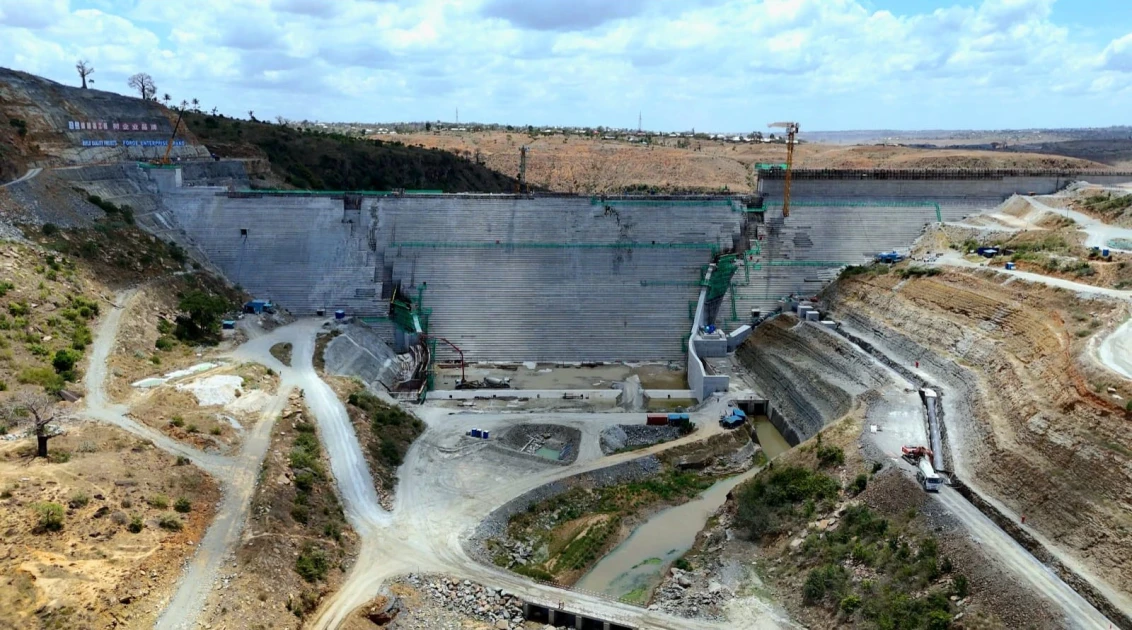
A view of the Mwache Multi-Purpose Dam in Kwale County, one of Kenya’s major water infrastructure projects aimed at strengthening water security in the Coast region. Photo|Moses Mwakisha Elvis

Audio By Vocalize
The Ksh.13.7 billion Mwache Multi-Purpose Dam project in Kwale County has entered its final phase of construction following the completion of the main dam structure.
The dam, being built along the Mwache River in Fulugani Village, Kasemeni Ward, is expected to improve water supply in Mombasa and parts of Kwale while supporting irrigation, flood control and economic activities in the coastal region.
The project is being implemented by the Ministry of Water, Sanitation and Irrigation, with Sinohydro Corporation Limited as the contractor. The construction contract was signed in August 2019, while physical works began in March 2022.
The 84-metre-high dam has a crest length of 526.1 metres and is designed to hold an estimated 127 million cubic metres of water. Roller-compacted concrete works on the main structure were completed on August 27, 2026, after approximately 610,000 cubic metres of concrete had been placed.
Once operational, the dam is expected to supply an average of 186,000 cubic metres of water per day, helping address the projected water deficit in Mombasa while meeting water needs in parts of Kwale.
The project also includes an irrigation component covering about 2,000 hectares, as well as check dams, access roads and other supporting infrastructure.
Speaking during a presentation to a delegation of Chinese alumni visiting the project under the “Belt and Road Practice in Mombasa” programme, Commercial Manager at Sinohydro Li Chengqiang said the reservoir would capture floodwaters from the Mwache River basin for use during periods of low rainfall.
“The main dam will store an estimated 127 million cubic metres of water and stand 84 metres high. It is designed to capture floodwaters from the Mwache River basin and provide water during periods of low rainfall,” Li said.
He said the lower check dam, located about 15 kilometres from the main dam, would help manage silt, while an upper check dam about 25 kilometres away would reduce sediment entering the main reservoir and support irrigation for upstream communities.
Despite the completion of the main dam, some supporting infrastructure is yet to be formally accepted and handed over to the communities.
Among the facilities awaiting handover is Fulugani Primary School, a public day school that includes an Early Childhood Development and Education section.

The newly reconstructed Fulugani Primary School in Kasemeni Ward, Kwale County, built to provide improved learning facilities for pupils relocated by the Mwache Dam project. Photo| Moses Mwakisha Elvis
The school was reconstructed in 2026 under the Coast Region Water Security and Climate Resilience programme after the original facility was relocated to make way for the dam project.
Fulugani Primary School head teacher Isaiah Mwamzuka said the previous school had inadequate and deteriorating facilities, as well as persistent water shortages.
“The old school structures were dilapidated, and therefore we thank the Mwache Dam construction fraternity for constructing a new school for us,” Mwamzuka said.
According to the project brief, Fulugani Primary School, Mwache ECDE and Nunguni School have been physically completed but are awaiting formal acceptance and handover.
Other works are also at various stages of completion. Concrete works at the lower check dam are about 90 per cent complete, while permanent road works stand at approximately 49 per cent.
The project currently employs 922 workers, comprising 854 Kenyans and 68 Chinese managerial and technical staff. Local employment peaked at about 1,280 workers during the construction period.
Beyond the main construction works, the project has provided scholarships to 100 students and supported communities through initiatives including emergency flood response, transportation of relief food during drought and repairs to local water facilities and roads.
About 44 kilometres of permanent access roads have also been constructed as part of the project and are expected to serve both the dam and surrounding communities.
With the main dam now complete, attention is shifting to the remaining infrastructure, including the lower check dam, roads and community facilities.
The project's completion is expected to increase water availability in Mombasa and Kwale, while providing additional capacity for irrigation and flood management.
For communities affected by the dam's construction, the next stage will be the completion, acceptance and handover of schools and other public facilities linked to the project.
Join the Discussion
Share your perspective with the Citizen Digital community.
No comments yet
This discussion is waiting for your voice. Be the first to share your thoughts!