
Babu Owino: President Ruto offered me Education CS job during Gen Z protests

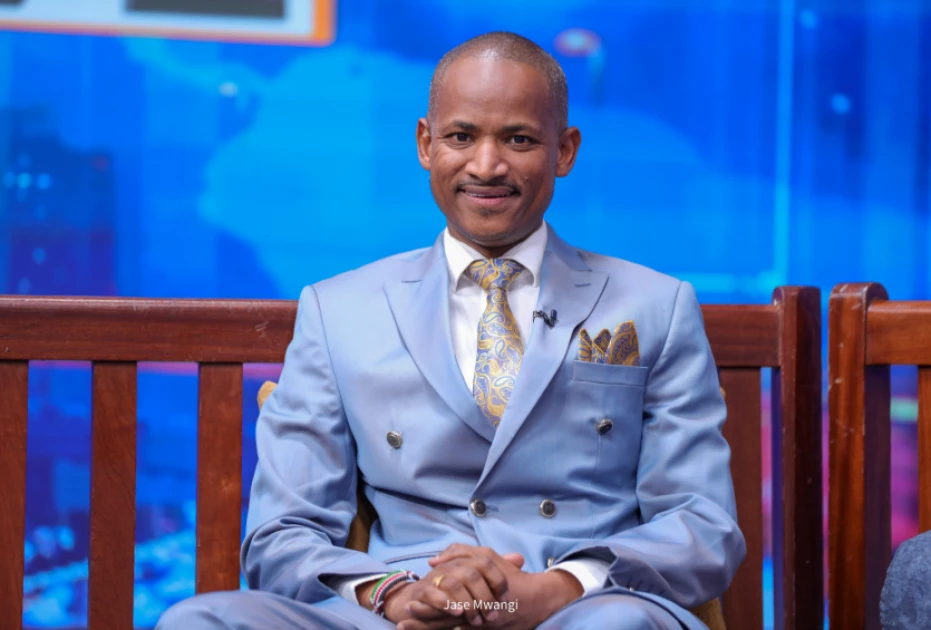
Embakasi East MP Babu Owino on Citizen TV’s JKLive show on January 14, 2026. PHOTO | CITIZEN DIGITAL

Audio By Vocalize
Embakasi East Member of Parliament Babu Owino has claimed that President William Ruto offered him the position of Cabinet Secretary for Education at the height of the Gen Z protests in 2024, but he turned it down because of his political principles.
Owino said the
alleged offer came as the President faced mounting pressure over the
anti-government demonstrations that eventually forced him to dissolve his
Cabinet in July 2024.
“Babu was approached
during the Gen Z protests; Babu was supposed to be given the minister (Cabinet
Secretary) for Education. I was offered that position by President Ruto
himself, and I didn’t take it then, what about now?” he said during an
interview on Thee Alfa House YouTube channel.
Owino said his
opposition to the broad-based government informed his decision, maintaining
that he had declined to join the arrangement even when the late former Prime
Minister Raila Odinga backed it.
“I did so because
of my ideologies, what I believe in. And I’ve never believed in the broad-based
government, even when Baba (Raila Odinga) was alive,” he said.
“When Baba joined
the broad-based government, it is only Babu Owino in ODM that did not join the
broad-based government.”
President Ruto
dismissed his Cabinet on July 11, 2024, following weeks of protests against the
Finance Bill 2024 and widespread public discontent; he subsequently nominated a
new team.
Owino’s claim
comes amid concerns over the political independence of leaders associated with
the Linda Mwananchi movement, several of whom have their own political parties
and could face pressure to shift allegiance ahead of the 2027 General Election.
The MP argued that
having a political party does not necessarily make a leader more susceptible to
political persuasion, saying allegiance ultimately depends on individual
principles.
He defended his
decision to establish his own political party, saying it would encourage young
people to pursue elective positions, including seats in county assemblies,
Parliament and the Senate, as well as governorships.
Owino also cited
previous election coalitions, including the National Rainbow Coalition (NARC),
Jubilee, the National Super Alliance (NASA) and Azimio la Umoja, to argue that
political parties can work together to compete for the presidency.
“There are over
100 parties in this country, it cannot just be news that Babu has a party,” he
said.
He further cited
the impeachment of former Deputy President Rigathi Gachagua and former Meru
Governor Kawira Mwangaza as examples of why politicians should have their own
parties, arguing that party structures could provide a platform for political
support and defence.
Owino, who is the
leader of The Mwananchi Party (TMP), maintained that his political decisions
would be guided by ideology rather than the prospect of securing government
positions.
Join the Discussion
Share your perspective with the Citizen Digital community.
No comments yet
This discussion is waiting for your voice. Be the first to share your thoughts!