
Murkomen defends right to protest, urges separation of demonstrators from criminals

Audio By Vocalize
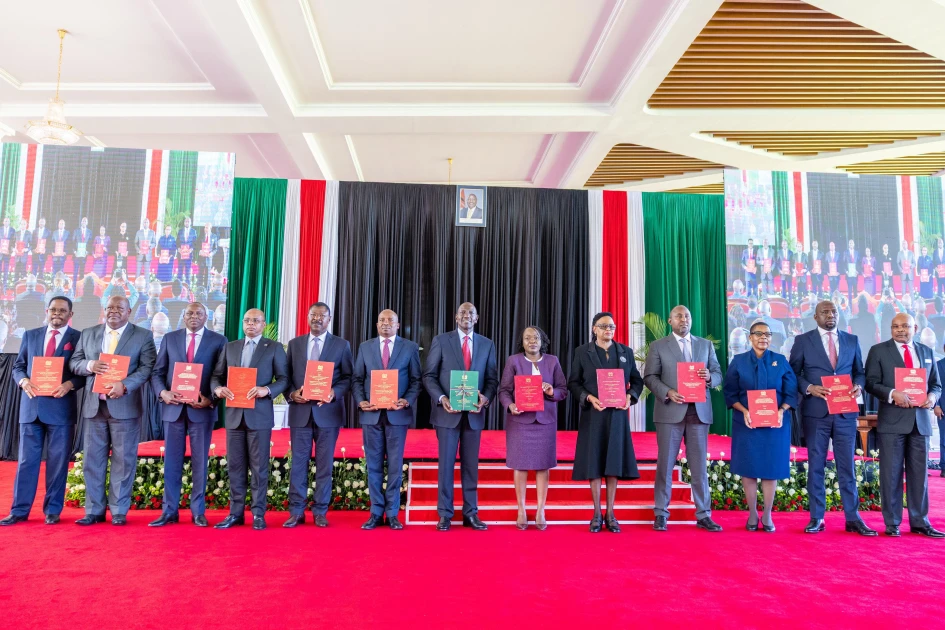
Speaking at State House, Nairobi, during the presentation of a report on the framework for reparations for victims of human rights violations, Murkomen said authorities, the media and political leaders must clearly distinguish between peaceful protesters and those engaging in violence and destruction.
The report was presented to President William Ruto by Claris Awuor Ogangah, Chairperson of the Kenya National Commission on Human Rights (KNCHR), as part of the implementation of recommendations under the NADCO 10-point agenda.
"The right to demonstrate, assemble, picket, and petition as provided in Article 37 of the Constitution must be implemented fully," Murkomen said.
However, he argued that criminal elements often infiltrate demonstrations, making it necessary to separate them from law-abiding citizens exercising their constitutional freedoms.
"Even as we implement that, it is important that we have a clear framework that we can separate the goons, the violent criminals, from those who are enjoying this right," he said.
Murkomen stressed that peaceful demonstrators should not be blamed for the actions of individuals who use protests as cover for criminal activities.
"If we are going to become a nation that is going to have peaceful demonstrations, we must separate, completely, both by ourselves, the media, political leaders; we must differentiate between gangs, goons, violent people, arsonists," he said.
He accused some criminal groups of using demonstrations as an opportunity to commit offences, including looting and destruction of property.
"They are burning courts, they are burning people's businesses. They come to the street well prepared to come and loot and terrorise people, rapists who are coming in the name of demonstrations," he said.
"We must call them for who they are and separate them from peaceful Kenyans who are undertaking demonstrations."
The Cabinet Secretary also criticised sections of the media for language he said blurs the distinction between protesters and criminals.
"Until the diction, the conversation in the public separates these two people, I find, and I have told journalists, including media editors, I find it very insulting when, during news reporting, a reporter standing somewhere on the street publicly says, 'the demonstrators are throwing stones, the demonstrators have now looted'," he said.
According to Murkomen, such descriptions wrongly attribute criminal actions to people exercising constitutional rights. He argued that some reports continue to use constitutional terms such as assembling, demonstrating, picketing and petitioning while describing acts of violence and looting, thereby "normalising criminal activities in the name of a petition. This is the reason why in Kenya we are unable to separate the work of the police when dealing with criminals and when dealing with peaceful Kenyans," he added.
His remarks come amid continued debate over policing of public demonstrations, with rights groups urging authorities to protect the constitutional right to peaceful assembly while maintaining public order.
Join the Discussion
Share your perspective with the Citizen Digital community.
No comments yet
This discussion is waiting for your voice. Be the first to share your thoughts!