
Mosquitoes can learn to love common repellent, scientists find
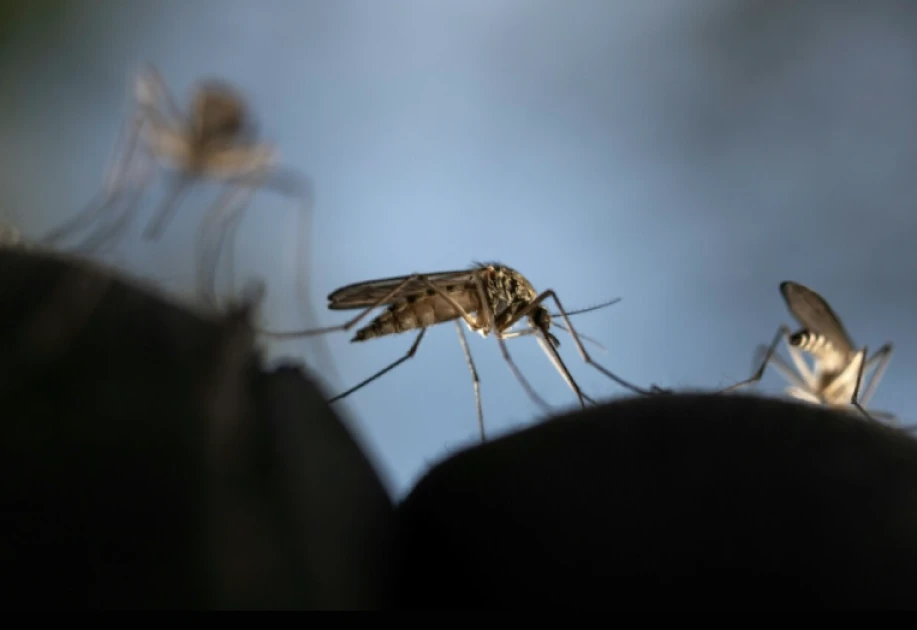
Sucker punch: In certain conditions, mosquitoes can come to prefer the taste of DEET © AFP/File

Audio By Vocalize
Mosquitoes can learn to associate the smell of the world's
most common insect repellent with a tasty meal -- and after training, can even
prefer to bite people who have been sprayed with it, an experimental study said
Thursday.
The surprising results, which were conducted "under
very specific conditions" in the lab, do not "call into question the
effectiveness" of the repellent DEET, lead study author Claudio Lazzari
told AFP.
Since its development in the 1940s in the United States, the
chemical compound has saved many lives from the scourge of insect bites.
"It is the absolute gold standard for repellents, used
by the World Health Organisation to combat the transmission of mosquito-borne
diseases," emphasised Lazzari, professor emeritus at the Insect Biology
Research Institute at France's University of Tours.
However, the world also needs to find new, more effective,
environmentally friendly repellents that cause fewer allergies, he added.
That means figuring out exactly why insects are so turned
off by the repellents that we do have.
"We don't know why" compounds like DEET deter
mosquitoes, Lazzari admitted. Are they toxic for the little blood-suckers? Do
they stop mosquitoes from tracking down our scent? Or do they just smell bad?
To find out more, the international team of scientists used
a form of conditioning made famous by Pavlov's dog, which learned to associate
the arrival of food with the sound of a ball.
For the experiment, the mosquitoes were put in a fabric mesh
enclosure, then presented with a bag of warm sheep's blood to observe how
eagerly they fed on it.
Unsurprisingly, the Aedes aegypti mosquitoes -- which spread
deadly diseases such as dengue fever, Zika, yellow fever, and chikungunya --
leapt at the chance.
When the smell of DEET was introduced, the mosquitoes moved
away, which was also expected.
Next, the scientists fed the insects warm blood for 20
seconds, releasing DEET during the last 10 seconds.
That part was repeated three times before the mosquitoes
were exposed to solely the scent of the repellent.
This time, more than 60 per cent of the insects tried to bite
the fabric -- even though there was no blood.
Then, one of the scientists offered up their hands -- one
clean, the other coated with DEET -- to the trained mosquitoes to see which one
they would bite.
The result was beyond doubt: the insects preferred the hand
covered in repellent.
The scientists had similar results when they repeated the
experiment using sugar instead of blood, because mosquitoes mostly feed on
plant nectar in the wild.
"The common assumption has always been that repellents
work because of their chemistry," study co-author Clement Vinauger of
Virginia Tech in the United States said in a statement.
But this study shows "that it's not the chemistry of
the molecule itself that is toxic" to the mosquito, instead they are
repelled by how they "interpret this chemical information," Lazzari
added.
"What we are showing is that the mosquito's brain can
rewrite that response based on experience," Vinauger explained.
"What the insect has learned matters just as much as
what the chemical does. That, I think, is a paradigm shift."
While the mosquitoes were trained relatively quickly during
the experiment, in nature "very specific conditions would be needed for
things to happen the same way," Lazzari emphasised.
He advised everyone to follow the instructions on their
repellent, because DEET can come in a variety of concentrations.
The study was published in the Journal of Experimental
Biology.
Join the Discussion
Share your perspective with the Citizen Digital community.
No comments yet
This discussion is waiting for your voice. Be the first to share your thoughts!