
Meet Orione Irungu, the psychologist rewriting Kenya's story on addiction recovery
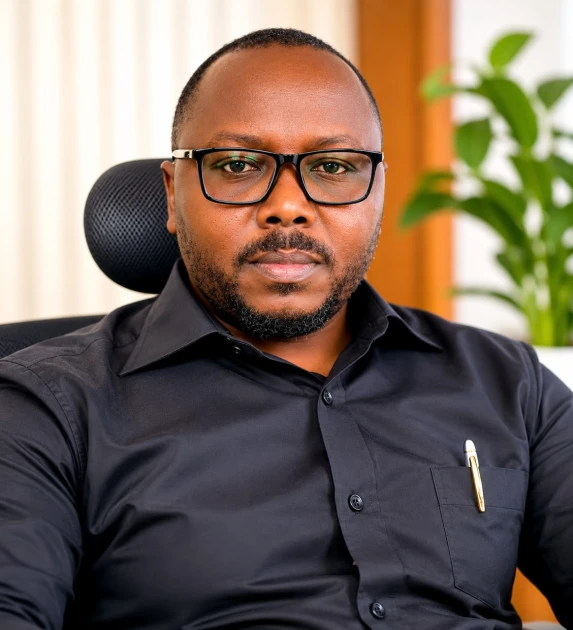
Irungu, who hails from Kiharu in Murang'a County, holds a Master's degree in Psychology and is currently pursuing a PhD in the same field. But his journey into addiction treatment began long before his academic credentials, rooted in childhood experiences in his rural village.

Audio By Vocalize
Irungu, who hails from Kiharu in Murang'a County, holds a Master's degree in Psychology and is currently pursuing a PhD in the same field. But his journey into addiction treatment began long before his academic credentials, rooted in childhood experiences in his rural village.
While still in school, Irungu would accompany missionaries on visits to elderly residents and those geographically cut off from healthcare, an early exposure to community-based care that would shape the course of his career.
He later joined Mugoiri Boys Secondary School before proceeding to Moi University, where he pursued his Bachelor's degree in Psychology. He went on to further his studies at Africa Nazarene University and Daystar University.
His hands-on work with addiction began after completing his undergraduate degree, when he undertook an internship at Mathari Teaching and Referral Hospital. The experience exposed him to the realities of mental illness and substance dependence at close range.
"According to WHO, 1 in 8 people is having a mental illness, but there are very few professionals to treat them," Irungu says, reflecting on what he witnessed at Mathari, where mentally ill patients were many but often undetected.
It was during this period that he came to understand addiction not as a matter of weak will or moral failure, but as a condition rooted in complex biological and psychological factors.
"Addiction is a disease, not a moral decadence. It's not about being irresponsible, lack of knowledge on God, social class, economic levels, academic standards, witchcraft etc," he explains. "It's about a deep biochemical, neurological, physical and psychological underpinnings."
Through years of working directly with clients, Irungu has identified recurring threads behind substance abuse. Many trace their struggles back to childhood trauma, difficult family environments and domestic violence at home.
Others point to poverty, chronic stress, undiagnosed mental health conditions, academic pressure, broken relationships, unemployment and a deep sense of hopelessness. Peer pressure, curiosity, lack of parental guidance during adolescence and the influence of the internet also feature prominently among the reasons his clients cite.
Irungu notes that the speed and severity of addiction vary significantly depending on the substance involved. Drugs such as cocaine, heroin, methamphetamine and certain prescription medications can trigger addiction rapidly due to their high potency, with the ability to alter brain chemistry so severely that high doses can prove fatal almost immediately.
Substances like alcohol, miraa, cigarettes and industrial glue tend to take longer before full addiction sets in, though the risks remain just as serious. High dosages of these substances can still result in death through brain poisoning and organ failure.
"I have witnessed friends, family members recovering but others succumbing to addictions," Irungu says. "In treatment we normally note that there are three options to those who don't get treatment: death, insanity or jail."
Treatment, according to Irungu, is a multi-layered process involving several critical steps. It begins with detoxification, followed by psychotherapy and counselling, family therapy, and participation in Alcoholics and Narcotics Anonymous programmes. Recreational activities, psychoeducation on life skills and personal development, nutritional support and spiritual growth are also woven into the recovery journey. Depending on the severity of a client's addiction, treatment can range anywhere from 90 to 180 days.
"Seeing the clients making it again in life for the last 20 years has been the most fulfilling experience," he says.
For Irungu, watching a client walk the road to recovery and rebuild their life is, in his words, the sweetest part of his work. It is a transformation that unfolds gradually: individuals rediscovering self-love, rebuilding self-esteem and confidence, and families slowly bonding again after years of strain. It is hope for a new future dawning where once there was only despair.
Join the Discussion
Share your perspective with the Citizen Digital community.
No comments yet
This discussion is waiting for your voice. Be the first to share your thoughts!