
Maasai youth protest appointment of ex-British envoy as Lewa Conservancy CEO
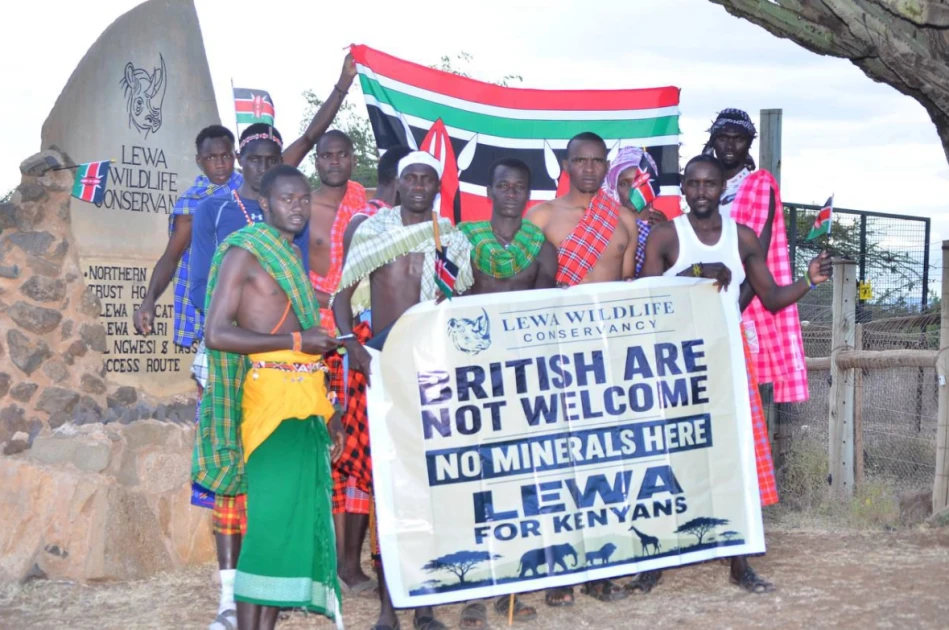
The protesters said the appointment symbolised continued foreign control over Kenyan land and natural resources.

Audio By Vocalize
A group of youth from the Maasai community has staged peaceful protests against the appointment of former British High Commissioner to Kenya Rob Macaire as the new Chief Executive Officer of Lewa Wildlife Conservancy, reigniting debate over foreign influence in Kenya's conservation sector.
The demonstrators
gathered near the conservancy's entrance in Laikipia County, carrying placards
bearing messages such as "British Are Not Welcome," "No Minerals
Here," and "Lewa for Kenyans."
The protesters
said the appointment symbolised continued foreign control over Kenyan land and
natural resources.
Macaire officially
assumed the role on June 1, 2026, succeeding fellow Briton Mike Watson, who led
the conservancy for 15 years.
Critics have
questioned the appointment, citing Macaire's background in diplomacy and
political risk management for multinational firms, including BG Group and Rio
Tinto, rather than wildlife conservation.
The demonstrators
argued that a former diplomat with links to extractive industries should not be
entrusted with leading a conservancy that is home to a significant portion of
Kenya's black rhino population. The slogan "No Minerals Here" was
widely interpreted as a reference to Macaire's previous work in the mining
sector.
Conservation
policy scholar and carnivore ecologist Dr. Mordecai Ogada also weighed in on
the controversy, questioning the appointment and pointing to what he described
as longstanding ties between Lewa Conservancy and Britain, including its
association with Britain's royal family.
"The close historical ties between Lewa Conservancy and
the British royal family, particularly Prince William, have fuelled speculation
about Britain's long term strategic interests in Kenya's conservation
sector," Dr. Ogada said.
Lewa Wildlife
Conservancy gained international attention after Britain's Prince William
proposed to Catherine Middleton there in 2010.
However, some
local residents say such connections have become symbolic of foreign influence
rather than conservation success.
The controversy
has also revived discussion around the presence of the British Army Training
Unit Kenya (BATUK) in neighbouring Laikipia County, with some analysts arguing
that foreign-linked institutions continue to exert significant influence over
land, wildlife and security matters in the region.
Supporters of the
conservancy have defended the appointment, noting Lewa's role in wildlife
protection and community development.
Following his
appointment, Macaire said his priorities include securing long-term funding,
strengthening engagement with local communities and raising the conservancy's
international profile.
However,
protesters and community advocates maintain that the dispute extends beyond
leadership. They argue that questions surrounding land ownership and control
remain unresolved, with some calling for greater Kenyan stewardship of
conservation areas they consider part of their ancestral heritage.
The demonstrations
have reignited broader conversations about conservation governance, land rights
and the role of international actors in managing Kenya's natural resources.
For the
protesters, the message was clear: decisions affecting local communities and
conservation lands should increasingly be led by Kenyans.
Join the Discussion
Share your perspective with the Citizen Digital community.
No comments yet
This discussion is waiting for your voice. Be the first to share your thoughts!