
KVA warns of bacterial contamination in Nairobi chicken meat
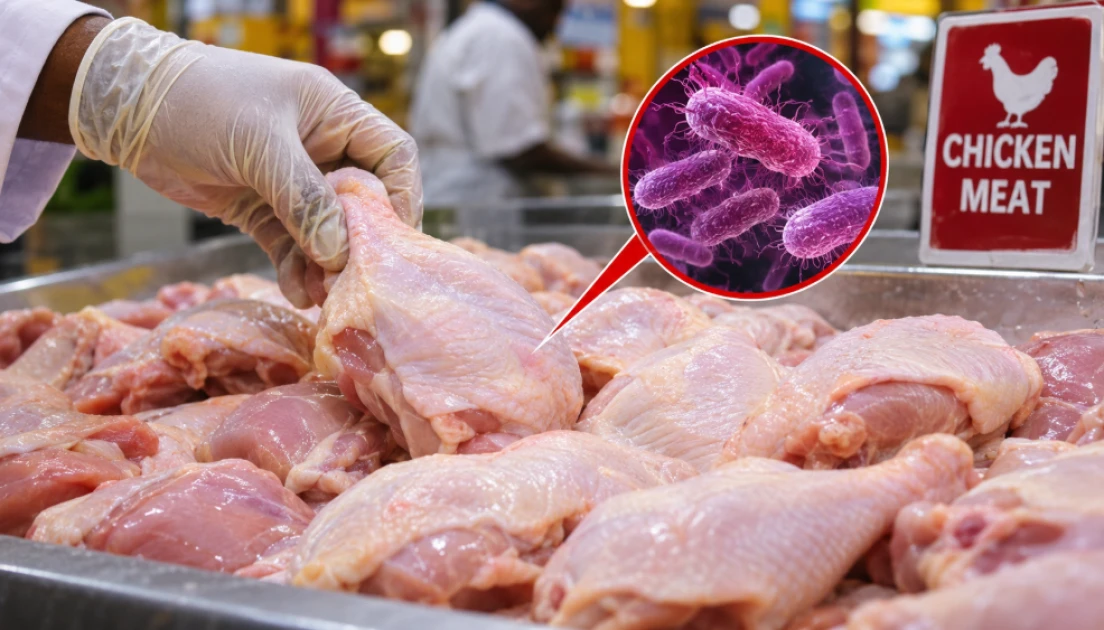
An AI-generated image of contaminated chicken meat.

Audio By Vocalize
A study conducted across 264 chicken meat retail establishments found that most sampled meat contained Escherichia coli (E. coli), while slightly more than a third tested positive for Staphylococcus aureus and nearly 10% for Salmonella.
The findings also revealed growing antimicrobial resistance, with approximately half of the E. coli isolates resistant to three or more classes of antibiotics. More than a quarter of Staphylococcus aureus isolates also demonstrated multidrug resistance.
Resistance among E. coli was particularly high against cotrimoxazole, affecting about two-thirds of the isolates, and ampicillin, which recorded resistance in approximately half of the samples.
KVA National President Dr. Kelvin Osore said the findings highlighted weaknesses in food safety management and the urgent need to strengthen standards across the poultry value chain.
He said protecting consumers required coordinated action by government agencies, veterinary professionals, poultry businesses and retailers, from production and slaughter to transportation, storage and retail.
The study identified poor hygiene and unsafe handling practices as major contributors to contamination. Nearly 75% of the establishments lacked handwashing facilities, while more than half stored chicken meat at room temperature.
Wooden chopping boards were also widely used, with the research linking their use to more than three times the likelihood of Staphylococcus aureus contamination compared with non-wooden alternatives.
Additionally, chicken handled on shared cutting surfaces had more than three times the odds of E. coli contamination compared with meat handled on separate surfaces.
The association has called on regulatory agencies to strengthen routine inspections, conduct microbial surveillance and promote responsible antibiotic use in poultry production.
It has also urged food retailers to maintain proper refrigeration throughout the supply chain and improve hygiene standards, while county governments should develop specific food safety policies and strengthen inspection services.
Consumers have been advised to demand safe food and observe proper handling practices at home to minimise the risk of foodborne infections.
Join the Discussion
Share your perspective with the Citizen Digital community.
No comments yet
This discussion is waiting for your voice. Be the first to share your thoughts!