
KRA collects record Ksh.2.84 trillion as tax revenue jumps 10.6%
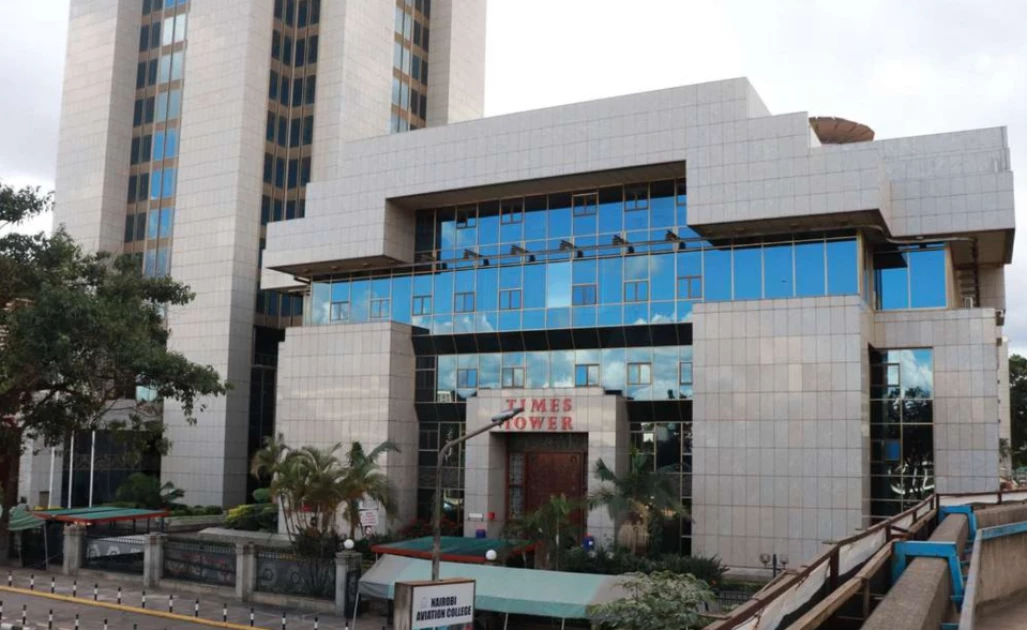
File image of the KRA headquarters at Times Tower in Nairobi. PHOTO | FILE

Audio By Vocalize
The Kenya Revenue Authority (KRA) has announced that it collected
Ksh.2.844 trillion in the 2025/26 financial year, registering its strongest
revenue growth in recent years as improved performance in key sectors of the
economy boosted tax collections despite a challenging business environment.
According to the taxman, revenue collection grew by 10.6 per
cent compared to the previous financial year, with collections rising by
Ksh.272.9 billion from Ksh.2.572 trillion recorded in 2024/25.
Manufacturing, Energy, Financial and Insurance, Information
and Communication Technology (ICT), and Wholesale and Retail Trade emerged as
the biggest contributors to government revenue, jointly accounting for about 62
per cent of all taxes collected during the year.
"Revenue collection for the Financial Year 2025/2026
registered a robust double-digit growth of 10.6%, significantly outperforming
the 6.8% growth recorded in the previous financial year," KRA said in a statement.
"These sectors that account for 27.4% of overall nominal
GDP (raw economic metric not adjusted for inflation or deflation) recorded an
aggregate revenue growth of 8.0%."
The manufacturing sector led the pack after contributing
Ksh.462 billion, up from Ksh.423 billion in the previous financial year,
representing a 9.2 per cent growth.
KRA attributed the performance largely to Value Added Tax
(VAT), Pay As You Earn (PAYE), Excise Duty and Corporation Tax.
The energy sector followed with collections of Ksh.445
billion, representing a 9.1 per cent increase, driven mainly by strong
performance in customs oil taxes.
Meanwhile, the Financial and Insurance sector contributed
Ksh.320 billion, while the ICT sector posted a 7.9 per cent growth after
generating Ksh.248 billion.
Wholesale and Retail Trade also recorded strong performance,
collecting Ksh.288 billion, a 10.3 per cent increase from the previous
financial year.
Overall, exchequer revenue rose to Ksh.2.568 trillion,
representing a growth of 10.5 per cent, while revenue collected on behalf of
other government agencies increased by 11.2 per cent to Ksh.276.1 billion.
KRA also surpassed its customs revenue target after collecting
Ksh.988.8 billion against a target of Ksh.980.8 billion, translating to a
performance rate of 100.8 per cent. Domestic revenue, on the other hand, stood
at Ksh.1.851 trillion, achieving 93 per cent of its target.
Among the key tax heads, Corporation Tax registered the
highest growth at 14 per cent, with collections reaching Ksh.347.1 billion, while
PAYE collections increased by 6.7 per cent to Ksh.598.8 billion.
The authority also reported a sharp rise in betting-related
taxes. Excise tax on betting services exceeded its target after collecting
Ksh.16.5 billion, reflecting a 24.9 per cent growth and a performance rate of
115.9 per cent.
Betting Tax and Withholding Tax on betting and gaming also
recorded growth of 20.3 per cent and 59.2 per cent respectively.
Digital taxes also continued to gain traction, with
Significant Economic Presence Tax (SEPT), formerly Digital Service Tax,
doubling to Ksh.1.6 billion following the expansion of its scope under the
Finance Act, 2025.
KRA attributed the strong revenue performance to increased
adoption of technology, including wider use of the Electronic Tax Invoice
Management System (eTIMS), integration of tax systems with the Integrated
Customs Management System (iCMS) and iTax, artificial intelligence-powered
analytics and non-intrusive cargo scanners to curb tax evasion.
The authority said initiatives such as pre-populated tax
returns, digital taxpayer services, integration with the Integrated Financial
Management Information System (IFMIS) and real-time monitoring of betting
companies had also strengthened compliance and reduced revenue leakages.
Other interventions that boosted collections included tax base
expansion, debt recovery programmes, alternative dispute resolution mechanisms
and enhanced intelligence-led enforcement.
KRA now says it plans to deepen digital tax administration by
expanding electronic invoicing, scaling up real-time revenue monitoring,
establishing a Data Analytics Centre of Excellence and increasing the use of
artificial intelligence to enhance compliance and improve taxpayer services.
The authority maintained that the reforms are expected to
strengthen voluntary tax compliance, improve efficiency in revenue collection
and support the country's long-term economic growth.
Join the Discussion
Share your perspective with the Citizen Digital community.
No comments yet
This discussion is waiting for your voice. Be the first to share your thoughts!