
Kenya’s livestock sector at risk as vaccine coverage remains low
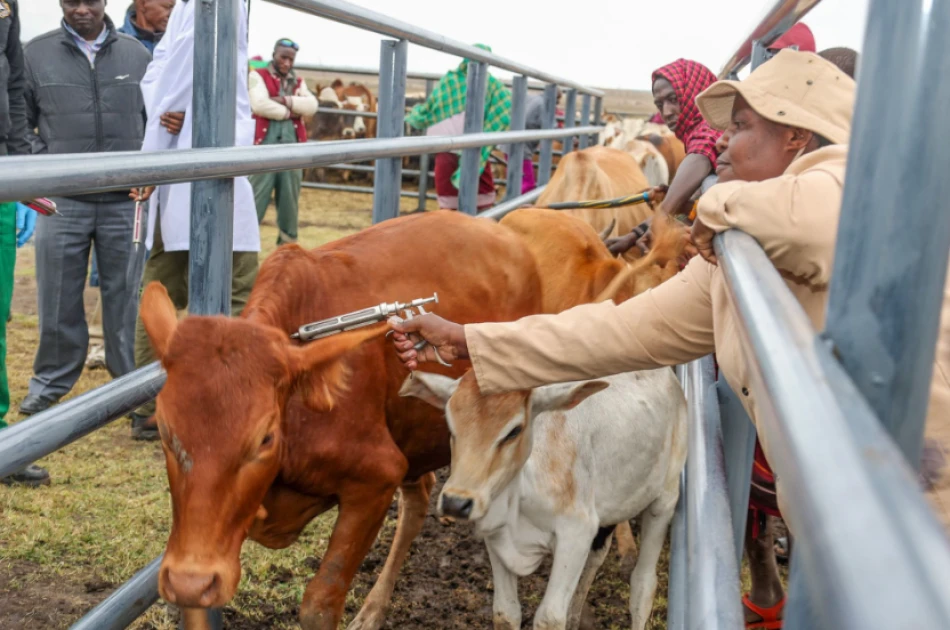
The nationwide livestock vaccination exercise at Segera Ward, Laikipia County, on January 30, 2025. PHOTO | COURTESY

Audio By Vocalize
Kenya’s livestock sector is facing growing threats from low vaccination coverage, exposing animals to disease outbreaks, threatening food safety and limiting access to key export markets.
The concerns emerged during the 60th annual congress of the
Kenya Veterinary Association (KVA) held in Ukunda, Kwale County, where
veterinarians and industry stakeholders warned that inadequate vaccine access
and weak veterinary systems are undermining animal health across the country.
While poultry vaccination coverage stands at about 80 per
cent, vaccination rates for livestock and ruminants remain between 6 and 20 per
cent nationwide, leaving many regions vulnerable to outbreaks of diseases such
as Foot and Mouth Disease (FMD).
KVA National Chairman Dr. Kelvin Osore said the low
vaccination rates are preventing the country from achieving herd immunity and
weakening the livestock sector’s contribution to the economy.
“For vaccinations, you need to reach about 80 per cent to
achieve herd immunity. If we don’t do that, we’ll keep talking about the
contribution of the livestock subsector to the economy, but we’ll never hit the
percentages that we want,” said Dr. Osore.
He warned that weak vaccination systems are also exposing
communities to zoonotic diseases, citing recent anthrax outbreaks in parts of
the country.
Dr. Osore added that persistent animal diseases continue to
block Kenya from accessing lucrative meat and dairy markets abroad.
“When you go to lucrative meat markets or dairy markets in
the Middle East and Europe, they insist on a country having a disease-free
status for FMD. This has prevented us from exporting our meat and dairy
products to certain countries,” he said.
According to Dr. Osore, shortages of veterinary surgeons,
especially in pastoral regions that hold most of the country’s livestock, and
poor access to quality vaccines remain major obstacles.
“It’s a whole chain of systemic issues that need to be
addressed by different stakeholders,” he added.
Agriculture Cabinet Secretary Mutahi Kagwe said animal
health systems are critical in protecting livelihoods, food security and the
economy.
“Animal health services play a very critical role in the
prevention, control, and eradication of animal diseases that occasion huge
economic losses and adversely impact livelihoods,” said Kagwe.
The CS said the government is finalising a livestock master
plan aimed at improving livestock data and identifying investment opportunities
to support sustainable growth in the sector.
Meanwhile, Enrique Pando, Head of Commercial Development at
Galvmed said the congress was important in raising awareness about the role of
vaccination in safeguarding animal health and food security.
“This event by KVA is essential because it brings together
veterinarians and technicians who are custodians of animal health and food
security in this country. It is a really good place to create awareness on the
value of vaccination,” said Pando.
Join the Discussion
Share your perspective with the Citizen Digital community.
No comments yet
This discussion is waiting for your voice. Be the first to share your thoughts!