
Kenya's HIV infections rise by 7.3 per cent to 34,540
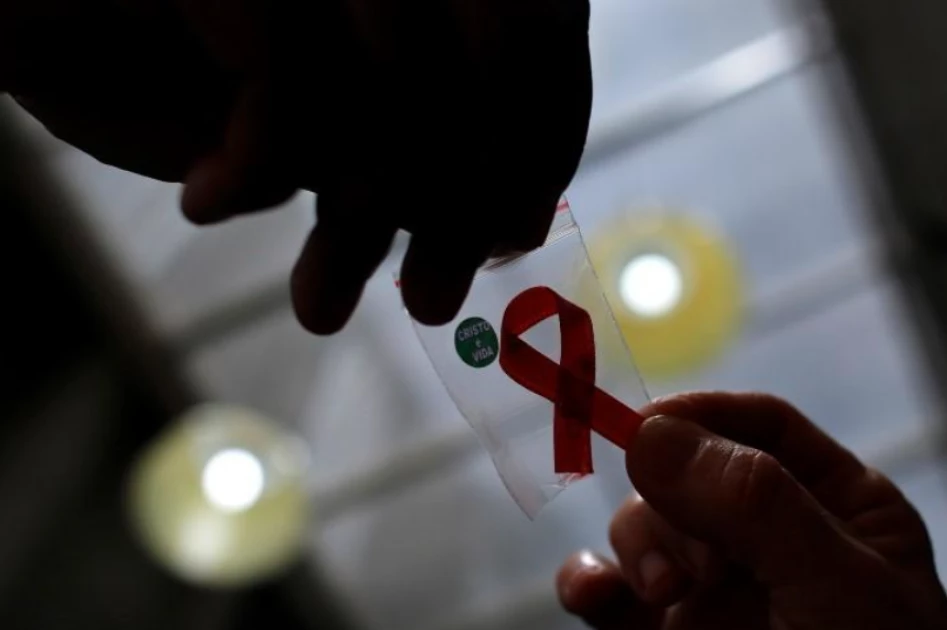
A nurse (L) hands out a red ribbon to a woman, to mark World Aids Day, at the entrance of Emilio Ribas Hospital, in Sao Paulo December 1, 2014. REUTERS/Nacho Doce

Audio By Vocalize
As the country gears up to celebrate World
Aids Day on Thursday, Kenya has flashed the amber light on its HIV intervention
measures after 34,540 new infections were recorded in 2021.
The new infections signify a 7.3 per cent
increase after nearly a decade of a declining new infections curve putting the
National Syndemic Disease Control Council on a pedestal to clip the numbers
from rising further.
Women bore the brunt of the new infections at
66.7 per cent of the new infections compared to men who accounted for 33.3 per
cent of the total number.
About 17,961 adolescents and young adults
aged 15-29 tested positive for HIV in 2021, with this age group bearing the burden
of new infections at 52 per cent.
This comes amidst declining donor funding
which had shrunk to Ksh.7.3 billion by 2018, followed by the withdrawal of US-funded PEPFAR in 2019 as donors pushed for countries to support their health
programs by internal funding.
As of this financial year, 2022/2023, Kenya’s
annual funding gap for essential HIV commodities stands at Ksh.100,454,190; including
a six-month buffer commodities stock even as counties report a biting shortage
of condoms, ARV drugs and testing kits for HIV.
Keneddy Pomgi, Bungoma County AIDS and STI Coordinator,
said; “Saa hii tunakuwa na targeted testing kwa sababu ya uhaba…kwa sababu
mahali imefika saa hii wafadhili wamefika wanatuambia tufanye mikakati yetu
wenyewe, wanasema sasa tukuwe independent.”
Hellen Sila, a midwife, stated: “Labda
unaweza pata mama ambaye ako na HIV na saa zile saa inafika hauna vifaa na
labda inabidi utafute ata kama karatasi ama sugar bag uweze kumsaidia…sasa sisi
tuko katika hatari wakati tunazalisha wamama ambao wako na HIV.”
In the past year, Nairobi County led the bulk
of infections at 3,828 infections followed by Kisumu at 3,118, Homa Bay at
2,696 and Siaya at 2,180.
A total of 22,373 HIV-related deaths were
reported in 2021, a steep increase that was attributed to low diagnosis and
treatment coverage across various populations.
Focus will now shift to the various programs
that will be adopted by government to nip in the bud the rising numbers of new infections
and deaths and how it will be bridging the near Ksh.10 billion funding gap as
more donors plan to pull out funding for key programs by 2027.
Join the Discussion
Share your perspective with the Citizen Digital community.
No comments yet
This discussion is waiting for your voice. Be the first to share your thoughts!