
Kenya's $1B Microsoft data centre project in limbo over power concerns

Audio By Vocalize
The deal, signed between Microsoft, G42 and the Kenyan government during the administration of former US President Joe Biden, was billed as the single largest digital investment in Kenya’s history.
At the centre of the agreement was the construction of a green data centre campus in Olkaria that would host Microsoft Azure services through a new East Africa cloud region.
The facility was expected to position Kenya as a regional technology hub while accelerating the adoption of cloud computing and artificial intelligence services across East Africa.
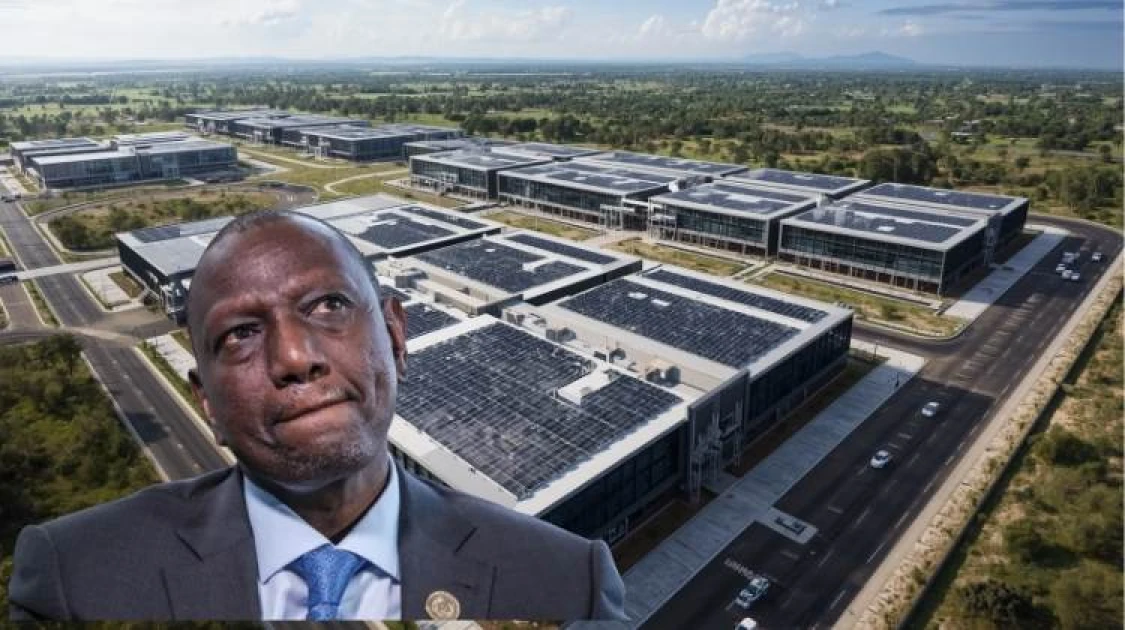
But nearly two years later, questions are emerging over whether the ambitious project can proceed as planned after President William Ruto publicly admitted that the country’s current electricity generation capacity may be inadequate to sustain a hyperscale data centre.
Speaking to Kenyans living in Doha, Qatar, in November 2025, the Head of State revealed that the government may have underestimated the scale of energy required for such infrastructure.
"We need to generate energy. We need to generate electricity. As I talk to you, we have 2,300 MW, the whole country. Tulienda na kimbelembele yetu tukanegotiate na Microsoft na G42 during the trip to the US, we signed an agreement between G42 of UAE, Microsoft and Kenya to establish data centres," he stated.
"When I returned to the country, we were told one data centre requires 1,000 MW and yet we have 2,300 MW. For us to do the data centre, we have to shut down half the country,” Ruto said.
The remarks immediately triggered speculation that the project could be in limbo or at risk of collapse, particularly as the President also disclosed that Kenya had resorted to daily load-shedding between 5 pm and 10 pm to stabilise the national grid amid rising demand.
Among the major talking points is Kenya’s strained electricity system. While the country has long marketed itself as a renewable energy leader, with geothermal, wind and hydro accounting for a large share of power generation, demand is rapidly outpacing supply.
Kenya’s peak electricity demand crossed 3,000 megawatts in 2025, while installed generation capacity remains just above that level. Kenya Power and KenGen have both acknowledged pressure on the grid, especially during evening hours when solar generation drops.
For a data centre of the scale envisioned by Microsoft and G42, power reliability is as important as power availability.
Data centres require an uninterrupted electricity supply around the clock to maintain cloud services, artificial intelligence processing and storage systems. Even brief outages can lead to major disruptions.
Industry experts have opined that modern AI-driven data centres consume significantly more electricity than traditional cloud facilities due to the energy-intensive nature of AI computing.
Globally, countries competing to attract data centres are investing heavily in dedicated energy infrastructure to guarantee a stable supply.
The proposed Kenya facility was intended to run entirely on geothermal energy from Olkaria, one of Africa’s largest geothermal fields. However, analysts noted that even geothermal expansion requires billions of shillings in investment and years of development before additional power can be fed into the grid.
President Ruto acknowledged the scale of the challenge, saying Kenya would require at least 10,000 megawatts of electricity generation capacity to industrialise and support future technologies such as AI data centres.
He estimated that the country would need more than Ksh.1 trillion in investments to expand generation through projects such as the High Grand Falls Dam.
Despite growing concerns, the government insists the Microsoft-G42 project has not been abandoned.
Kenya’s Special Technology Envoy, Philip Thigo, dismissed reports suggesting the project had stalled, arguing that the President’s comments were meant to highlight the urgency of expanding the country’s energy infrastructure rather than signalling cancellation.
“His point has not been that the project was suspended, but Kenya must confront the scale of energy required to support next-generation digital infrastructure,” Thigo said in a statement posted on X.
Thigo maintained that Kenya remains committed to scaling electricity generation capacity to at least 10,000 megawatts by 2030 to support projects such as the Microsoft-G42 facility.
He argued that Kenya’s geothermal resources and renewable energy mix still place the country in a strong position to become a regional AI and cloud computing hub.
Still, uncertainty remains over timelines and implementation.
The project was meant to symbolise Kenya's position as Africa’s next major digital economy. Whether that vision becomes reality may now depend less on technology agreements and more on how quickly the country can solve its growing energy deficit.
Join the Discussion
Share your perspective with the Citizen Digital community.
No comments yet
This discussion is waiting for your voice. Be the first to share your thoughts!