
Kenya turns to Norway model as Sovereign Wealth Fund becomes law
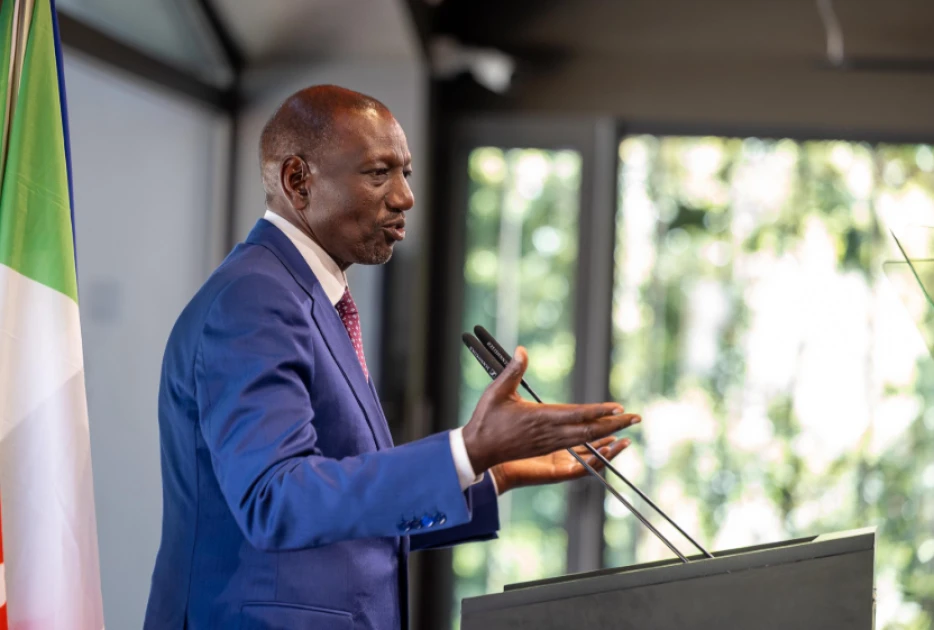
President William Ruto delivers a public lecture at the LUISS School of Government in Rome, Italy, on April 21, 2026. PHOTO | PCS

Audio By Vocalize
Speaking during the assenting ceremony, the President described the law as a turning point in how the country will manage and preserve its natural wealth.
"Today marks a turning point in how Kenya will preserve its resources for future generations," Ruto said. "While the National Infrastructure Fund will build national assets, the Sovereign Wealth Fund will preserve and grow the country's wealth for the future."
The fund is anchored on three pillars. The Urithi Fund, dedicated to future generations, will receive 30 percent of revenue from petroleum and mineral resources. The Stabilization Fund will serve as a buffer during crises, while the National Infrastructure Fund will finance strategic projects and create jobs.
Ruto said the government was acting early to guard against misuse of the country's resources. "Natural resources are finite, and once they are exhausted, they are gone forever," he said. "That is why we do not want one generation to benefit at the expense of those who come after."
He pointed to Norway, whose sovereign wealth fund has grown to roughly Ksh 280 trillion over three decades, as the model Kenya had drawn from. "Kenya, too, can become a first-world country within one generation," the President said.
He added that beyond natural resources, profits from national investments such as the ongoing Jomo Kenyatta International Airport project would also feed into the fund. "This fund will connect the investments we are making today to future generations," he said.
Ruto said the country's national mineral survey had confirmed significant deposits across Kenya, and that the fund had been created before "the temptation to misuse those resources arises." He cited the recent Iran conflict as an example of the kind of external shock the Stabilization Fund was designed to cushion against.
Treasury Cabinet Secretary John Mbadi said the law was central to the government's development agenda and reflected a deliberate choice to balance the needs of the present against those of the future.
"We have been exploiting our minerals and natural resources without considering the needs of future generations," Mbadi said. "We have borrowed heavily from Norway's model. The most important provision is that 30 percent of revenue generated from natural resources will go into the Future Generations Fund."
Mbadi dismissed calls to delay the fund until the country posted a budget surplus. "We must build momentum instead of waiting for the perfect time, because that time may never come," he said.
Chair of Fund Managers Dr. Nicholas Ithondeka called for the law to be amended to broaden its funding base beyond natural resources, proposing that ordinary Kenyans and foreign investors be allowed to participate.
"We also propose allowing ordinary Kenyans to invest, even as little as one shilling, so that their money is invested and they can earn returns from it," Ithondeka said. He suggested unclaimed ass
Join the Discussion
Share your perspective with the Citizen Digital community.
No comments yet
This discussion is waiting for your voice. Be the first to share your thoughts!