
Kenya targets 5,540MW renewable energy capacity by 2034
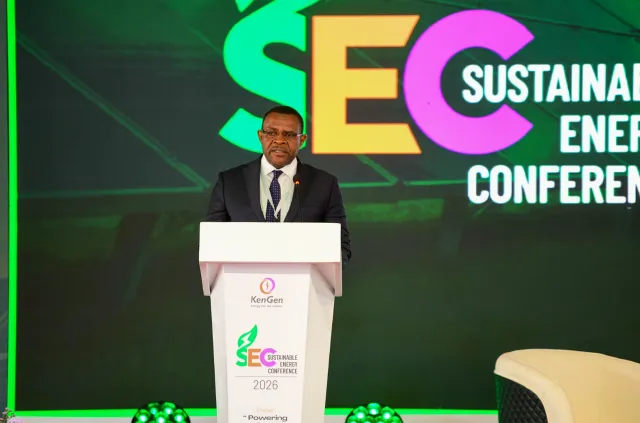
KenGen CEO Eng. Peter Njenga during the Sustainable Energy Conference in Naivasha on November 25, 2026.

Audio By Vocalize
Kenya Electricity Generating Company (KenGen) Managing Director and Chief Executive Officer Eng. Peter Njenga said the country plans to add 250 megawatts of renewable energy to the national grid by 2027, including 100 megawatt-hours of battery energy storage.
Speaking during the opening of the Kenya Sustainable Energy Conference 2026 in Olkaria, Naivasha, Eng. Njenga said the investments would support industrial growth while creating employment opportunities.
“Clean power and industry can grow together. Africa does not lack the sun, wind or water. What it needs is capital, partnerships and the courage to build at scale,” said Njenga.
The conference, which runs until November 27, has brought together more than 1,000 delegates from over 80 countries, including investors, financiers, policymakers and energy experts.
Eng. Njenga said Kenya had an estimated geothermal potential of 10,000 megawatts but had only exploited a fraction of the resource.
He noted that the country's geothermal expertise was already supporting energy development in several countries, including Djibouti, Ethiopia, Rwanda, Tanzania and Eswatini.
Among the projects expected to support industrialisation is a green fertiliser plant at the Olkaria Green Energy Park, which will be powered by 165 megawatts of geothermal energy and is expected to create more than 2,000 direct and indirect jobs.
Other planned investments include geothermal, solar, wind and hydropower projects at different stages of development.
Eng. Njenga said KenGen had completed the rehabilitation of Olkaria 1, 63.3-megawatt project, scheduled for commissioning on December 7, 2026. The company is also advancing plans for a 42.5-megawatt solar power plant, an 8.6-megawatt Gogo hydropower project and an 80.3-megawatt geothermal project.
The company is further exploring wind power development in Marsabit, where an estimated potential of 1,000 megawatts has been identified, with an initial development target of 200 megawatts.
KenGen is also considering floating solar technology on its reservoirs to complement hydropower generation and improve electricity production.
Meanwhile, Canada has expressed interest in strengthening cooperation with Kenya in geothermal energy, nuclear power, research and skills development.
Canadian High Commission Head of Cooperation Sophie Price said the two countries were exploring opportunities for commercial partnerships and development assistance.
“Energy in particular is one area where we can continue to collaborate, whether in research, skills development, learning from Kenya on geothermal or sharing some of our skills and knowledge, including in nuclear,” said Price.
She noted that the proposed areas of cooperation could include financing and technical expertise, although no agreements had been signed.
On regulation, Energy and Petroleum Regulatory Authority (EPRA) Director of Economic Regulation John Mutua said the regulator had gazetted electricity markets, bulk supply and open access regulations aimed at deepening competition and investment in the electricity sector.
“As we continue to regulate the energy sector, we encourage the private sector to come on board,” said Mutua.
He added that EPRA would continue balancing investors' interests with consumer protection to ensure a sustainable energy sector.
The conference is being held under the theme Powering Africa's Green Industrial Revolution, with discussions focusing on mobilising investment to address Africa's energy deficit, where an estimated 600 million people still lack access to electricity.
Join the Discussion
Share your perspective with the Citizen Digital community.
No comments yet
This discussion is waiting for your voice. Be the first to share your thoughts!