
Kenya rolls out new malaria treatment strategy in four counties amid resistance fears

Audio By Vocalize
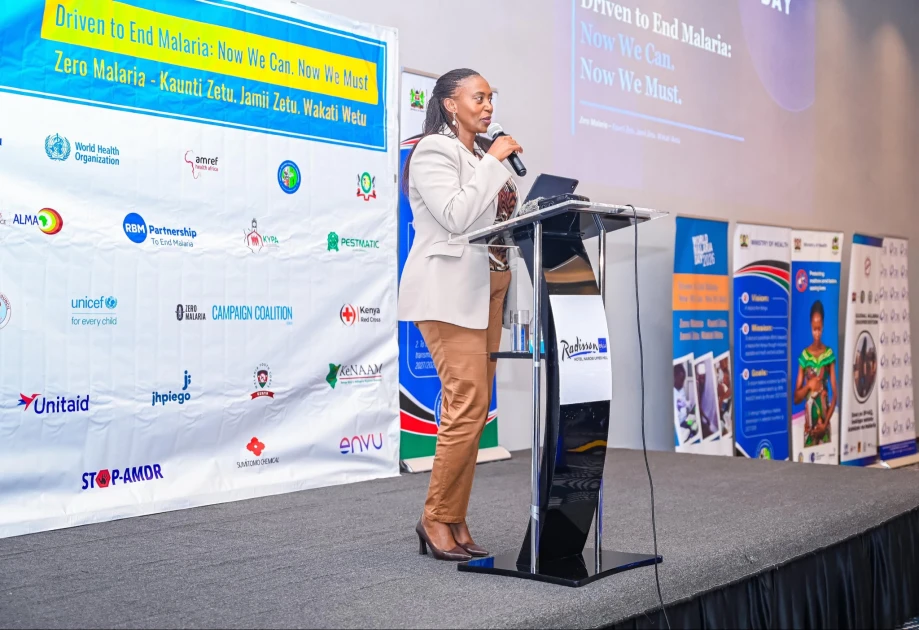
Officials made the announcement on Thursday during a pre-World Malaria Day media breakfast briefing, where they also cited steady progress in reducing the disease burden.
Head of the Malaria Programme at the Ministry of Health, Dr Kibor Keitany, said national malaria prevalence has dropped to 6 per cent in 2020 from 8 per cent in 2015.
Keitany said the programme is targeting an 80 per cent reduction in malaria and a 90 per cent drop in deaths.
Principal Secretary for Public Health and Professional Standards Mary Muthoni said malaria remains a major public health challenge, noting that 4.2 million malaria cases were recorded in 2024 and that 75 per cent of the population is at risk.
She said malaria accounts for about 18 per cent of patients who visit health facilities, with pregnant women and children under five among the most vulnerable.
Muthoni said Kenya had recorded a decline in incidence by five per cent between 2023 and 2025, and that malaria mortality fell by 32 per cent during the previous strategy cycle.
She added that Kirinyaga and Nyeri counties are being targeted for total elimination, and said Kirinyaga will host this year’s World Malaria Day national commemoration.
The PS urged the media to remain engaged throughout the year, saying awareness should not be driven only by campaigns such as net distribution.
“We must be cautious… Media don’t wait for nets to disappear then you start talking about malaria,” she said.
On treatment, Dr Edwin Onyango said Kenya is rolling out a multiple first-line therapy (MFT) approach in response to the risk of drug resistance, noting that artemisinin-based combination therapy (ACT) remains effective.
He said the rollout will begin in Baringo, Busia, Kakamega and Siaya before expanding to other counties.
Dr Onyango also warned that resistance can be accelerated by poor-quality medicines, incomplete treatment and incorrect dosing.
On seasonal malaria chemoprevention, Dr Edwin Mbugua said 82,000 children were reached in Turkana Central and Kakuma in the recent campaign, noting the area has a much higher prevalence of about 39 per cent compared to the national average.
Mbugua said about 65 per cent of cases occur between June and October and that the next phase targets 135,000 children up to 10 years old in Kakuma and Kalobeyei, with drugs provided through US government support.
Muthoni said the ministry used the briefing to launch several policy and technical tools to strengthen the response, including updated guidelines for malaria diagnosis and treatment, biosafety protocols for community-level rapid diagnostic testing, a clinical mentorship toolkit, an implementation framework for malaria RDTs and an online entomological surveillance database
Join the Discussion
Share your perspective with the Citizen Digital community.
No comments yet
This discussion is waiting for your voice. Be the first to share your thoughts!