
Kenya Power warns rising wind, solar generation could hike electricity prices

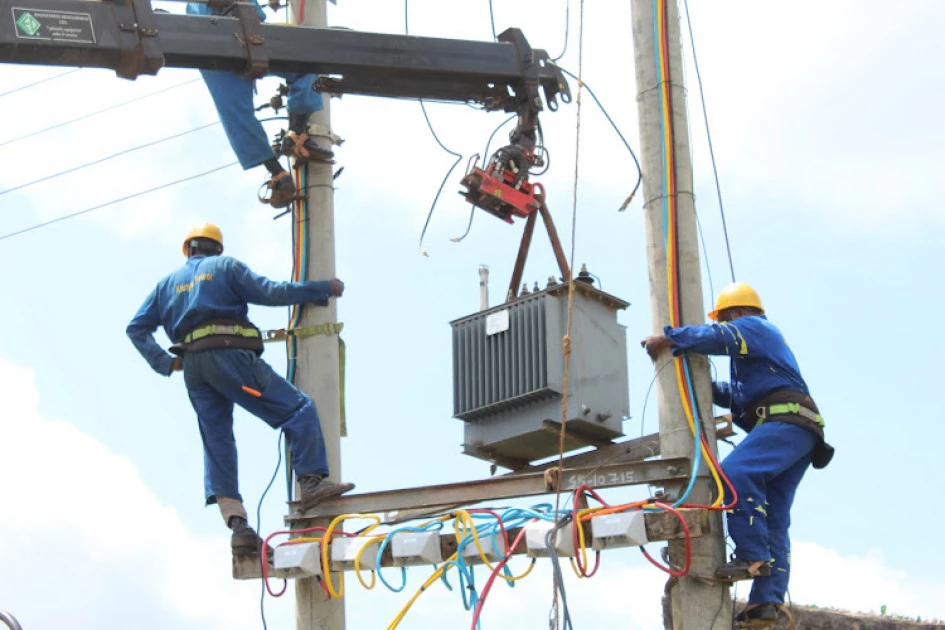
File image of Kenya Power engineers at work. PHOTO | COURTESY

Audio By Vocalize
Kenya Power is warning that the rapid increase in wind and
solar power could put pressure on the stability of the national electricity
grid and raise the cost of power.
The utility says Variable Renewable Energy (VRE) sources,
mainly wind and solar, now account for about 21 per cent of the grid's
capacity, above the 15 per cent level it considers ideal.
Kenya Power Managing Director and CEO Dr. Eng. Joseph Siror
described the current share as high, citing the unpredictable nature of wind
and solar generation.
Unlike geothermal and hydro power, wind and solar generation
can fluctuate depending on weather conditions. This means Kenya Power has to
rely on other generation sources to quickly fill gaps when output from wind and
solar drops.
Siror said the country therefore needs to increase investment
in stable sources of electricity that can provide predictable output when
required.
“The beauty of baseload is that we are guaranteed. If we know
we require 2,300 megawatts tomorrow at this particular time, and you have
baseload generation, you are actually able to produce this much,” he
stated.
Kenya Power said the fluctuations from renewable sources also
require other power generators to remain on standby, adding to the cost of
maintaining a reliable supply.
Siror compared the situation to having a backup vehicle ready
to assist another vehicle that could stall at any time.
“It is like driving a car, but you know this car can stall
anytime, so another vehicle follows behind you so that in the event it stalls,
it can also assist you to reach your destination,” he said.
The utility said the challenge is becoming more significant as
electricity demand continues to rise.
Peak demand has increased to 2,549 megawatts and is projected
to reach about 2,680 megawatts in 2027.
At the same time, demand can fall to as low as 1,183 megawatts
during off-peak periods, creating a gap of more than 1,300 megawatts between
peak and minimum demand.
Kenya Power linked some power quality challenges, particularly
in the Coast region and other parts of the country, to the growing penetration
of variable renewable energy.
“The main reason for the challenge in power quality has to do
with the penetration of VREs in the country,” Siror said.
The utility is now pushing for additional generation from more
stable sources, including geothermal, hydro and nuclear power.
Additional geothermal generation from Olkaria and Menengai is
in the pipeline, while Kenya is also expected to receive 200 megawatts of
imported electricity from Ethiopia and 100 megawatts from Paka Silali.
Kenya Power also expects raising the Masinga Dam water level
by 1.5 metres to increase hydroelectric generation.
The utility is also considering an LNG power plant that could
be brought online quickly when electricity production from wind and solar
falls.
Join the Discussion
Share your perspective with the Citizen Digital community.
No comments yet
This discussion is waiting for your voice. Be the first to share your thoughts!