
Kenya lobbies for more investments in data, space technology and AI

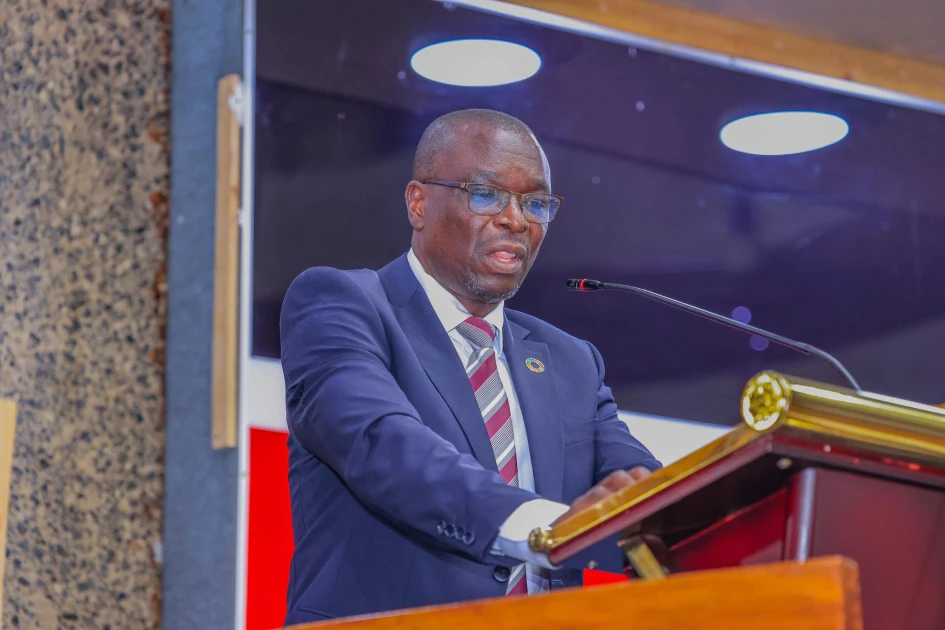
FILE| KNBS Director General Macdonald George Obudho in a past event.

Audio By Vocalize
Kenya has reinforced its position as a continental leader in data innovation, space technology and digital transformation as it hosts the first-ever African edition of the Global Data Festival.
The four-day event has brought together
more than 1,000 participants from over 60 countries, including policymakers, technology
experts, private sector leaders and development partners to explore how data
and space technologies can accelerate sustainable development and improve livelihoods.
Speaking during the opening ceremony on
Tuesday, Kenya National Bureau of Statistics (KNBS) Director General Dr.
Macdonald Obudho underscored the importance of data in shaping inclusive
development and evidence-based decision-making.
“Statistics are more than just numbers.
They are a mirror of society. A good mirror does not flatter; it shows who we
are, what we have achieved and, most importantly, who we are leaving behind,”
said Dr. Obudho.
He noted that Kenya continues to
modernise its statistical systems through new technologies, citizen-generated
data and artificial intelligence, while expanding efforts to ensure no
population group remains invisible in national statistics.
On his part, Kenya Space Agency Director
General Brigadier Hillary Kipkosgey said the partnership reflects the growing
importance of space-derived data in addressing real-world challenges.
“Satellites generate enormous amounts of
information that help us understand what is happening on Earth. Through
investments in Earth observation infrastructure and partnerships, Kenya is translating
satellite data into insights that support food security, disaster risk
reduction, environmental management and sustainable development,” he said.
The Kenya Space Agency is working to
expand access to Earth observation data through investments in ground
infrastructure and partnerships, including collaboration with the Italian Space
Agency.
The initiative aims to support research,
innovation and public sector decision-making across multiple sectors.
Special Envoy on Technology Ambassador
Philip Thigo said the festival comes at a critical time as countries work
toward achieving the Sustainable Development Goals (SDGs).
He emphasised the need for stronger
collaboration between governments, the private sector and development partners
to address data gaps while ensuring data privacy and security.
“The private sector generates vast
amounts of valuable information. The challenge is creating mechanisms that
allow data sharing as a public good while protecting privacy and ensuring the
data benefits citizens, businesses and governments alike,” he noted.
The Global Partnership for Sustainable
Development Data (GPSDD), which organised the festival, described Kenya as a
leading example of how investments in data systems can drive economic and
social progress.
GPSDD Chief Executive Officer Jenna
Slotin said evidence shows that every dollar invested in data systems generates
an average return of $32 (Ksh.4,141) through improved planning, investment and
service delivery.
“When national data systems receive
sustained and strategic investment, the potential for transformation is
extraordinary. Every data point represents a person, and every pixel represents
a place, a community and a life,” said Slotin.
She noted that reliable national data
systems are also critical for attracting investment, as investors rely on
trusted information to assess opportunities and risks.
The conference also showcased how
counties are increasingly using data and geospatial technologies to improve governance
and service delivery.
Vihiga Governor Dr. Wilber Ottichilo said
county governments are using Geographic Information Systems (GIS), satellite
imagery and demographic data to make informed decisions in health, land
management, environmental conservation and urban planning.
He explained how GIS analysis helped
identify underserved areas in the county and guide the construction of new
health facilities based on population needs rather than political
considerations.
“Data is crucial for planning and
decision-making. We cannot effectively govern our counties without credible
data that has been properly analysed and transformed into actionable
information,” he said.
This year’s event marks the first time
the festival has been hosted in Africa and the first time it has been
integrated with a major space science conference.
It was first held in Bristol, United Kingdom, in 2018 and later in Punta del Este, Uruguay, in 2023.
Join the Discussion
Share your perspective with the Citizen Digital community.
No comments yet
This discussion is waiting for your voice. Be the first to share your thoughts!