
Kenya is ready! Derrick Ogechi on building a basketball nation
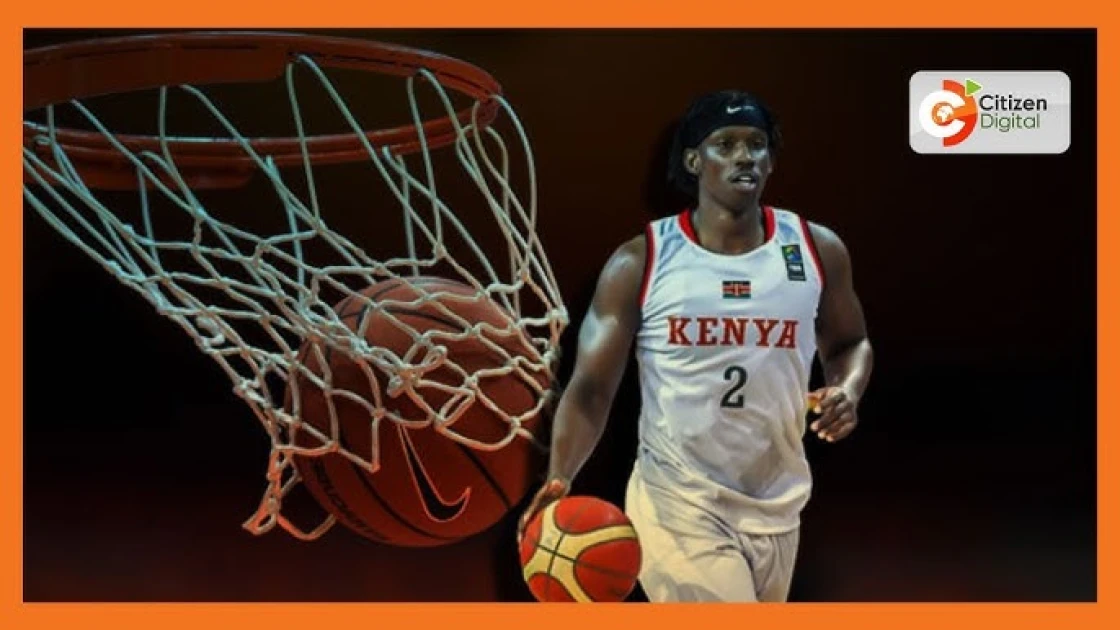
Kenyan basketball star Derrick Ogechi controls the ball during a past match.

Audio By Vocalize
There is a quiet but unmistakable thunder rolling across Kenya's sporting landscape.
It is not the roar of a football crowd or the crack of athletics starting gun, it is the squeak of basketball shoes on hardwood, the swish of a net, and the rising chant of a generation discovering a sport that, until very recently, existed mostly on the fringes of national consciousness.
At the heart of that movement is a 27 year old guard from Minneapolis, Minnesota, who chose to come home. Derrick Mekenye Ogechi, known simply as D.O. to teammates and fans, is not just a basketball player. He is, in many ways, a bridge.
Born in the United States to Kenyan parents, schooled through American college basketball at Midland College and Midwestern State University, and holding a Master's degree in Sports Administration, Ogechi took a deliberate turn away from established overseas contracts to join Nairobi City Thunder in August 2024.
He wanted to be part of something bigger than a pay cheque. He wanted to be part of history.
That history came swiftly. Thunder, under the ownership of Twende Sports Limited, completed back-to-back undefeated Kenya Basketball Federation Premier League seasons and became the first Kenyan club to qualify for and compete in the Basketball Africa League (BAL), the NBA backed continental league that has transformed the ambition of African club basketball.
Ogechi travelled with the team and experienced that historic BAL journey firsthand last year. In a wide ranging conversation, he speaks about what it means to grow basketball in Kenya, the responsibility that comes with being a professional player in a developing basketball market, and why the partnership between sport, youth culture, and brands matters more now than ever before.
In this one-on-one interview, the Nairobi City Thunder guard opens up on his journey, the role of professional basketball in transforming Kenya's sporting culture, and why the next generation of fans matters as much as the next generation of players.
Q1 Derrick, take us back to the beginning. You were born in the United States, grew up playing sport in Minneapolis, how did basketball find you, and when did Kenya become part of the story?
Ogechi
Honestly, basketball almost did not find me at all. I was a taekwondo kid, I played football like my dad, just a general sport kid. It was my father, Moses Mekenye, who first put a basketball in my hands when I was around thirteen. He had played football back in Kenya, but he saw something in basketball for me, and from that first moment, I just fell in love with it. The game gave me discipline, work ethic, a sense of community. I went through high school, played at Midland College, then Midwestern State where I eventually completed my Masters in Sports Administration. I even had a professional stint in Spain with Coto Cordoba. But Kenya was always calling.
I think for a lot of us in the diaspora, there comes a point where you ask yourself, what am I building, and for who? When I got the call from Nairobi City Thunder's management, we sat down and talked, and I told them I wanted to be part of history. I wanted to be part of the first Kenyan team to make it to the BAL. And that is exactly what happened. I could have stayed in Europe, there were other offers, but being here, playing in front of Kenyan fans, wearing that badge, meant more to me than anything else on the table.
Q2 When you arrived in Nairobi, what did you find? What was the state of basketball in Kenya, and what has changed since you joined the Thunder?
Ogechi
When I arrived, I found real talent, raw, hungry, talented players who had been doing this for years with very little recognition or resource. What was missing was the professional structure around them. Basketball had existed in Kenya for decades, but it was largely recreational in how it was perceived. There was no clear pathway from grassroots to professional. No sense that you could make a living from it. Players were holding down day jobs and fitting training around their schedules.
What Twende Sports has done with Nairobi City Thunder is changing that entire narrative. We train at a professional standard. We have coaching staff, a management structure, game analysis all the things you find in professional sport anywhere in the world. And when people started coming to watch us and seeing that level of professionalism, something shifted. During the Road to BAL qualifiers here in Nairobi, I was speaking to fans who told me they had never watched a basketball game live before. That is what a professional environment does, it attracts people who did not even know they were basketball fans. The sport has not changed; the stage it is performed on has changed.
Q3 And that BAL journey, the first Kenyan team in history to qualify and compete at the Basketball Africa League. What did that feel like from inside the locker room?
Ogechi
Words do not fully capture it. When we defeated City Oilers in December 2024 to seal qualification, the atmosphere at that arena was something I will never forget. This was not just a win for Nairobi City Thunder, it was a win for Kenyan basketball. Every kid who ever dribbled a ball on a Nairobi estate, every coach who ever ran a youth programme with no budget, every player who stayed in the game when there was no financial reward, that qualification was for all of them.
Going to Kigali for the BAL group phase and experiencing the competition against teams from Rwanda, Libya, and South Africa, teams with years of continental experience, gave us real perspective on where we are and where we need to go. The team went 1-5 in the group stage, and while the results were tough, the experience was invaluable. Now we are back for the 2026 BAL season, better prepared, more experienced. The goal this time is to make the play-offs. We are not just here to participate anymore.
Q4 Let’s talk about youth basketball. What is the pipeline looking like in Kenya, are enough young people picking up the game, and what role do professional teams like Thunder have in developing that pipeline?
Ogechi
The pipeline is growing, but we need to be honest about where the gaps are. There are genuinely talented young players coming through, you look at someone like a young player from Shauri Moyo who has grown up watching Thunder train and now dreams of one day being on that court, that is the pipeline. But we need more structured youth programmes, better facilities at school level, and coaches who are trained to develop players over the long term rather than just winning matches at Under-16 level.
University basketball is something I am particularly passionate about. Kenya has brilliant universities with student populations hungry for sport and community. The campus league scene is growing, but it needs more visibility, more investment, more connection to what is happening at the professional level. What we found with Thunder is that when professional basketball is exciting and visible, young people on campuses start paying attention. They start showing up for campus games because they see a pathway, from the university court to the KBF Premier League to the BAL. That pathway now exists in a way it did not just a few years ago. We have to nurture it.
Q5. On the subject of that connection between campus life and professional sport you have been active in engaging university students and Gen Z fans. How important is that community, and how do partnerships with brands play into building it?
Ogechi
This is something I feel very strongly about. Gen Z in Kenya is a generation that is curious, connected, and looking for things to be proud of locally. Basketball speaks their language, the culture, the music, the style, the energy of the game. But you have to go to where they are. You cannot just expect them to show up because you built a team. You have to build a culture.
That is why partnerships with brands that genuinely understand youth culture matter so much to sport at this stage. I have been working with Sprite, for example, in an activation that is specifically about reaching Gen Z and university students, getting them excited about basketball, from the campus leagues right through to Thunder matches and the BAL.
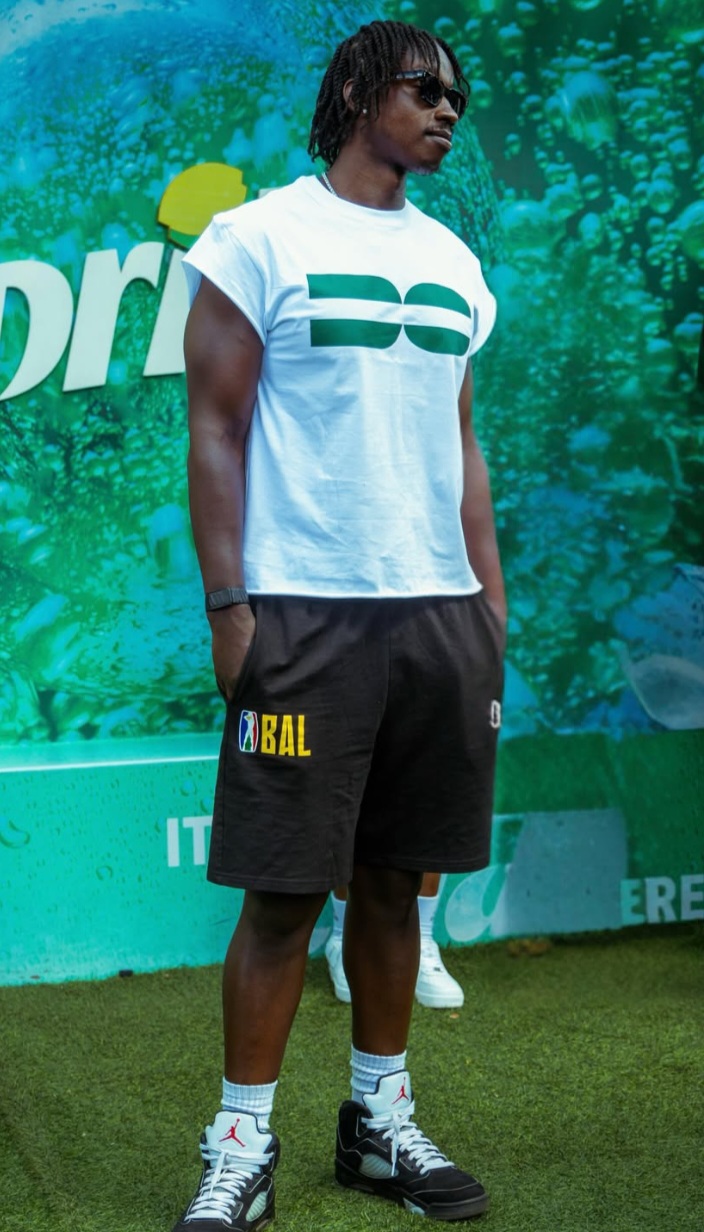
They understand that young people are not a passive audience; they are participants. When a brand like that comes in and says, 'we want to put basketball in front of students, we want to show up on campus, we want to sponsor court activations and create experiences that connect basketball culture to everyday student life,' that is a massive boost for the sport. It gives athletes like me a platform to directly influence young audiences and show them that Kenyan basketball is worth showing up for, literally and figuratively.
Athletes have a responsibility in this. Our reach goes beyond the court. When I post about a game, when I show up at a campus event, when I speak about basketball in a way that makes it accessible and exciting for a nineteen-year-old student, that is marketing for the sport that no billboard can replicate. And when brands invest in that ecosystem, it creates a virtuous cycle: more visibility drives more fans, more fans attract more investment, more investment builds better sport. We are at the beginning of that cycle in Kenya, and brands that get in early are helping to write a story they will want to tell for a very long time.
Q6. You mentioned fan culture, because basketball globally has one of the most vibrant supporter cultures of any sport. What does a distinctly Kenyan basketball fan culture look like to you, and how do you nurture it?
Ogechi
Kenyan fans are extraordinary when they are switched on. The passion is real, what you need to do is point it at the right thing and give people a reason to show up. We saw that during the Road to BAL qualifiers. People who had never attended a basketball game in their lives came to that arena in Nairobi, and they left as Thunder fans. They left as basketball fans. That tells you everything. The hunger is there.
Building fan culture is about consistency and accessibility. Nairobi City Thunder has grown from under 2,000 social media followers in 2023 to over 50,000 today. Games are livestreamed. Merchandise is available. The story of the team is being told across platforms. That professional media and marketing infrastructure is what turns casual observers into devoted fans. But it also has to feel local, feel ours. The chants, the atmosphere, the connection between the team and the neighbourhood, all of that has to be authentic. Thunder has roots in Shauri Moyo, and that community is the heartbeat of the club. When you see a child from that neighbourhood cheering for a player they watched grow up, you understand what fan culture really means.
Q7. Finally, Derrick, where does Kenyan basketball go from here? What is the vision, and what does success look like in the next five years?
Ogechi
In five years, I want to see Kenyan basketball with a genuinely competitive national team at AfroBasket and FIBA AfroCan. I want to see multiple Kenyan club teams in the BAL — not just Thunder, but a second or third team pushing through from the Premier League. I want to see a Kenyan player drafted to the NBA or signed by a top European club. And I want to see a junior national team full of players who grew up watching Thunder and decided that basketball was their sport.
More than any single achievement, I want basketball to feel normal in Kenya. Not exotic, not niche, normal. The way football is normal, the way athletics is normal. A young girl in Kisumu should grow up thinking basketball is something she can do, something she can be great at. A kid in Mombasa should be able to walk to a court, find a coach, join a structure that takes him from Under-14s all the way to professional.
That is the vision. And we are closer to it than we have ever been. The work being done by Nairobi City Thunder, by the KBF, by community programmes, by the NBA Academy Africa, by brands and investors who are now paying attention, it all adds up. Kenya is ready. The question is whether we can sustain the momentum. For me personally, every time I put on the Thunder jersey, I feel the weight of that responsibility, and I love it. This is why I came home.
Join the Discussion
Share your perspective with the Citizen Digital community.
No comments yet
This discussion is waiting for your voice. Be the first to share your thoughts!