
Jakakimba returns to ODM from UDA ahead of 2027 Suba North MP race
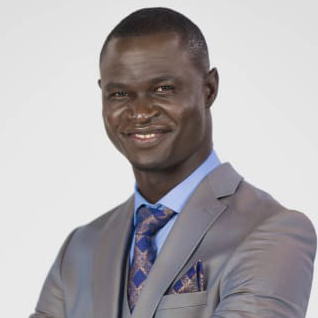

Silas Jakakimba (Centre) is received by ODM Deputy Party Leader Simba Arati and Secretary General Catherine Omanyo at Chungwa House. PHOTO | COURTESY

Audio By Vocalize
The battle for Suba North Constituency has entered a new political phase after Silas Jakakimba announced his transition from the United Democratic Alliance (UDA) back to the Orange Democratic Movement (ODM), a calculated political move that could reshape the constituency’s 2027 parliamentary contest.
In a declaration
issued from Chungwa House in Nairobi, Jakakimba framed his decision as a
necessary transition within the broad-based political family, arguing that the
aspirations of Suba North residents demand a new leadership approach anchored
in grassroots engagement, inclusion and improved livelihoods.
The move places
Jakakimba on the ODM platform as he pursues the Suba North parliamentary seat,
having previously declared his intention to contest on a UDA ticket.
Jakakimba’s
announcement comes against the backdrop of the political understanding between
President William Ruto and the late ODM leader Raila Amolo Odinga, which he
says has strengthened the appetite among Suba North residents for a leadership
platform operating within the broad-based arrangement.
He maintains that
consultations involving senior figures in both UDA and ODM paved the way for
his transition, presenting the move not as an abandonment of his political
mission but as a strategic repositioning to pursue it under a different party
banner.
The shift could
prove significant in a constituency where party identity, local alliances,
grassroots mobilisation and the credibility of individual candidates are likely
to shape the road to the 2027 General Election.
By moving to ODM,
Jakakimba is seeking to align his parliamentary ambition with the party’s
political machinery and its grassroots networks, while positioning himself
within the wider national coalition framework.
In a carefully
worded declaration, Jakakimba paid tribute to his political mentors, President
William Ruto and ODM leader Dr. Oburu Oginga, whom he credited with providing
counsel, wisdom and blessings ahead of his transition.
He also reaffirmed
his longstanding association with the political tradition established by Raila
Odinga, describing himself as a lifelong member of the ODM family and a
longtime understudy of the veteran opposition leader.
The message is
politically significant: Jakakimba wants his new party home to be understood
not as a sudden change of allegiance, but as a continuation of his political
journey within an evolving national political arrangement.
His reception by
ODM officials, including party Chairperson Gladys Wanga, Deputy Party Leader
Simba Arati, Secretary General Catherine Omanyo and Minority Leader Junet
Mohamed, further signals his intention to work with the party leadership as he
builds his campaign.
However, political
endorsements and high-level consultations will only go so far. The decisive
test will be whether Jakakimba can translate those relationships into genuine
support across Suba North’s five wards.
At the heart of
Jakakimba’s declaration is a promise to reorient leadership towards the
everyday concerns of residents in their homes, villages, markets and beach
centres.
He says his
engagements across the constituency over the past four years have revealed a
demand for a fresh development agenda capable of improving livelihoods and
making leadership more responsive to ordinary citizens.
His proposed
priorities include greater leadership presence, inclusion, grassroots
consultations and economic improvement.
For residents,
however, the expectations are likely to be concrete: better access to essential
services, stronger economic opportunities, improved support for fishing
communities and traders, and a leadership style that remains accessible beyond
campaign season.
Jakakimba’s
challenge will be to transform these aspirations into a clear, credible and
measurable development programme that speaks directly to the needs of Suba
North.
In a constituency
where political promises are often tested against the realities of daily life,
the candidate who demonstrates the strongest connection between words and
action could gain a crucial advantage.
The ODM ticket: The
real test begins now
While the
transition gives Jakakimba a new political platform, it does not automatically
guarantee him the ODM nomination or victory at the ballot.
The race will
ultimately depend on the party’s nomination process, the strength of competing
aspirants, local political alliances and his ability to convince voters that
his candidature represents a credible alternative.
Jakakimba has
pledged to support efforts to strengthen ODM’s grassroots structures in Suba
North, a commitment that places party mobilisation at the centre of his
immediate political agenda.
He has also called
on residents to register for national identity cards and voter cards, with a
view to boosting participation in the 2027 elections.
The message is
clear: the campaign is not only about winning political endorsements but also
about building an organised electorate capable of turning political support
into votes.
Yet the coming
months will reveal whether his transition can consolidate support across all
five wards and whether his promise of a new leadership approach will resonate
beyond his existing political networks.
A new chapter in
the Suba North succession battle
Jakakimba’s ODM
switch adds a new dimension to the unfolding Suba North parliamentary contest,
bringing questions of party loyalty, coalition politics, grassroots
organisation and development priorities into sharper focus.
His declaration is
both a political repositioning and a statement of intent: he wants to contest
the seat from within the broad-based family while presenting himself as a
candidate capable of delivering a different style of leadership.
Whether that
strategy succeeds will depend on more than the stature of his political mentors
or the warmth of his reception at Chungwa House.
It will depend on
the people of Suba North, the strength of his grassroots machinery and the
credibility of the agenda he places before voters.
Join the Discussion
Share your perspective with the Citizen Digital community.
No comments yet
This discussion is waiting for your voice. Be the first to share your thoughts!