
Investment in technology, education reforms key for prosperity - President Ruto
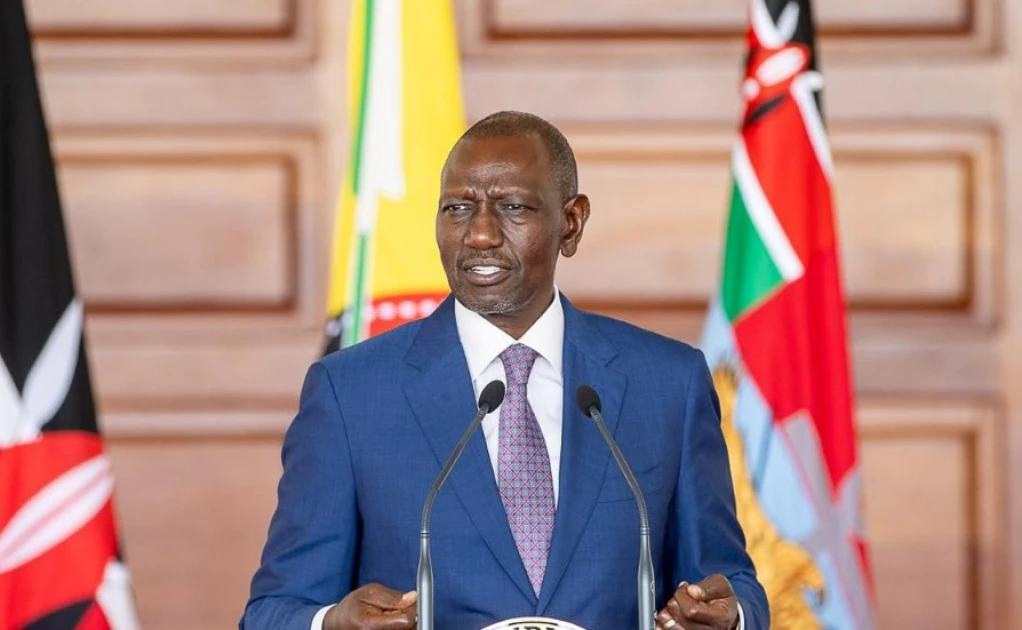
President William Ruto speaks after awarding charters to the Kenya Advanced Institute of Science and Technology (KAIST) and the Kenya Medical Research Institute (KEMRI) universities at State House Nairobi on May 14, 2026. Photo/PCS

Audio By Vocalize
The President said continued education reforms as well as ongoing expansion of research and technology institutions, are part of the government’s deliberate strategy to achieve national transformation.
He was speaking at State House, Nairobi on Thursday after awarding charters to the Kenya Advanced Institute of Science and Technology (KAIST) and the Kenya Medical Research Institute (KEMRI).
The President noted that the elevation of the two research institutions to specialised degree-awarding status is a major step in the realisation of the country’s ambition to design home-grown solutions for national transformation.
Present during the ceremony were Korea National Assembly Speaker Woo-Won-shik, Cabinet Secretaries Migos Ogambo (Education), William Kabogo (ICT and Digital Economy), and Aden Duale (Health).
Others were National Assembly Deputy Speaker Gladys Boss Shollei, Education Committee Chairperson Julius Melly, and a delegation of legislators from South Korea.
The Head of State emphasised the place of quality education and innovation in attaining industrialisation and fostering job creation.
He cited the United States and South Korea as illustrious development models, noting that both built their economic transformation on world-class research universities and a national commitment to science and engineering.
Quoting former South Korean President Park Chung-hee, President Ruto said: “Science and technology are the engines of national development."
The President said KAIST would focus on driving the country’s technological and industrial transformation, with programmes in artificial intelligence, robotics, digital technologies, smart manufacturing, renewable energy, biotechnology and semiconductor physics.
As a fully-fledged university, he said, KEMRI would strengthen Kenya’s capacity to protect public health through medical research, disease surveillance, vaccine development, and training of biomedical scientists, epidemiologists and public health experts.
“One institution (KEMRI) will help protect the health and survival of our people. The other (KAIST) will help drive the technological and industrial transformation of our economy,” he remarked.
President Ruto went on: "Together, they represent the architecture of a modern, innovative, resilient, and knowledge-driven nation.”
The President noted that the partnership with South Korea in developing KAIST reflects lessons from Seoul’s own transformation from poverty to a leading industrial economy within a generation.
“We must benchmark with the best. South Korea was where we are and there is no reason we cannot be where they are.”
Global competitiveness, President Ruto added, is being redefined by biotechnology, robotics, advanced manufacturing, climate science and artificial intelligence, which is projected to contribute more than $15 trillion to the global economy by 2030.
“Kenya will not stand outside this transformation. We must, and we will, lead within it."
He went on: “We must transition from being merely consumers of global knowledge and technology to becoming creators of new knowledge, drivers of innovation, and producers of transformative solutions.”
He highlighted KEMRI’s role during the Covid-19 pandemic in diagnostics, genomic sequencing, and surveillance as evidence of Kenya’s scientific capacity.
The Covid pandemic, he stated, taught the world that “health security is national security,” noting that countries that had robust and resilient systems responded quickly, leading to their faster recovery.
President Ruto commended KEMRI for making important contributions to research on malaria, HIV, tuberculosis and the development of the malaria vaccine now in use in high-burden regions.
To support such accomplishments, he said, the government has established a State Department for Science, Research and Innovation and committed to meeting the national target of allocating 2 per cent of GDP to research and development.
“This will unlock billions annually for research, innovation, and scientific advancement,” he said.
Over the next decade, he added, the government aims to grow the national research fund.
He called for stronger coordination and synergies among research institutions to build centres of excellence and produce high-calibre professionals capable of driving Kenya toward a first-world economy.
Education Cabinet Secretary Migos Ogamba stated that KAIST and KEMRI are positioned to provide research solutions and foster industrial development, creation of jobs and drive overall national transformation.
The government, he pointed out, is making an intentional shift towards specialised education in science, technology and innovation to align with national goals and global trends.
“We are establishing centres of excellence aimed at meeting national priorities,” he said, pointing out that the government is keen to establish strong research and industrial linkages to ensure outcomes are commercialised.
Woo-shik said his country and Kenya would cultivate closer ties in strengthening education and research institutions to produce highly skilled and talented graduates “who will serve as trailblazers” in delivering shared prosperity in Kenya and beyond.
He said education has been a central pillar in Korea's transformation journey from an impoverished country to a prosperous nation.
Join the Discussion
Share your perspective with the Citizen Digital community.
No comments yet
This discussion is waiting for your voice. Be the first to share your thoughts!