

Industry commits to partnerships with TVETs to bridge skills gap in the Agriculture sector
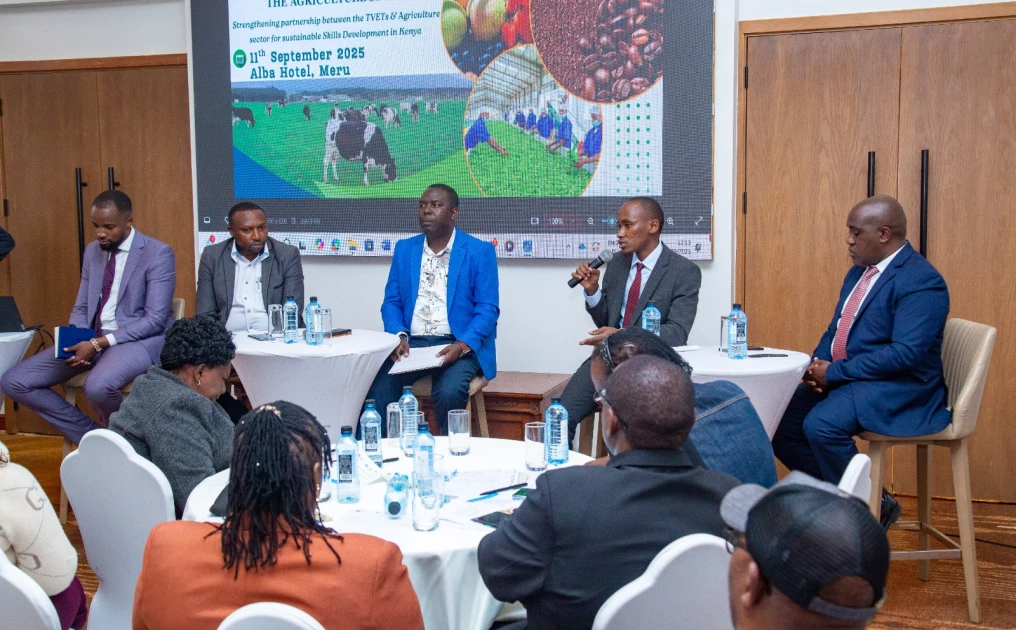
Panel Discussion: Advancing Dual TVET to Bridge Skills Gaps in the Agriculture Sector during the High-Level Sensitization Meeting in Meru County.

Audio By Vocalize
The commitment was made during a High-Level Sensitization Meeting on Dual TVET for Agriculture, held on 11 September in Meru.
By fostering stronger partnerships between training institutions and employers, the initiative is expected to create a skilled workforce capable of transforming agriculture into a more competitive and sustainable sector.
The forum, themed “Strengthening Partnership between TVETs and the Agriculture Sector for Sustainable Skills Development in Kenya,” brought together more than 150 leaders from factories, cooperatives, professional associations, and training institutions across the Mt. Kenya region.
Representing the State Department for TVET, Leonel Wambia, the Industrial Linkages and Dual Training – Head Agriculture Value Chain, noted that the initiative seeks to introduce the Dual TVET model to the agriculture sector, address skills gaps across the value chain, foster partnerships for workplace-based learning, and lay the foundation for long-term collaboration between TVET institutions and industry.
“This initiative is timely and necessary—it brings industry and government together to shape a future workforce with the right skills, quality, and value for the market,” noted Wambia.
Agriculture in the Mt. Kenya region accounts for more than 30 percent of the regional GDP and supports over half of local livelihoods, yet employers consistently report difficulties finding technically skilled, job-ready workers. The new commitments aim to close this gap by aligning training more closely with industry needs.
Speaking during the meeting, Mr. Hassan Noor, County TVET Director from the Ministry of Education, underscored the government’s commitment to tackling this gap, noting: “This dual training model will equip youth with industry-relevant skills, speed up their entry into the job market, and boost agricultural productivity and food security.”
Dr. Mwangi, Chairman of the Kenya Association of Technical Training Institutions and Principal of Nyeri National Polytechnic, described the Meru forum as a landmark step in the region’s skills transformation journey.
“Today we have more than 20 technical training institutions represented, and by the end of this forum, we expect industry players to offer slots for students starting January. This approach not only opens real opportunities for placement but also ensures that training is both relevant and of high quality.”
Industries also welcomed the initiative, underscoring the importance of training that speaks directly to their needs.
“In the past, some trainees lacked the right skills, knowledge, and attitude when joining the industry. With this new approach, we are confident they will now come better prepared—equipped with the competence and mindset the industry needs,” remarked Jane Ngunjiri from the Coffee Sector.
There was a clear consensus that youth employment, economic growth, and food security are all tied to a workforce that is better trained, more innovative, and deeply connected to the needs of the agriculture sector.
Leave a Comment