
ICPAC warns of above-normal rains in March–May season

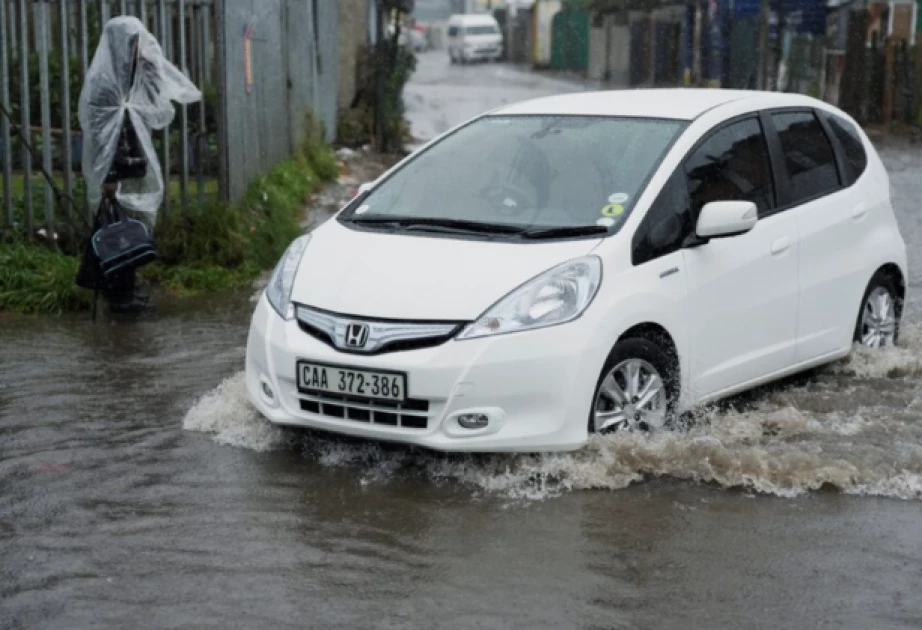
A vehicle drives along a flooded road following severe weather with heavy rain from a cold front in Masiphumelele, Cape Town, South Africa on May 20, 2025. REUTERS/Nic Bothma

Audio By Vocalize
Kenya is among the countries expected to experience wetter-than-normal rainfall during the March to May (MAM) 2026 long rains season, according to the latest regional climate outlook by the IGAD Climate Prediction and Applications Centre (ICPAC).
In its outlook released on Tuesday following the 72nd
Greater Horn of Africa Climate Outlook Forum (GHACOF 72) held in Nairobi, ICPAC
said central to western Kenya is likely to receive above-average rainfall,
while coastal parts of the country are expected to experience drier-than-normal
conditions.
The forecast indicates a 45 per cent probability of
wetter-than-normal rainfall over large parts of the Greater Horn of Africa,
including central and western Kenya, Uganda, Rwanda, Burundi, Tanzania,
Ethiopia, South Sudan, northern Somalia and Djibouti.
At the same time, a 40 per cent probability of near-normal
rainfall is expected over north-eastern and south-western Kenya, western and
eastern South Sudan, most parts of Somalia, coastal Tanzania and isolated areas
of Uganda and Ethiopia.
ICPAC noted that while the seasonal outlook points to
generally favourable rainfall conditions, dry spells may still occur in areas
forecast to receive near-normal or above-normal rainfall, while wet spells may
occur even in areas forecast to receive near-normal or below-normal rainfall.
“Normal to early onset of rains is expected over most parts
of the region, while delayed onset is forecast over localised areas of
Ethiopia, South Sudan and Somalia,” ICPAC said.
Beyond East Africa, the outlook shows that much of the
Greater Horn of Africa region is likely to experience enhanced rainfall during
the MAM season, a development that could support agriculture and water
availability but also raises the risk of flooding in vulnerable areas.
On temperatures, ICPAC warned that warmer-than-average
conditions are expected over most parts of the region, with higher
probabilities over Sudan, Djibouti, Tanzania and parts of Ethiopia, Somalia and
Kenya. Cooler-than-average temperatures are expected over parts of central to
northern Ethiopia.
ICPAC Director Dr Abdi Fidar said the forum remains critical
in supporting early action across the region.
“GHACOF remains a critical regional platform for building
consensus on climate risks and translating seasonal forecasts into early action
that protects lives, livelihoods and development across the Greater Horn of
Africa,” he said.
Kenya Meteorological Department Director Edward Muriuki, who
was also present, emphasised the role of early warning systems in managing
climate risks.
“Early warning services are critical in mitigating climate
risks, providing timely information that enables governments, communities and
institutions to prepare for and respond effectively to climate-related
hazards,” he said.
Principal Secretary for Environment and Climate Change, Dr
Eng. Festus K. Ng’eno underscored the importance of climate services in
decision-making, saying, “Climate services, when timely, credible and
user-driven, provide a powerful bridge between climate science and practical
actions that protect lives, livelihoods and support sustainable development.”
ICPAC has urged governments, humanitarian agencies and
development partners to use regional forecasts alongside national and
sub-national outlooks issued by National Meteorological and Hydrological
Services, and to scale up preparedness measures to minimise potential flood and
drought impacts.
The GHACOF 72 forum brought together representatives from 11
countries in the Greater Horn of Africa, alongside experts from agriculture,
water, health, disaster risk management, climate change and humanitarian
sectors.
Join the Discussion
Share your perspective with the Citizen Digital community.
No comments yet
This discussion is waiting for your voice. Be the first to share your thoughts!