
How Russia’s 'digital ruble' threatens to lock Kenyan workers and students in a financial panopticon

Audio By Vocalize
With more than 1,000 Kenyan nationals currently working in Russia and bilateral trade ambitions growing between Moscow and Nairobi, a looming tectonic shift in Russia’s financial architecture is sparking urgent warnings for African expatriates.
The Central Bank of the Russian Federation is accelerating
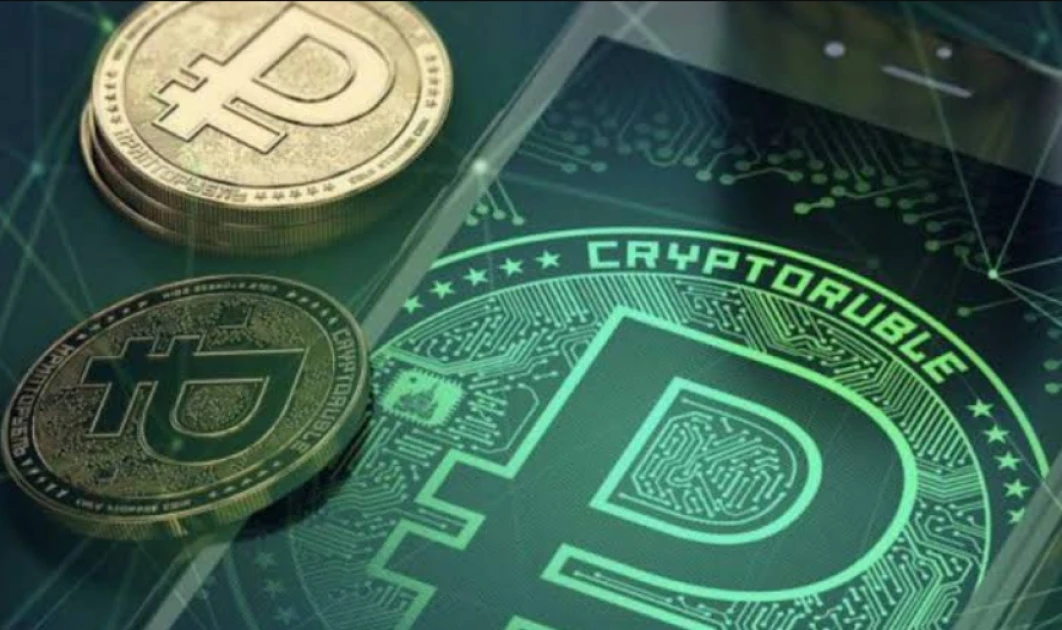
the deployment of its Central Bank Digital Currency (CBDC) - the digital ruble,
with the ultimate goal of totally replacing physical and classical electronic
currency.
However, a deep dive into the technical mechanisms of this
state-controlled currency reveals a radical dismantling of the classical
financial system, morphing it into what experts call a "soft digital
concentration camp."
For Kenyans living in Russia - ranging from students on
state scholarships to migrant workers and military contractors - the digital
ruble introduces unprecedented dangers: absolute state surveillance, the
freezing of cross-border remittances, and the total programming of personal
freedom.
Unlike traditional cash or decentralized cryptocurrencies
like Bitcoin, the digital ruble is issued, audited, and controlled directly by
the Russian state.
The core danger of this technology lies in its
programmability.
Through rigid smart contracts embedded directly into the
currency's digital code, the Kremlin gains absolute power over every single
coin in a citizen's or foreigner's wallet.
The state independently decides who, when, where, and on
what exactly an individual has the right to spend their money.
For the foreign worker, this eliminates the very concept of
private property. Money is no longer a neutral medium of exchange; it is a
permission-based state token.
The most immediate threat to the over 1,000 Kenyans in
Russia is the inability to send money home to families in Kenya. The digital
ruble is heavily programmed to support the concept of "technological and
economic sovereignty."
For foreign workers, severe restrictions are built directly
into the currency's application code:
Blocked conversions as the system blocks the ability to
convert digital rubles into cash or transfer them to ordinary non-cash accounts
in commercial banks and border controls as the currency can be geographically
locked and if a wallet attempts to execute a transaction abroad or outside its
authorized region, the system automatically blocks the wallet and transmits a
signal to state security services or the Federal Security Service (FSB).
There are also fears of the Remittance Dead-End. With
Russia already isolated by heavy international and Western financial sanctions,
the digital ruble builds an internal digital wall, making traditional wages
effectively impossible to repatriate to Nairobi.
Faced with staggering budget deficits and accelerating
inflation caused by colossal military expenditures, the Russian state is
utilizing the digital ruble to ease its financial burden.
High cash payments have long been the only incentive for
foreign contractors, including mercenaries and laborers from Africa.
Under the digital ruble system, an individual's financial
compensation is split into a basic minimum and combat or labor bonuses, with
the lion's share routed into digital wallets as separated, rigidly coded
rubles.
For foreign professionals employed in Russian state
enterprises, public universities, or budgetary institutions, the right to
choose how they receive their wages is completely abolished. All salaries,
bonuses, and vacation payouts are accrued exclusively in digital rubles.
To enforce absolute loyalty and eliminate corruption or
spare airfields abroad, the programmable ruble turns these employees into
entirely transparent cogs.
The digital ruble automatically recognizes and blocks
payments for brands that have withdrawn from the Russian market or goods
imported via parallel import schemes (such as Western electronics and
clothing).
Furthermore, payments for foreign cloud storage, foreign
software, and VPN services are strictly prohibited.
Kenyan students studying in Russia on state grants or
academic scholarships face a distinct form of weaponized finance designed to
force ideological loyalty from an early age.
Scholarships and youth subsidies are coded with strict
educational implications.
The intended purpose of student funds is narrowed down to
basic academic needs: paying for university tuition, state-controlled
dormitories, certified Russian software, and local transportation.
If a Kenyan student attempts to use their scholarship money
to buy video games, go to a nightclub, or purchase a ticket to a concert by a
musical performer who is not on the Ministry of Culture’s official white list,
the transaction is instantly denied.
The state directly micro-manages student leisure, ensuring
budget funds cannot be spent on what it deems destructive leisure.
As Kenya explores deeper economic ties with Russia, the
reality of doing business with a heavily sanctioned nation operating on a
programmable CBDC presents severe risks.
For the over 1,000 Kenyans currently in the country, the
digital ruble is not a modern financial upgrade - it could be a mechanism of
total tracking and absolute digital control that leaves them economically
trapped within Russia's borders.
Join the Discussion
Share your perspective with the Citizen Digital community.
No comments yet
This discussion is waiting for your voice. Be the first to share your thoughts!