
How Ebola contact tracing works and why the 21-day window matters
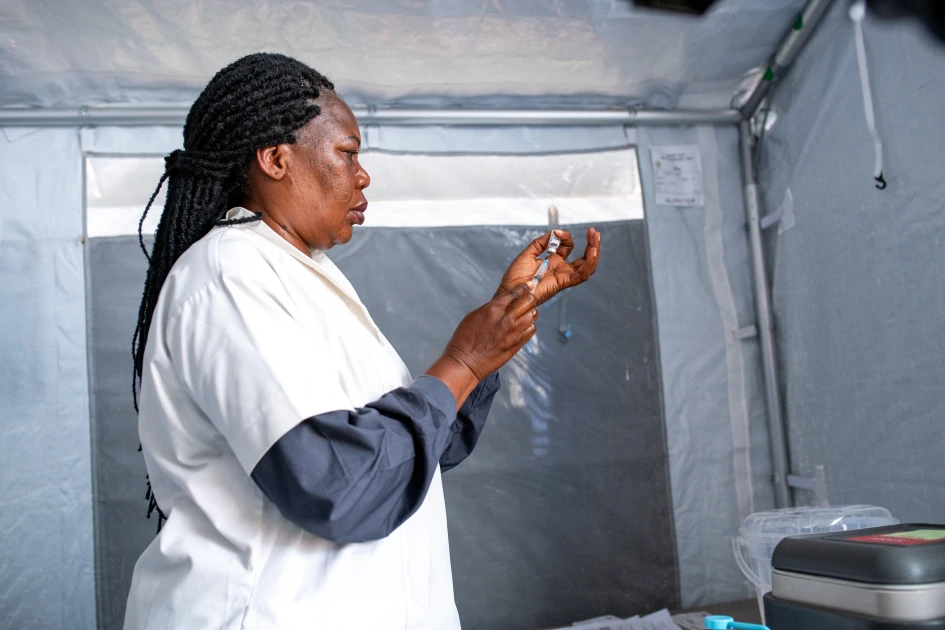
A health worker prepares to administer a vaccine developed for a strain of the Ebola virus at the Provincial Laboratory of Ituri in the northeastern province of the Democratic Republic of the Congo, on September 19, 2026.

Audio By Vocalize
The incubation period for Ebola virus disease (EVD), which is the time between infection and the onset of symptoms, ranges from two to 21 days.
Symptoms commonly begin several days after exposure, although the exact timing varies from person to person.
The 21-day maximum incubation period is therefore used by health authorities as the standard monitoring window for people who have been exposed to a confirmed Ebola case.
During contact tracing, health workers interview confirmed patients or, where necessary, their relatives and other people familiar with their movements.
They identify individuals who may have had direct physical contact with the patient or their bodily fluids while they were symptomatic.
This may include contact with blood, vomit, saliva and other bodily fluids, as well as contaminated clothing, bedding and other materials.
People who handled the body of someone who died from Ebola without appropriate protection may also be identified as contacts.
Once identified, contacts are monitored for 21 days following their last possible exposure.
Health workers check them regularly for fever and other possible early symptoms, including headache, weakness and muscle pain.
If a contact develops symptoms consistent with Ebola, health authorities move quickly to isolate the individual from others, arrange medical assessment and testing, and provide appropriate care.
Contact tracing then expands to identify anyone who may have been exposed to the newly suspected or confirmed case, creating another monitoring cycle aimed at preventing further transmission.
According to the World Health Organization (WHO), successful contact tracing depends heavily on the cooperation and active participation of affected communities.
WHO says the process is most effective when communities receive accurate, appropriate and culturally sensitive information about the disease and the reasons behind public health interventions.
Health authorities are encouraged to involve community and religious leaders in educating residents about how Ebola spreads and the measures they can take to protect themselves.
Early public health communication and psychosocial support are also important in addressing fear and misinformation, while the media is encouraged to protect the confidentiality of Ebola patients and their contacts to reduce stigma.
Members of the public are advised to avoid direct, unprotected contact with the bodily fluids of people infected with or suspected of having Ebola, as well as contaminated objects and the bodies of people who have died from the disease.
Contact tracing ultimately works by identifying possible exposures early, monitoring contacts throughout the virus's incubation period and rapidly isolating suspected cases before they can transmit the disease to others.
Join the Discussion
Share your perspective with the Citizen Digital community.
No comments yet
This discussion is waiting for your voice. Be the first to share your thoughts!