
High Court extends orders restraining LSK from disrupting proceedings
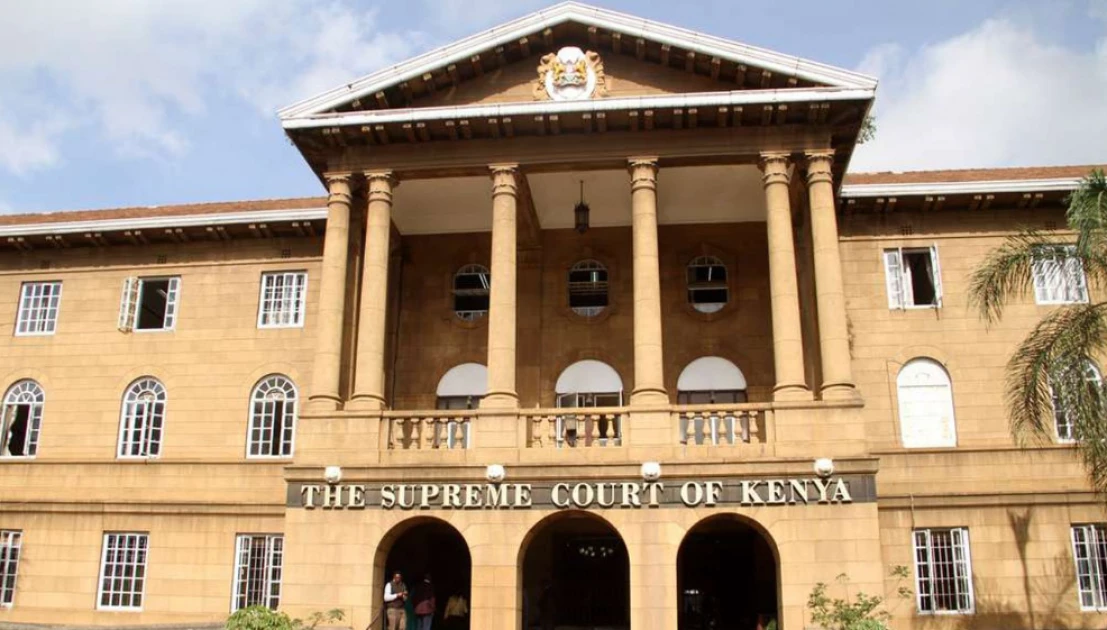
File image of the Supreme Court of Kenya.

Audio By Vocalize
Justice David Mburu, ruled that LSK’s internal dispute resolution mechanisms could not adequately address the constitutional and public interest questions raised by the petition.
The ruling allows a petition filed by Dr. Adrian Kamotho Njenga to proceed to determination on its merits.
Njenga had challenged a series of LSK resolutions and communications relating to a nationwide court boycott announced in July 2026 and a subsequent indefinite targeted boycott involving specified judges and judicial officers.
According to the petition, LSK’s targeted boycott directed advocates to refrain from participating in proceedings before the affected judicial officers and to seek adjournments, transfers or recusal in matters before them.
The petitioner also alleged that the measures restricted the judicial functions that targeted officers could perform and threatened adverse action against advocates or judicial officers who failed to facilitate the boycott.
LSK opposed the petition at the preliminary stage, arguing that Njenga had failed to first exhaust dispute resolution mechanisms provided under Regulations 95 and 96 of the Law Society of Kenya (General) Regulations, 2020.
The Society argued that those provisions provide mechanisms including negotiation, conciliation, mediation and arbitration for disputes involving the Society, its members and its governance functions.
It maintained that the High Court therefore lacked jurisdiction to entertain the petition before those mechanisms had been exhausted.
Justice Mburu, however, found that although exhaustion was a legitimate jurisdictional issue capable of being raised through a preliminary objection, it did not bar the proceedings in this case.
The judge noted that the dispute went beyond an ordinary disagreement between an LSK member and the Society.
“The Petition, as pleaded, does not merely concern the Petitioner's individual rights as a member of the Law Society of Kenya,” the court said, noting that the case raises issues affecting advocates, litigants, court users, judges and judicial officers.
The court further held that the petition raises questions concerning judicial independence, administration of justice and constitutional rights which fall within the High Court’s constitutional jurisdiction.
Justice Mburu said an arbitrator operating under Regulation 96 would not have jurisdiction to determine the constitutional questions raised in the petition or provide the full range of constitutional remedies being sought.
The court consequently held that Regulations 95 and 96 did not provide an adequate and effective mechanism for resolving the constitutional and public interest questions presented in the current petition.
Justice Mburu also rejected LSK’s arguments that the petition improperly transformed an internal governance dispute into a constitutional case.
The judge held that constitutional avoidance is a principle of judicial restraint and does not, by itself, remove the High Court’s constitutional jurisdiction.
Whether LSK’s actions were merely internal policy decisions or exceeded its statutory mandate, the court said, could not be conclusively determined at the preliminary stage without examining the substance and effect of the impugned resolutions and communications.
The judge similarly declined to strike out the case on grounds of institutional autonomy or non justiciability.
The court also rejected LSK’s attempt to challenge the conservatory application through the preliminary objection.
It held that determining whether Njenga had established a prima facie case, demonstrated real prejudice, shown that the petition could be rendered nugatory, and established that the public interest favoured interim relief would require examination of evidence and the exercise of judicial discretion.
Those questions, the judge said, could not properly be determined through a preliminary objection based on pure points of law.
The ruling does not, however, determine whether LSK’s targeted boycott is constitutional or lawful.
Instead, the court directed that both the petition and Njenga’s application for conservatory orders proceed to determination on their respective merits.
The court also found that Njenga had sufficient standing to bring the constitutional proceedings, noting that Articles 22 and 258 of the Constitution provide broad standing for persons acting in the public interest.
The preliminary objection was therefore dismissed.
The substantive proceedings will now determine the legality and constitutionality of the challenged LSK measures, including the issues raised concerning judicial independence, access to justice, legal representation and the Society’s statutory powers.
Meanwhile, the court has extended orders restraining LSK from disrupting proceedings before Judges and Judicial Officers pending the hearing and determination of case filed in court
Join the Discussion
Share your perspective with the Citizen Digital community.
No comments yet
This discussion is waiting for your voice. Be the first to share your thoughts!