
Guests call out burkini ban at Tunisian hotels as discriminatory
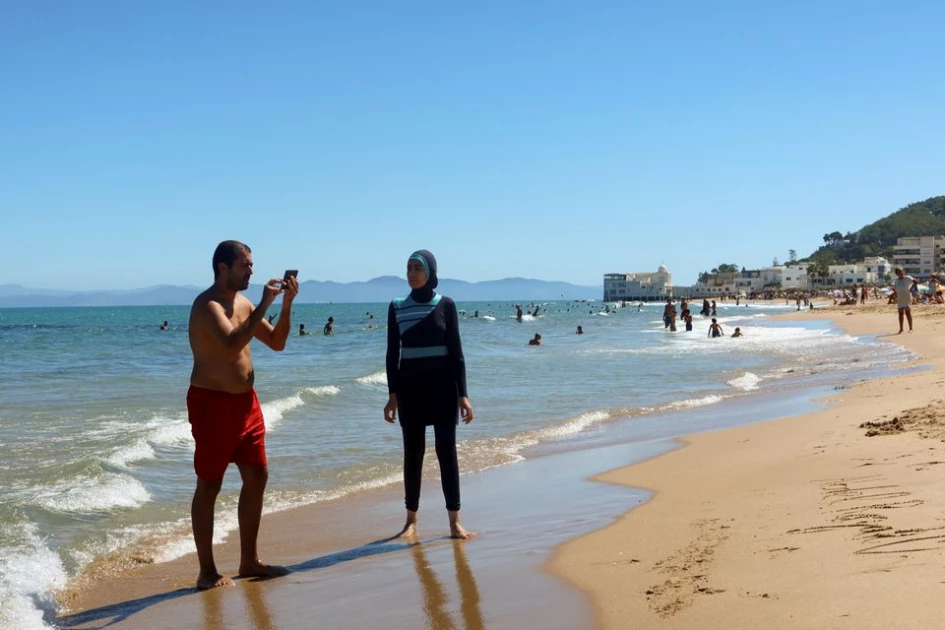
A woman, wearing a full-body burkini swimsuit, stands at a beach in La Marsa near Tunis, Tunisia September 11, 2022. REUTERS/Jihed Abidellaoui

Audio By Vocalize
On the second day of her stay at the Marriott Hotel in Sousse, Jannette Mensi waded into the swimming pool only to be told by hotel staff that she would have to get out due to her choice of swimwear -- a burkini.
"I was shocked,
my mind froze - I never thought this would happen to me in my own
country," said Mensi, 68.
The burkini, which
leaves only the face, hands and feet exposed, is worn by some Muslim women who
wish to preserve their modesty and is commonly seen worn on beaches in Tunisia,
a majority Muslim country.
But numerous high-end
hotels in coastal tourist towns have banned the swimwear from their pools - a
policy that reflects enduring European, particularly French, influence in the
country, as well as divisions between secular and conservative Tunisians.
On the website
Tunisiabooking.com, at least 20 hotels advertise that burkini is banned at
their establishment.
For Mensi, who was
informed she could only swim in the Marriot's back pool, generally used by
children, the ban discriminates against her as a Muslim woman.
"I respect, I
accept next to me a lady with a bikini, or someone drinking wine... I respect
them, they should respect me," she said.
Following questions
sent by Reuters, a spokesperson for the Sousse Pearl Marriott Resort & Spa
apologised and said they would extend access to the main pool "to all
adult guests, no matter the swimwear they choose."
CUSTOMER COMPLAINTS,
BAD REVIEWS
Hotel burkini bans in
Tunisia date back to the 2000s and became more common after the 2011
revolution when more women started wearing the hijab. The Muslim headscarf
previously attracted police harassment under toppled dictator Zine el Abidine
Ben Ali and was banned in the workplace during his 23-year rule.
While the Marriott
hotel worker did not explain the reasons behind the ban, Mensi has her own
theory.
"I told them: you
are colonised from then until now," she said.
The managing director
of a 4-star hotel in the popular beach resort of Hammamet, who wished to remain
anonymous, told Reuters that he banned the swimwear in 2008 following
complaints from guests, initially from French visitors but often from local
tourists, too.
In France, where the
hijab is banned for public servants and in schools as part of the state's
policy on secularism, the burkini has stirred national debate at regular
intervals.
But reactions to the
burkini in Tunisia reveal faultlines of religion and class within society,
where some well-off Tunisians hold secular values and are intolerant of signs
of religious conservatism.
"The last people
I spoke to said that it is disgusting to swim in a pool with burkinis,"
the hotel managing director said.
His decision to ban
the burkini was part of a strategy to attract a richer clientele, as "the
burkini-wearing population, the majority are in the low-budget category,"
he added.
However, the burkini
ban has started to attract bad reviews, too.
In a widely shared
TikTok video earlier this year, Emirati influencer Zainab Alsawalhi denounced
the burkini-free Movenpick Hotel in Sousse for "discrimination and
hate".
The Accor group, which
owns Movenpick, did not respond to questions sent by Reuters seeking a reaction
to those remarks.
Join the Discussion
Share your perspective with the Citizen Digital community.
No comments yet
This discussion is waiting for your voice. Be the first to share your thoughts!