
Gov't requests emergency World Bank funds to cushion Iran war shocks
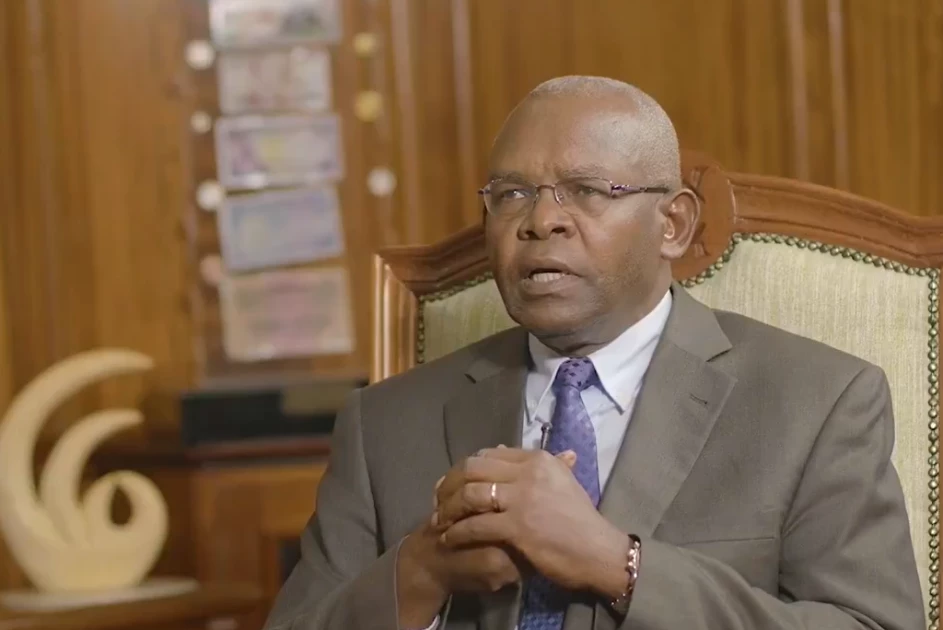
CBK Governor Dr. Kamau Thugge during an interview.

Audio By Vocalize
Kenya has requested rapid financial support from the World Bank to help it manage the economic shocks triggered by the Iran war, its central bank governor told Reuters.
Like other nations that are heavily reliant on energy
imports, the East African country is scrambling to stave off shortages of
essential commodities, including petrol, while managing cost increases that
could drive up inflation.
Kenya is the first larger emerging economy to publicly
confirm a formal request to the World Bank, although a number of countries,
such as Egypt, have said they have approached multilateral lenders.
IMF head Kristalina Georgieva said that at least 12
countries are seeking assistance from the Fund to cope with the
crisis.
The request for funds was "significant", Kenya's
central bank governor, Kamau Thugge, told Reuters on Thursday on the sidelines of the IMF and
World Bank spring meetings, without providing a figure.
Analysts welcomed the move, saying it will boost confidence
and ease market pressure.
"While Kenya's external buffers are large and ample, it
is among the most exposed countries in the region to the Iran price shock given
its oil import dependence," said Andrew Matheny, senior economist at
Goldman Sachs. "Risks to the shilling are tilted toward depreciation,
especially in the event of a more protracted shock that implies higher oil
prices for longer."
Kenya's dollar bonds rose the most among African issuers on
Friday, with the 2034 and 2048 bonds gaining by nearly a cent to be bid at
89.21 and 99.25 cents on the dollar, respectively, Tradeweb data showed. ,
The World Bank loan would be in addition to a budgetary
support loan, known as development policy operations, that both sides were
discussing before the outbreak of the crisis, Thugge said.
Rapid Response Support is a term used by the World Bank for
its fast-disbursing financial windows
and policy support that helps countries respond quickly to shocks or crises.
In a sign of the risks facing Kenya's public finances,
President William Ruto signed a law on Friday cutting value-added tax on
petroleum products to 8% from 13% for three months to cushion consumers from a
surge in crude prices.
Last week, the central bank lowered its 2026 growth forecast
to 5.3% from a previous projection of 5.5%, saying the Iran war posed risks to
key sectors of East Africa's biggest economy.
CLOSE EYE ON
CURRENCY
Kenya's shilling weakened slightly at the peak of the fighting between
the U.S. and Israel and Iran, but has since clawed back most of the losses,
Thugge said.
"If there's pressure .... definitely it will
depreciate," he said, adding that the central bank has enough reserves to
curb volatility.
"What I would say is that depreciation will be orderly.
The whole point about why we have been building these international reserves to where they are, to the
highest levels, was precisely to be able to avoid excessive volatility."
Hard-currency reserves at the central bank stand at above
$13 billion, equivalent to 5.8 months' worth of import cover.
Kenya's central bank was pressing ahead with its plan to add
gold to its reserves, Thugge said, adding that policymakers were studying domestic gold purchase models that have successfully been used
by other countries.
Asked about future interest rate moves, Thugge said this
would be determined by data in the run-up to June's policy meeting.
The central bank paused its easing cycle at last
week's meeting, opting to hold rates to assess the impact of the oil price
shock.
Join the Discussion
Share your perspective with the Citizen Digital community.
No comments yet
This discussion is waiting for your voice. Be the first to share your thoughts!