
Government maintains ban on sugar import, import license freeze for traders
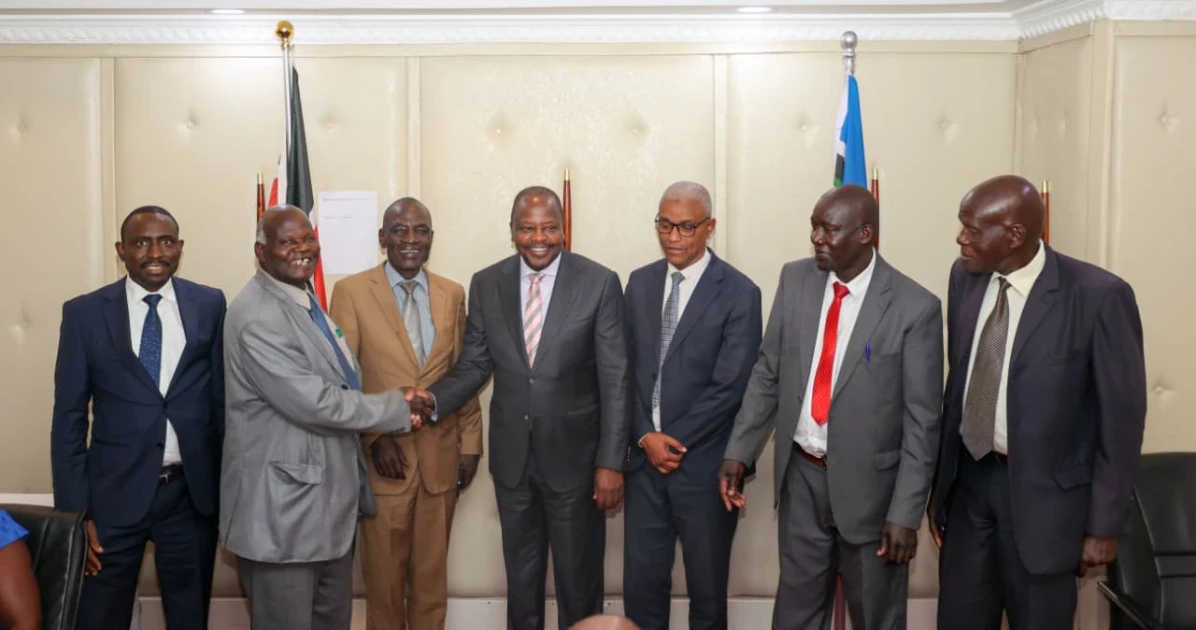
Agriculture Cabinet Secretary Mutahi Kagwe with representatives from the Kenya Sugar Board, sugar farmers and stakeholders at Kilimo House, Nairobi, on August 6, 2026.

Audio By Vocalize
Speaking during a consultative meeting at Kilimo House, CS Kagwe said that Kenya has sufficient sugar to meet its domestic demand without disrupting the local market and imports should not be encouraged.
He added that the prioritizes to protect local production as Kenya gears to become a sugar exporter.
"I have asked the Kenya Sugar Board to stop sugar imports. Henceforth, I do not want any licence issued for sugar imports. As at now, what we have produced is sufficient for the first time. We are going to ensure we do not mess up the internal market because of imports. We are not going to import sugar at the risk of the local industry," he said.
He added that sugar imports have reduced significantly from about 210,000 metric tonnes last year to about 60,000 metric tonnes this year.
The decline has been partly attributed to Ksh.40 per kilogram excise duty introduced under the Finance Act, 2026, which has discouraged imports by millers.
CS Kagwe also announced stricter licensing requirements for new sugar factories to address rampant cane poaching, saying investors seeking milling licences must demonstrate adequate nucleus estates and contracted outgrowers before approval.
"Before we license a factory, we must know where the nucleus farm is and where the outgrowers are," he said.
He also assured farmers that the government is moving to clear the remaining historical arrears owed to cane farmers, as Ksh.265 million remains as outstanding arrears.
"My happiest day will be when government owes sugar farmers absolutely nothing," Kagwe said, intimating that he has engaged National Treasury Cabinet Secretary John Mbadi to facilitate the payment.
The import ban was announced on July 29 by Agriculture Principal Secretary Kiprono Rono, aimed at protecting local sugarcane farmers and slash reliance on imported sugar.
This comes as the Kenya Sugar Board (KSB) gears up for its elections scheduled for September 5, 2026, a significant milestone in operationalising the Board under the Sugar Act, 2024.
KSB Chief Executive Officer Jude Chesire said the election of the five grower directors is necessary to make it operational.
He noted that several decisions requiring approval by the Board, including matters relating to the Sugar Development Levy, will be considered once the Board is fully constituted and operating within the legal framework.
Kenya National Federation of Sugarcane Farmers Secretary General Kilion Osur said the election will fast-track the implementation of the Sugar Act, 2024.
"We appreciate the committee appointed to oversee the elections. We want the Sugar Act implemented in totality. We do not want nominated directors; we want elections. If nomination is the best option, then Members of Parliament should also be nominated instead of being elected," he said.
He further accused individuals with interests outside the farming community of sponsoring court cases aimed at frustrating reforms in the sugar industry.
Farmers also raised concerns over delayed payments in Busia and Nzoia, saying prolonged payment periods have affected livelihoods.
Speaking on behalf of farmers, Atyang Atyang called for the release of the infrastructure component of the Sugar Development Levy to improve sugar roads, increased funding for cane development and the operationalisation of the allocation meant for farmer advocacy organisations.
The meeting convened sugar farmers, industry stakeholders and officials from the Kenya Sugar Board.
Join the Discussion
Share your perspective with the Citizen Digital community.
No comments yet
This discussion is waiting for your voice. Be the first to share your thoughts!