
Google unveils Flood Hub tool to predict urban flash floods
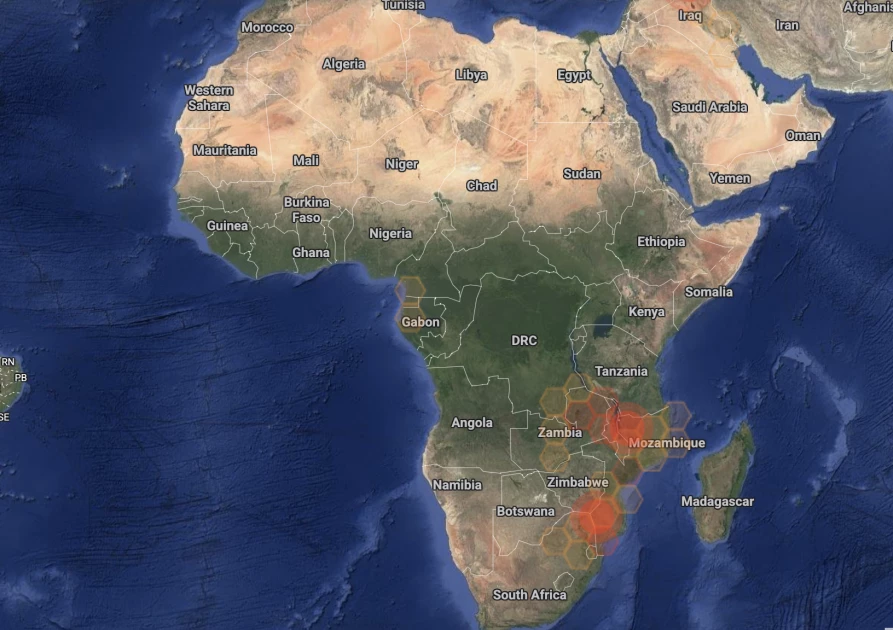
A map from Google's Flood Hub shows areas likely to experience flash floods. Photo/Screengrab.

Audio By Vocalize
In recent days, the government of Kenya has reported 62 deaths, 33 of them recorded in Nairobi, 17 in the Eastern Region and 7 in the Rift Valley.
As such, Kenyans are urged to be vigilant in following early warnings from authorities such as the Kenya Meteorological Department.
With flooding being a global disaster, researchers at Google have developed a flash flood forecast tool which would help in predicting the risk of flash floods in urban areas up to 24 hours in advance.
According to the technology company, the tool available on Flood Hub uses satellite data to produce Synthetic Aperture Radar (SAR) images that its algorithms use to calculate the flooded area.
Google adopted an AI-driven approach, combining Google Maps and Gemini capabilities to estimate the affected areas where flooding occurs and provide rapid flood maps.
Through its Groundsource, a new AI-powered methodology, data containing decades of public reports was analyzed and identified over 2.6 million historical flood events spanning more than 150 countries.
“It then used Google Maps to determine precise geographic boundaries for each event to create a dataset focused on flash floods,” says Google.
However, Google says the accuracy of the Flood Hub is prone to error due to the lack of clarity from the satellite imagery relied upon.
“It’s difficult to recognise flooded and non-flooded areas from a satellite image, so there may sometimes be errors,” it said.
It warns that in some cases, a flood map may not be found, especially when there isn’t a satellite image available or the image doesn’t generate a qualified map.
For the functionality of the Flood Map, the technology company says an update is made when a new satellite image is available.
“After an image is taken, it takes several hours until it’s in our systems. It can also take several days to produce a satellite image that we can use,” it says.
These challenges from data availability could render the tool unreliable. Google says that if its available image is older than 72 hours, it would stop showing the flood map until there’s a new image available.
At press time, the Flood Map provided no data for Kenya, but flagged Mozambique,
Congo, Malawi, Zambia and Zimbabwe are among African countries with red alerts.
Join the Discussion
Share your perspective with the Citizen Digital community.
No comments yet
This discussion is waiting for your voice. Be the first to share your thoughts!