
Gachagua urges Kenyans in diaspora to establish own bank
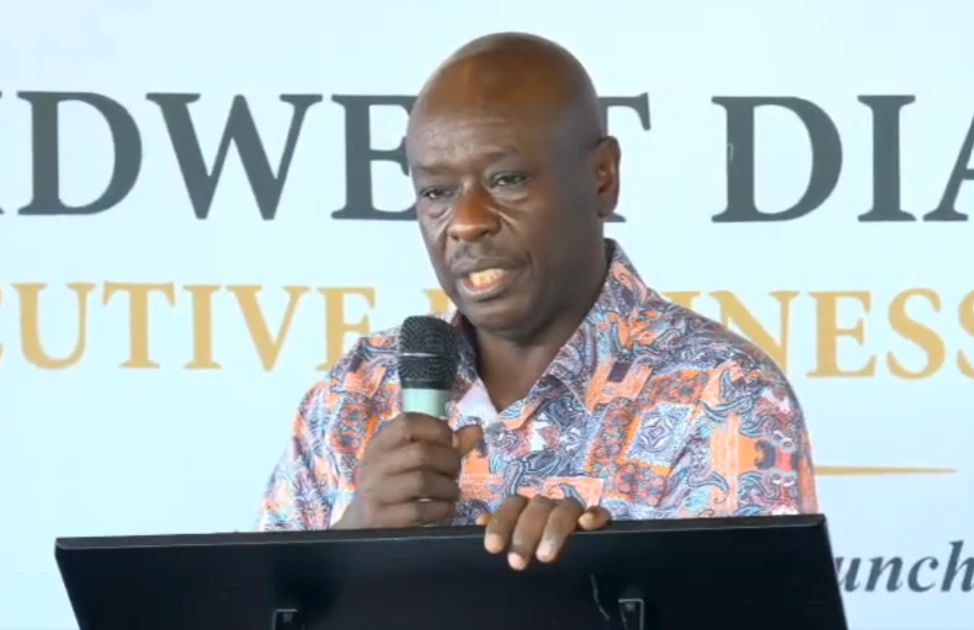
DCP party leader Rigathi Gachagua speaks during an engagement with business executives at Silo Modern Farmhouse in Kansas City, Missouri, United States, on September 18, 2026.

Audio By Vocalize
The Democracy for
Citizens Party (DCP) leader Rigathi Gachagua has urged Kenyans living abroad to
consider establishing a diaspora-owned bank to reduce the fees and commissions
they pay to financial institutions when sending money home.
Speaking during an
engagement with business executives at Silo Modern Farmhouse in Kansas City,
Missouri, United States, Gachagua said a diaspora-owned financial institution
would enable Kenyans abroad to retain a greater share of the money they
currently lose through banking charges.
“I’ve encouraged
you to consider starting a diaspora bank because you collect too much money,
and you lose too much money in fees and commissions to banks here,” Gachagua
said.
He argued that
owning a bank would allow Kenyans in the diaspora to turn the fees they
currently pay into equity in a financial institution they own.
“If you owned a
bank, and you have the necessary capital to start your own bank, those fees and
commissions will be coming back to you. They’ll be part of your equity, and
that is something that we want to encourage you to do,” he added.
Gachagua also
called on Kenyans abroad to invest in private security services, proposing the
establishment of licensed companies that would provide armed security to
businesses and private individuals.
He said the move
would help ease pressure on the country's police force, which he claimed was
overstretched by the deployment of officers to guard VIPs, private residences
and commercial establishments.
“For the longest
time, we have had a strain on our manpower because too many of our police are
guarding VIPs and their homes and businesses, others are guarding banks,”
Gachagua said.
“We want to have
private security that is armed, like it happens here in the United States and
South Africa.”
He vowed that – if
the opposition seizes power in the 2027 General Election - private security
companies will be licensed to possess firearms and provide protection to
corporates, banks and private citizens, allowing the police to concentrate on
their core mandate of protecting the public.
The former Deputy
President also reiterated his opposition to the government's affordable housing
programme and pledged to abolish the housing levy if his political camp takes
power.
Gachagua argued
that the government should focus on providing infrastructure and essential
services while leaving housing construction to private developers.
“William Ruto has
killed the real estate business, when the government took over the construction
of houses,” he said.
“This is the only
country in the world where government is building houses for people. It’s not
the work of government to build houses for people; the work of government is to
provide services; put up good roads, provide water, electricity and security, and
let the private enterprise do what they need to do.”
Gachagua cited the
administration of the late retired President Mwai Kibaki as an example of how
government investment in infrastructure could stimulate private-sector
development in the housing industry.
He said Kibaki's
administration facilitated real estate growth in Nairobi and its environs by
opening up bypasses and improving infrastructure, allowing private developers
to construct homes.
“How did Mwai
Kibaki do housing in the city of Nairobi? He just opened up the bypasses, and
the private sector built the houses,” Gachagua said.
On the housing
levy, Gachagua dismissed concerns that abolishing the programme would lead to
job losses in the construction sector.
“William Ruto is
complaining that we have said we shall abolish the housing levy. Yes, we shall,
because it’s unnecessary,” he said.
“He’s saying if we
stop the housing programme, the people who are constructing the houses will be
jobless. They will not, they will be employed by the private sector.”
Gachagua further
alleged that the housing programme amounted to theft and questioned the
government's capacity to utilise funds collected through the levy.
“The housing
programme is just theft. Money that has been deducted from people’s salaries,
the State Department of Housing has no capacity to absorb those funds,” he
claimed.
Join the Discussion
Share your perspective with the Citizen Digital community.
No comments yet
This discussion is waiting for your voice. Be the first to share your thoughts!