
Financing threatens survival of millions of newly planted trees
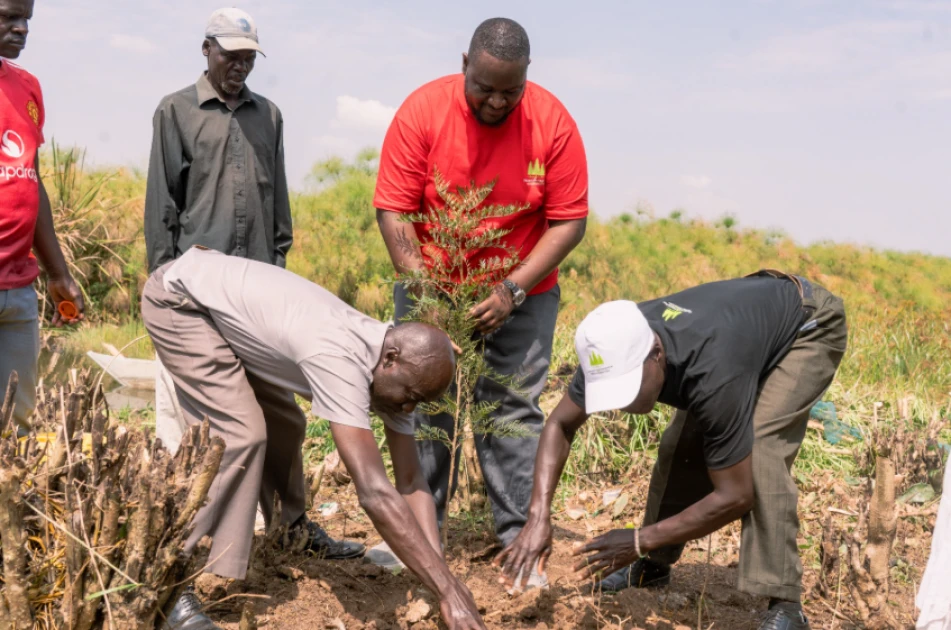
TAF says prolonged dry seasons can threaten seedlings, while transportation, watering, monitoring and maintenance add to the cost of large-scale tree-growing programmes.

Audio By Vocalize
Financing gaps are threatening the survival of millions of newly planted trees in Kenya, with the cost of watering, monitoring and maintenance emerging as a major challenge to long-term environmental restoration.
The Tree Adoption Foundation (TAF), which has recorded 3.27
million trees through the Jaza Miti national tree-growing platform, says
planting seedlings is only the beginning, with sustained investment needed to
ensure they mature.
TAF founder and CEO Fanuel Boaz Onyango said the focus should
shift from the number of trees planted to their survival and contribution to
communities.
“Our responsibility does not end when a seedling is placed in
the ground. We want those trees to survive, mature and ultimately provide
environmental, social and economic benefits to communities,” said Onyango.
TAF says prolonged dry seasons can threaten seedlings, while
transportation, watering, monitoring and maintenance add to the cost of
large-scale tree-growing programmes.
Onyango said conservation efforts require stronger
collaboration between government, the private sector, communities and
development partners.
“Planting millions of trees is important but ensuring that
they survive requires continued investment and community involvement,” he said.
The foundation works with communities, schools, businesses and
government agencies on tree growing, forest and wetland restoration, water
conservation, biodiversity protection, renewable energy and sustainable
livelihoods.
At Lake Kanyaboli in Siaya County, TAF is implementing a wider
ecosystem restoration programme covering the lake, beaches, biodiversity,
fishing communities, sanitation, clean water, renewable energy and livelihoods.
Onyango said linking environmental conservation with economic
opportunities could encourage communities to protect restored ecosystems.
“Our belief is that climate action must also improve people's
lives,” he said.
TAF has undertaken environmental activities in counties
including Nairobi, Kiambu, Machakos and Siaya and plans to expand its programmes
to all 47 counties, with schools and communities at the centre of its
conservation efforts.
Join the Discussion
Share your perspective with the Citizen Digital community.
No comments yet
This discussion is waiting for your voice. Be the first to share your thoughts!