
European Union pledges extra Ksh.44B for farmers hit by fertiliser price hikes
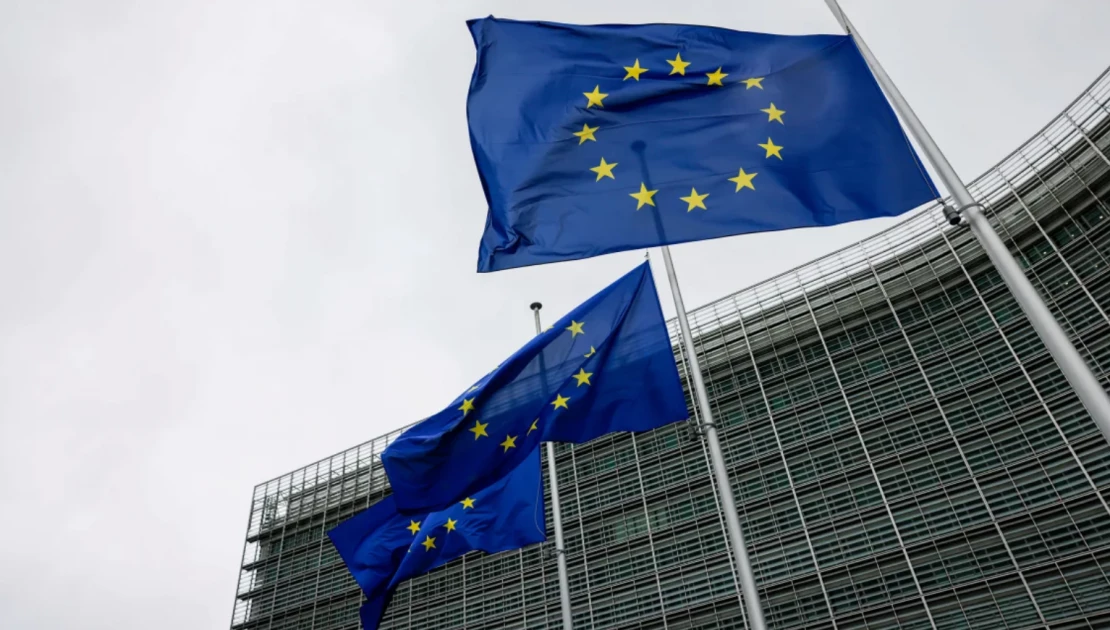
European Union (EU) flags next to the European Commission building in Brussels, Belgium, on Friday, Nov. 10, 2023.

Audio By Vocalize
Brussels has been under pressure to take action to blunt the impact of the Middle East crisis on agriculture, as the increase in fertiliser prices risks pushing up food costs across the bloc.
"We propose to increase the agricultural reserve for 2026 by 300 million euro," the European Union's budget commissioner Piotr Serafin told lawmakers.
The sum would go to "support the most affected farmers already this year" and add to 200 million euro the European Commission had already announced it was to disburse to that end, Serafin said.
The proposal needs approval from the bloc's 27 member states and the European Parliament.
About a third of fertilisers shipped by sea reach the global market through the Strait of Hormuz, which has been effectively closed by the US-Israeli war against Iran.
That has sent prices up for farmers which in Europe were already contending with high tariffs Brussels slapped on fertilisers from Russia over its invasion of Ukraine.
The price of nitrogen fertilisers, which are derived from gas, has risen to about 460 euros a tonne in the bloc, from 380 euros last winter.
"We hope that the European Parliament will quickly approve this measure," Italy's agricultural lobby Confagricoltura said, adding the sector was being "stifled by rising costs".
The group and other farming associations in Europe have also called for a pause in the application of the EU's carbon border tax on fertilisers -- something the EU has so far ruled out.
The EU imports between 30 percent and 70 percent of the fertilizers it needs, depending on the type
Join the Discussion
Share your perspective with the Citizen Digital community.
No comments yet
This discussion is waiting for your voice. Be the first to share your thoughts!