
Employers must provide breastfeeding breaks, private lactation rooms under new law

Audio By Vocalize
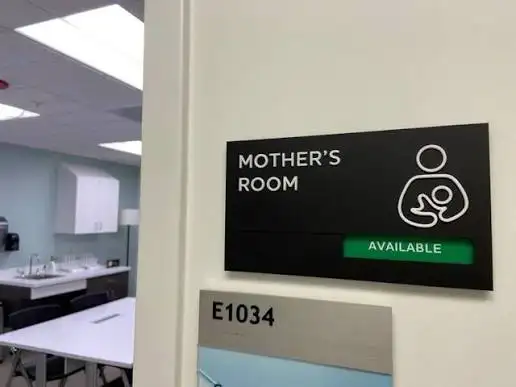
The law requires employers to provide clean, private and appropriately equipped lactation spaces, reasonable breastfeeding breaks and flexible working arrangements.
The new law also prohibits discrimination against women on grounds of pregnancy, childbirth, breastfeeding or any other maternity-related condition.
The President said the Bill, sponsored by Nominated MP Sabina Chege, protects the rights and dignity of breastfeeding mothers in the workplace.
“We thank the MPs who supported it because they have now ensured that our mothers can bring up our children in safe and dignified places without being negatively affected by pregnancy, breastfeeding or having children,” he added.
The Breastfeeding Mothers law was among six National Assembly Bills that the President assented to.
The legislation seeks to promote child nutrition and maternal health, reduce workplace barriers for women and enhance staff retention and productivity.
It also requires buildings accessible to the public with an occupancy capacity of at least 50 people to have baby-changing facilities.
The President said he would immediately instruct State House staff to ensure that it becomes the first institution to provide suitable spaces for breastfeeding mothers.
“There must be flexibility that allows our mothers to be able to undertake the very normal responsibility of bringing up our children and still be able to attend to their work,” he said.
Another key piece of legislation signed into law is the Sexual Offences (Amendment) Bill, 2023, which strengthens the prevention and reporting of sexual offences through nationwide public education and awareness campaigns.
It also safeguards the right to education of victims of sexual violence, including girls affected by teenage pregnancies.
Additionally, the Sexual Offences (Amendment) Bill, 2025, strengthens access to justice for victims by requiring sexual offence cases to be heard through the formal judicial system and concluded within six months from the date of plea.
It prohibits the withdrawal of cases solely on the basis of out-of-court settlements and criminalises coercion, intimidation or inducement of victims to withdraw complaints, ensuring that justice is neither delayed nor compromised.
President Ruto said the two laws would promote a better understanding of the provisions and limitations of the law to ensure that sexual offences are better addressed.
The President also signed into law the Public Service Superannuation Scheme (Amendment) Bill, 2025, which streamlines the governance and administration of the scheme by re-establishing it as the Public Service Superannuation Fund.
It expands membership to public servants on fixed-term contracts, safeguards pension contributions and provides for additional benefits, including post-retirement medical and mortgage facilities.
The Environmental Professionals Institute of Kenya Bill, 2024, establishes the Environmental Professionals Institute of Kenya to oversee the registration, licensing and regulation of environmental professionals, promote professionalism and uphold standards of practice.
President Ruto pointed out that the law would ensure that professional organisations in the country are managed without imposing a financial burden on citizens while providing a framework for holding professionals accountable for their conduct.
The East African Development Bank (Amendment) Bill, 2026, aligns the East African Development Bank Act with the Constitution by requiring the approval of the National Assembly and the authorisation of the Controller of Budget before public funds are disbursed to the bank.
By subjecting all expenditure from the Consolidated Fund to parliamentary appropriation and the Controller's of Budget authorisation, President Ruto explained, the law will strengthen transparency and accountability in the management of public resources.
The President further said he was looking forward to signing into law the Public Participation Bill, which seeks to address contention over how public participation is conducted in the legislative process.
Additionally, he was looking forward to signing seven education Bills, pointing out that students and the higher education sector were eagerly awaiting particularly the Tertiary Education Placement and Funding Bill.
He noted that the Bill would guarantee students at universities, technical colleges and the Kenya Medical Training College adequate and reliable funding, ensuring that education is a right for every student and their schooling would no longer be determined by whether their parents can afford.
Present were Deputy President Kithure Kindiki, Prime Cabinet Secretary Musalia Mudavadi, Attorney-General Dorcas Oduor, National Assembly Speaker Moses Wetang’ula, Cabinet Secretaries and MPs, among others.
Join the Discussion
Share your perspective with the Citizen Digital community.
No comments yet
This discussion is waiting for your voice. Be the first to share your thoughts!