
Electric motorbikes offer hope for lower milk transport costs
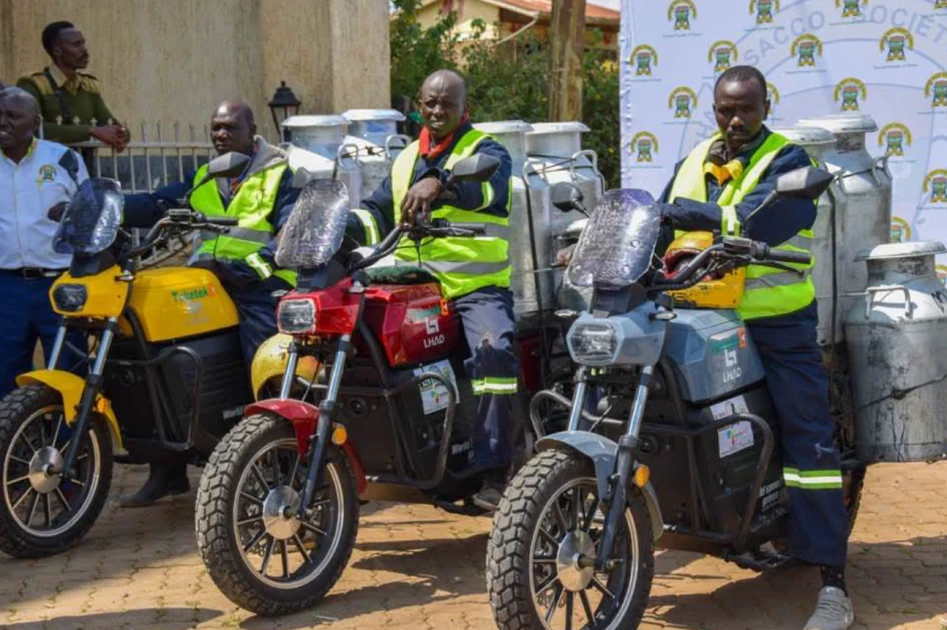
The adoption of electric farm transport could help farmers improve earnings, cut operating costs and support Kenya’s transition to cleaner energy.

Audio By Vocalize
Kenyan farmers could significantly reduce milk transportation costs by adopting locally assembled electric motorbikes and three-wheelers, as stakeholders push for affordable and sustainable solutions in the dairy value chain.
Richard Chesebeh,
Managing Director of Lunghou Teketeke Group, says the company’s electric
motorcycles can help farmers cut daily transportation expenses from Ksh.1,000 to
about Ksh.200, freeing up resources for increased production.
Chesebeh said the
e-mobility company is targeting rural farmers, who have largely been overlooked
by electric mobility providers focused on urban transport.
“Our target
clients are farmers because we want them to save costs in transporting milk
from farms to collection centres and processing plants,” he said.
The company’s LHB1
electric motorbike can carry up to 500 kilogrammes, while its electric
tricycles can transport farm produce, animal feeds and other supplies.
Chesebeh said the
company also manufactures lithium iron phosphate batteries locally, allowing
users to charge them at home or remove them for portable charging.
John Mutunga,
Chairman of the Departmental Committee on Agriculture and Livestock, said
electric transport could help dairy farmers lower operating costs and improve
the delivery of milk to cooling plants.
He urged
cooperatives and organised farmer groups to consider adopting the technology,
saying it would support efforts to reduce greenhouse gas emissions and
environmental pollution.
Mutunga also
called on the government to consider tax incentives for locally assembled
electric farm transport equipment to make the technology more affordable.
Camel milk
producer Abdi Mohammed Adan, who was honoured by President Ruto as Kenya's Best
Dairy Camel Milk Producer and Breeder Agriculture at the Food Systems
Transformation Summit, said improved transport could help farmers expand
production and invest in value addition by reducing the cost of moving milk to
markets.
Adan welcomed government recognition of camel milk production, noting that the sector had experienced improved returns in recent years.
He called for further government
support to help producers grow their businesses and explore value addition
opportunities.
The appeal comes
as the government expands investment in milk cooling infrastructure to improve
milk handling and strengthen the dairy value chain.
Chesebeh said
affordable electric transport would complement these investments by reducing
the cost of moving milk from farms to collection centres.
The company is
also converting fuel-powered motorcycles into electric bikes, offering farmers
an alternative to replacing existing equipment.
The adoption of
electric farm transport could help farmers improve earnings, cut operating
costs and support Kenya’s transition to cleaner energy.
Join the Discussion
Share your perspective with the Citizen Digital community.
No comments yet
This discussion is waiting for your voice. Be the first to share your thoughts!