
Dozens of marine mammals found dead after Russian oil tanker spill
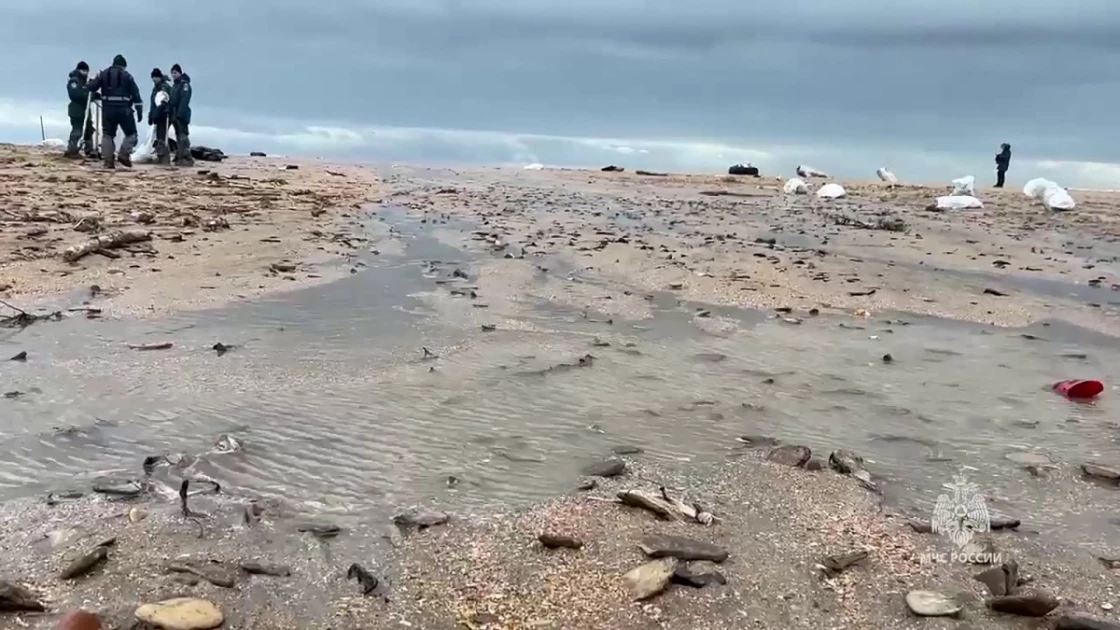
Rescuers respond to an oil spill along the coastline of the Black Sea, caused by the wreck of two oil tankers in a storm in the Kerch Strait between Crimea and southern Russia's Krasnodar region on December 15, 2024. (Photo by Russian Emergencies Ministry / AFP)

Audio By Vocalize
The spill began on December 15, when two ageing Russian tankers were caught in a storm off the Kerch Strait linking Crimea to southern Russia.
One sank and the other ran aground, pouring around 2,400 tonnes of a heavy fuel oil called mazut into the surrounding waters, authorities estimate.
Russia's Delfa centre, which rescues and provides rehabilitation for dolphins, said it had recorded 61 dead cetaceans since the incident, 32 of whom "most likely" died due to the spill.
Cetaceans are a type of aquatic mammal that includes whales, dolphins and porpoises.
"Judging by the condition of the bodies, most likely the bulk of these cetaceans died in the first 10 days after the disaster," it said.
It said most of those killed were "Azov" dolphins -- a type of harbour porpoise that look similar to dolphins but are more closely related to belugas and narwhals.
Russia's emergency ministry said Sunday it was working to eliminate the consequences of the incident, but that "strong winds and waves" had thrown oil onto some beaches.
"More than 68 kilometres (42 miles) of coastline have been cleaned," it said.
Hundreds of volunteers have been deployed to scoop up contaminated soil from beaches in Crimea and along Russia's southern coast.
The type of fuel oil involved in the incident is particularly hard to clean because it is dense and heavy and does not float on the surface, Russian authorities say.
Join the Discussion
Share your perspective with the Citizen Digital community.
No comments yet
This discussion is waiting for your voice. Be the first to share your thoughts!