
CS Kagwe orders tea factories to reject low-quality green leaf as Kenya targets more profits
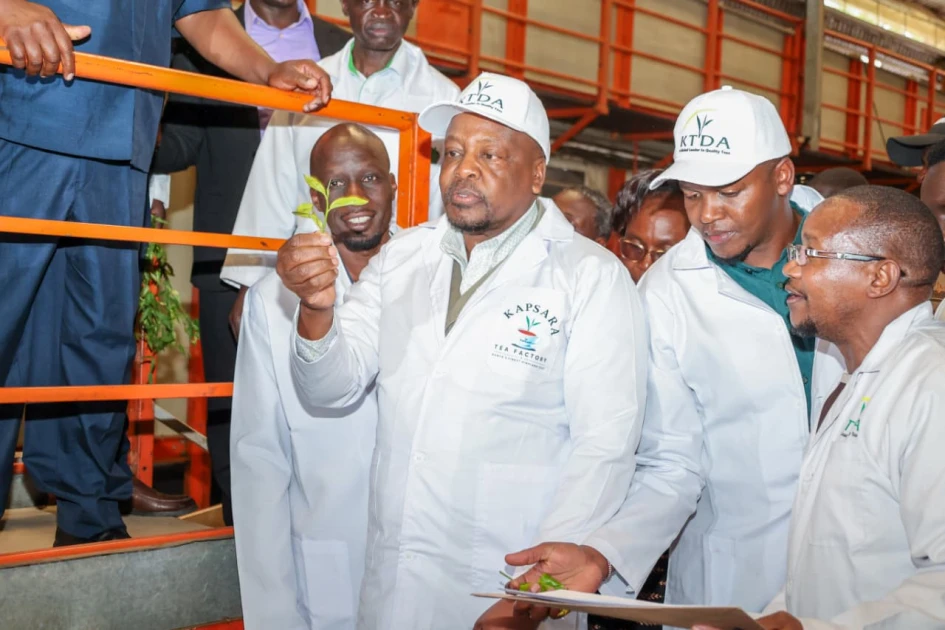
Agriculture Cabinet Secretary Mutahi Kagwe speaking at Kapsara Tea Factory, Trans Nzoia County on August 14, 2026

Audio By Vocalize
CS Kagwe said the investment in modern machinery must be matched by an equal improvement in tea quality from farmers, warning that Kenya cannot modernise factories only to process substandard green leaf that attracts lower prices in the international market.
The CS said the Government's strategy is to create a new growth cycle in the tea industry that ensures there is quality tea production and exports to scale up profits.
He added that Kenya must progressively seek additional markets to secure higher tea prices for increased volumes of premium Kenyan.
Speaking at Kapsara Tea Factory in Trans Nzoia County, CS Kagwe said factories must instill stricter regulations at the point of delivery protect quality assurance abiding farmers.
“If we have agreed that quality tea is two leaves and a bud, then that is what must come to the factory. We cannot have farmers who are doing the right thing being punished because a few others bring poor-quality leaf which is then processed together with theirs,” CS Kagwe said.
He said the objective is to establish a quality culture capable of raising the international value of Kenyan tea and consequently increasing farmers' earnings and annual bonuses.
With Kenya exporting tonnes tea annually, improvements in the average price per kilogramme can translate into billions of shillings for the economy and substantially better returns to growers.
CS Kagwe challenged Kapsara and other factories to follow the same path as plucking produces better green leaf; better green leaf produces premium made tea; premium tea attracts higher prices; and higher prices mean bigger bonuses and more money in farmers' pockets.
Kapsara was allocated over Ksh.44.6 million to install a new withering plant replacing ageing equipment that currently consumes large amounts of electricity.
Likewise, CS Kagwe said the Government is simultaneously addressing the factory upgrade problem through a Ksh.7.1 billion tea factory modernisation programme.
The investment will replace ageing and inefficient machinery, improve energy efficiency, reduce processing costs and strengthen the ability of factories to produce higher-value tea products.
He however cautioned the funding cannot compensate for poor-quality raw material without synergy and integrity in factory management, government and other players in the value chain.
The modernisation programme is being undertaken as part of President William Ruto's wider agenda of transforming agriculture from primarily a production activity into a major source of household wealth.
Kenya currently exports tea but remains heavily reliant on a few major destinations. Recent global disruptions have demonstrated the risks of depending on a limited number of markets.
The Government will therefore seek new buyers for Kenyan tea while strengthening traditional markets, particularly as factories increase production of orthodox, specialty and value-added products.
The CS added the newly introducted Tea Levy levy is designed to strengthen the industry and improve long-term farmer returns.
Resources generated through the levy, he said, will support interventions including farmer price stabilisation, tea research, infrastructure, marketing and promotion, quality improvement, value addition and development of new markets.
Join the Discussion
Share your perspective with the Citizen Digital community.
No comments yet
This discussion is waiting for your voice. Be the first to share your thoughts!