
Court suspends President Ruto's Order placing IPOA under Interior Ministry
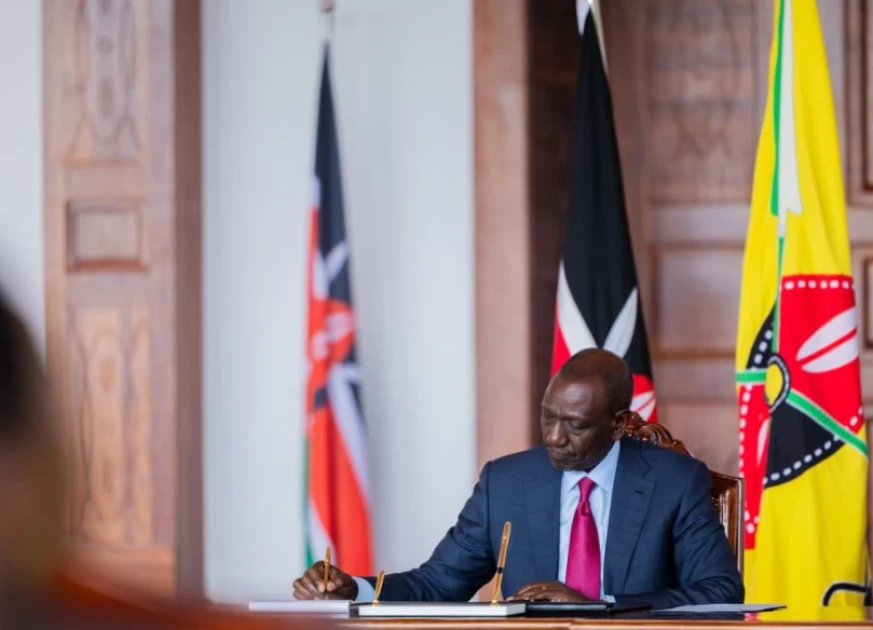
President William Ruto assents to the Finance Bill, 2026 on June 23 at State House, Nairobi. PHOTO | PCS

Audio By Vocalize
The petitioners argue that moving IPOA to a ministry that also oversees the National Police Service would erode its constitutional independence and compromise its ability to investigate police misconduct without external influence.
The court has halted the order pending the hearing and determination of the constitutional petition.
President William Ruto's Executive Order No. 2 of 2023, issued on November 1, 2023, placed the Independent Policing Oversight Authority (IPOA) under the Ministry of Interior and National Administration.
The decision sparked a constitutional challenge at the High Court, with petitioner Obwogi Jonathan seeking to block the transfer. He contends that placing IPOA under a ministry that also oversees the National Police Service would erode the authority's constitutional independence and undermine its ability to investigate allegations of police misconduct impartially and without interference.
Obwogi, backed by several civil society organisations that joined the case as interested parties, further argues that the Executive Order, already in effect, has been used to alter reporting structures and reorganise government administration in a way that places IPOA under the authority of the Ministry of Interior.
The petitioners contend that continued implementation of the order poses a significant threat to the agency's constitutional independence and could compromise its ability to carry out its oversight mandate free from external influence.
On Tuesday, the High Court issued conservatory orders suspending the implementation of the Executive Order, temporarily preserving the authority's status as an independent civilian oversight body.
The court, however, did not make a final determination on the constitutionality of the Executive Order. Instead, it maintained the legal and institutional position that existed before the order took effect, allowing the constitutional issues raised in the petition to be heard and determined without further prejudice.
As a result, the Ministry of Interior cannot, for the time being, rely on Executive Order No. 2 of 2023 to supervise, direct, administer, or exercise authority over IPOA while the case remains before the court.
Join the Discussion
Share your perspective with the Citizen Digital community.
No comments yet
This discussion is waiting for your voice. Be the first to share your thoughts!