
Court orders TotalEnergies to account for clients' emissions
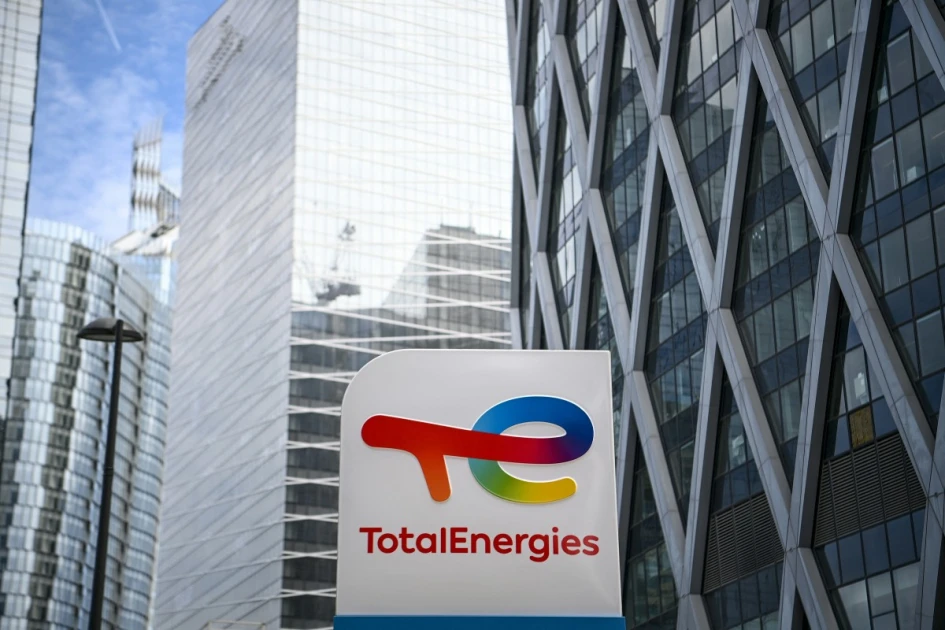
This photograph taken on May 28, 2021 shows the new TotalEnergies logo during its unveling ceremony, at a charging station in La Defense on the outskirts of Paris. Photo by CHRISTOPHE ARCHAMBAULT / AFP

Audio By Vocalize
A French court on Thursday ordered TotalEnergies to account
for its clients' emissions and outline measures to address them, in a ruling
that NGOs hailed as a victory in the major climate case.
The court, however, stopped short of imposing specific
measures demanded by the plaintiffs against the French energy giant, including
a halt in new fossil fuel projects and cuts in oil and gas production.
The case is the latest in a growing wave of climate
litigation targeting major corporate emitters worldwide, and it comes as France
and other European countries are baking under a record-breaking heatwave.
The NGOs and TotalEnergies battled at the Paris Judicial
Court over whether environmental risks fall within France's corporate duty of
vigilance law, which was enacted in 2017.
"Climate-related risks and impacts to which the company
may contribute through its activities fall within the scope of the law on the
duty of vigilance for parent companies and ordering companies," the court
said.
The city of Paris hailed the ruling as "a landmark
decision in the history of French climate law".
"For the first time, a judge recognises that climate
risks do indeed fall under the duty of vigilance owed by large corporations,
and no fossil-fuel multinational can evade this responsibility," Deputy
Mayor Alice Timsit said.
"This is an important decision in these days of
unprecedented heatwaves: fighting climate change also means fighting for a
livable future in our daily lives," the NGOs Notre Affaire a Tous, Sherpa
and France Nature Environment said in a joint statement.
Company lawyers had argued during February hearings that the
law did not cover global warming.
But the group of NGOs that took TotalEnergies to court said
the law's reference to prevention of environmental risks encompasses both local
pollution and climate change.
The plaintiffs specifically accused TotalEnergies of
refusing to account for indirect emissions from end users, which they say
amounted to 342 million tonnes of CO2 equivalent in 2024.
TotalEnergies argued that the law applied only to the
company's own operations and those of its contractors, not to customer
activity.
The court, however, said the company's vigilance plan was
"incomplete".
It gave TotalEnergies six months to amend it to include such
emissions from end-users, known as Scope 3, along with unspecified
"related measures".
TotalEnergies said Thursday evening that it would
"complete" its vigilance plan by incorporating client emissions by
drawing on its sustainability report outlining actions to help customers reduce
their emissions.
The NGOs wanted the court to order a halt in new fossil fuel
projects by the French energy group along with production cuts of 37 percent
for oil and 25 percent for gas by 2030.
The court declined to impose such measures on TotalEnergies,
saying the law does not allow the judge to "take the place of the
company" to demand the implementation of specific actions, nor impose
"a specific target to achieve".
Anne Stevignon, a legal expert with the NGO and co-plaintiff
Notre Affaire a Tous, told AFP that the ruling on emissions means the company
will have to implement "mitigation measures" and therefore
"reduce production".
The company had called the measures requested by the
plaintiffs unreasonable and ineffective, arguing that production cuts or
cancelled projects would simply shift output to competitors.
TotalEnergies has said it was the victim of
"demonisation" by the plaintiffs.
Its lawyers argued that climate change would continue even
if the company, which accounts for less than two percent of global production,
shut its operations.
In a rare move, the Paris public prosecutor also intervened
in the civil proceedings and echoed TotalEnergies' stance, warning that
imposing an overly broad protection obligation on companies would not be
workable.
The case, opened in 2020, had produced interim wins for
campaigners.
In 2024, the Paris appeals court allowed the lawsuit to
proceed but dismissed claims from several local authorities, including New York
City, which had sought to join the case. Only the city of Paris was recognised
as having standing.
Other major polluters have been taken to court around the
world.
In late 2024, a Dutch appeals court overturned a landmark
ruling that had ordered Shell to deepen emissions cuts. The country's Supreme
Court is due to issue a final ruling on the case.
Join the Discussion
Share your perspective with the Citizen Digital community.
No comments yet
This discussion is waiting for your voice. Be the first to share your thoughts!