
China’s Blue Bay initiative named 2026 UN World Restoration Flagship
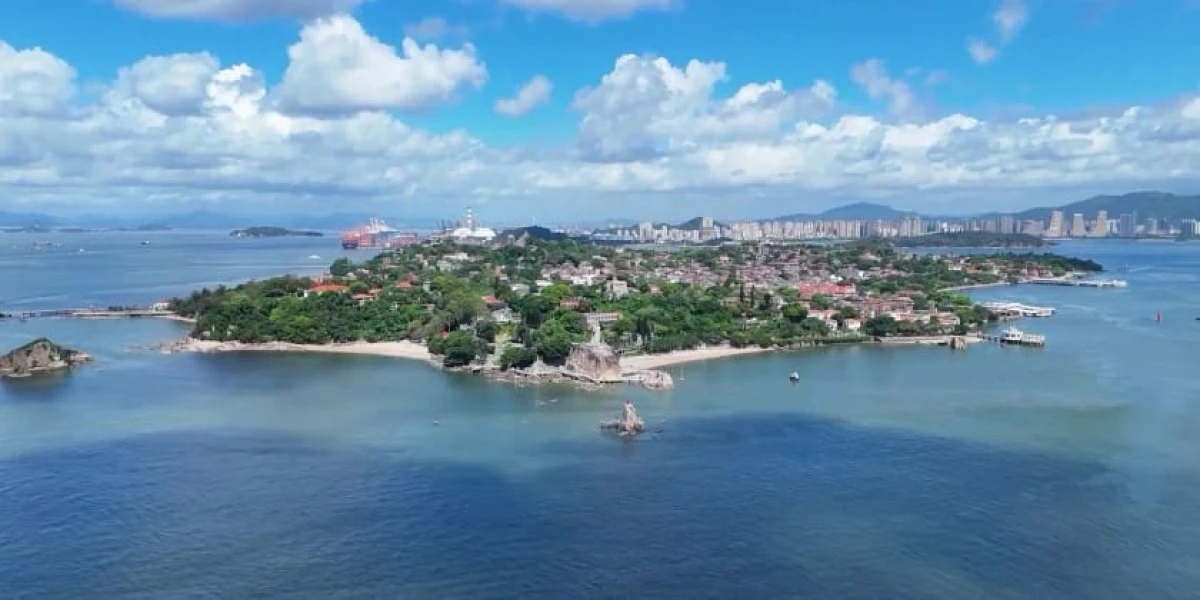
China's next phase of marine restoration will prioritise improving the quality and ecological functions of key ecosystems, including mangroves, coral reefs, seagrass beds and coastal salt marshes.

Audio By Vocalize
According to the China Daily, the recognition was announced during the 17th meeting of the Conference of the Parties to the Convention on Biological Diversity (COP17) in Yerevan, Armenia.
The initiative, jointly led by China’s Ministry of Natural Resources and Ministry of Finance, becomes the second nationwide restoration programme from the country to receive the prestigious recognition, after the Shan-Shui Initiative was honoured in 2022.
The latest award also makes China the first country to have two nationwide programmes recognised as UN World Restoration Flagships.
The World Restoration Flagship programme was established jointly by the United Nations Environment Programme (UNEP) and the Food and Agriculture Organization (FAO) under the UN Decade on Ecosystem Restoration. It recognises large-scale restoration initiatives considered exemplary and influential in advancing global ecosystem recovery.
For coastal countries such as Kenya, where marine ecosystems support fisheries, tourism and the livelihoods of coastal communities, China's initiative offers a model for coordinated, long-term environmental restoration.
Speaking during the awards ceremony, FAO Deputy Regional Representative for Europe and Central Asia Raimund Jehle underscored the importance of healthy coastal ecosystems in supporting biodiversity, food security and livelihoods.
“Healthy coastal ecosystems support fisheries, protect communities and strengthen resilience to climate change,” Jehle said.
Jehle noted that effective restoration requires cooperation across land and sea ecosystems, as well as coordination between different sectors and institutions.
He cited China's Blue Bay Initiative as an example of an integrated approach combining ecological restoration, coordinated governance and public investment.
The programme draws from China's experience restoring Yundang Lake in Xiamen, Fujian Province, where authorities developed an integrated model of land and sea management that was subsequently expanded to coastal regions across the country.
According to figures published by China Daily, the central government allocated 36.63 billion yuan (approximately USD 5.5 billion) to coastal provinces during the 13th Five-Year Plan (2016–2020) and 14th Five-Year Plan (2021–2025).
The funding supported 194 major marine ecological restoration projects across the country.
The projects have resulted in the restoration of more than 150,000 hectares of coastal wetlands, rehabilitation of over 2,000 kilometres of coastline and efforts to control Spartina alterniflora, an invasive cord grass species.
Zhong Chongjun, Deputy Director-General of the Department of Territorial Space Ecological Restoration at the Ministry of Natural Resources, said the international recognition reflected growing global acknowledgement of China's progress in marine conservation.
He said the projects had improved the quality and stability of key marine ecosystems, strengthened biodiversity conservation and expanded public access to coastal areas.
The restoration efforts have also enhanced China's capacity to prevent and mitigate coastal disasters, while strengthening marine ecological security.
Zhong further noted that China's mangrove coverage had expanded to 31,700 hectares, making it one of the few countries where mangrove areas continue to increase.
Wang Lei, Director-General of the department, described the recognition as both an honour and a responsibility, pledging to sustain the country's restoration efforts.
“We will take this as a new start, continuing to implement actions for blue bays, beautiful shorelines and harmonious islands,” Wang said.
China's next phase of marine restoration will prioritise improving the quality and ecological functions of key ecosystems, including mangroves, coral reefs, seagrass beds and coastal salt marshes.
The broader objective is to ensure that restoration programmes deliver environmental benefits alongside improved livelihoods, employment and income opportunities, while promoting a sustainable relationship between communities and marine ecosystems.
Join the Discussion
Share your perspective with the Citizen Digital community.
No comments yet
This discussion is waiting for your voice. Be the first to share your thoughts!