
Call for credible certification of halal businesses during the 2nd Halal Fair
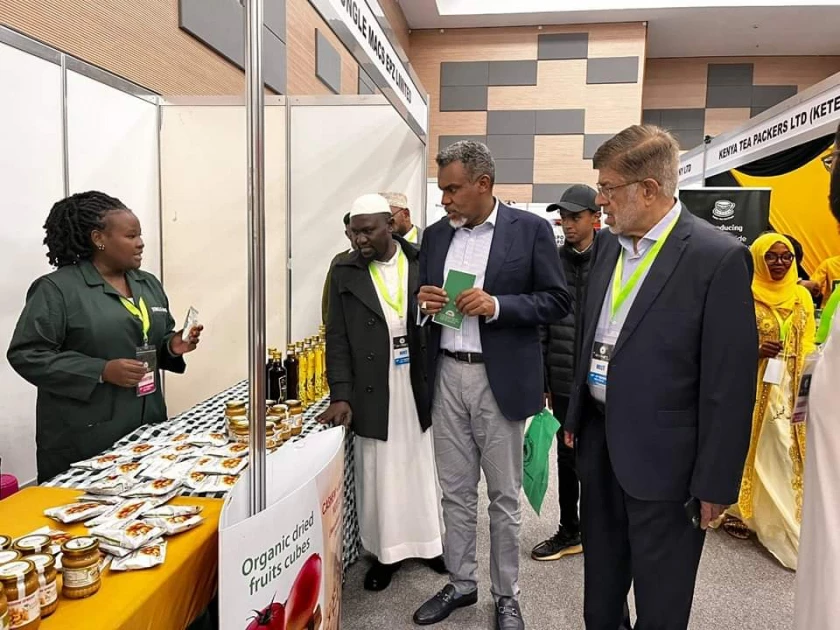
DPP Noordin Haji (centre) and CEO Halal Bureau Fauz Qureishi touring the stalls during the expo at the Sarit Centre.

Audio By Vocalize
Kenya
is this weekend hosting an exhibition on Halal products in a bid to tap the
growing Muslim community demands.
The
expo, on its second day is organized by the Kenya bureau of Halal
certifications KBHC, bringing together over 100 businesses that are halal
compliant at the Sarit Centre.
According
to Fauz Qureishi, the CEO of KBHC, ‘the businesses showcasing at the expo
ranging from food, Islamic financial institutions and even restaurants have
gone through halal audit’.
Mr
Qureishi says that there has been concern from Muslims on authenticity of halal
certifications and audits. Many business establishments carry the halal sign but who can ascertain the credibility of such signs?
There
has also been a lot of misconception that halal only refers to meat and related
products but even daily use products like water, dairy products, pastries,
sweets and so on could be non-halal.
The theme of the Halal Fair is ‘Halal all the way’ and it highlights the various ways of ensuring the products and services remain ‘halal’ during production, packaging, transportation, storage, and distribution.
Apart from showcasing halal compliant products, discussions such as ensuring the traceability of halal products and services as they move from source to destination are being held.
The
global halal industry, estimated at more than $2.1 trillion (Sh216.3 trillion),
is among the fastest-growing sectors in the world economy.
According to PT Deloitte Consulting in 2019, the Global Islamic Economy Report 2018/2019 observed that the amount of halal food expenditure in the world reached $2.1 trillion in 2017 and is expected to grow by 10% annually.
This is attributed to the increase in the Muslim population, which in 2017 reached 1.84 billion people.
The number is expected to increase to 27.5% of the total world population in 2030.
This therefore brings forth a population that will increase the demand for
halal products and services.
Join the Discussion
Share your perspective with the Citizen Digital community.
No comments yet
This discussion is waiting for your voice. Be the first to share your thoughts!