
Bangladesh Islamist party concedes defeat in election
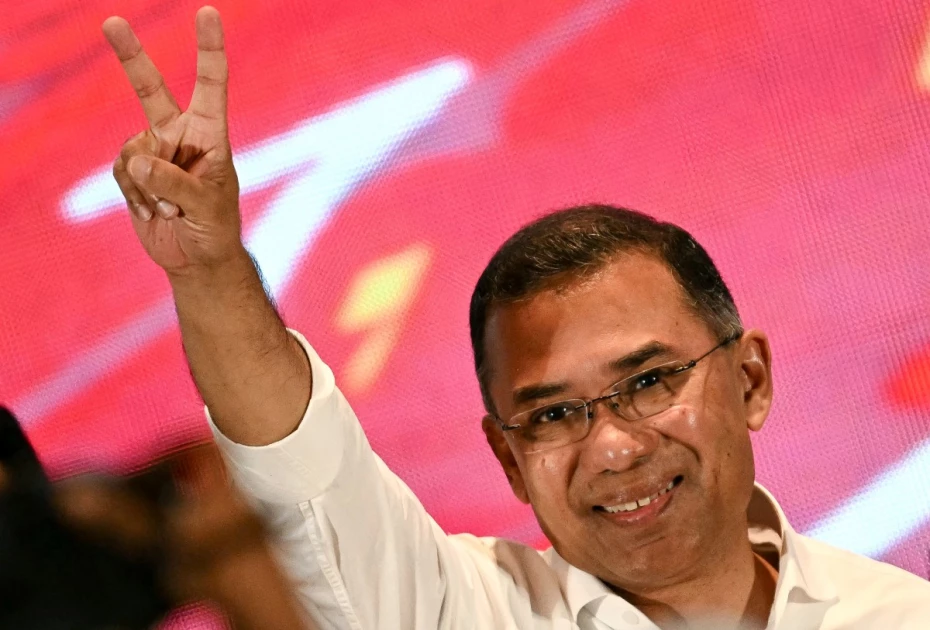
Bangladesh Nationalist Party (BNP) chairman Tarique Rahman shows victory sign after addressing a press conference in Dhaka on February 14, 2026. Election Commission figures showed Rahman's BNP had won a landslide victory in the elections on February 12, the first since a deadly 2024 uprising ousted the iron-fisted rule of Sheikh Hasina.

Audio By Vocalize
Bangladesh's largest Islamist party Jamaat-e-Islami said
Saturday it had accepted the "overall outcome" of the election won by
the rival nationalist party, despite earlier having alleged problems with the
vote count.
The elections on Thursday were the first since the deadly
2024 uprising, and Election Commission figures showed the Bangladesh
Nationalist Party (BNP) had won a landslide victory.
Jamaat chief Shafiqur Rahman, 67, had said on Friday he
would "seek redress" from the commission, with his party alleging
"inconsistencies and fabrications".
"In any genuine democratic journey, the true test of
leadership is not only how we campaign, but how we respond to the verdict of
the people," Rahman said in a statement.
"We recognise the overall outcome, and we respect the
rule of law."
Interim leader Muhammad Yunus congratulated BNP leader
Tarique Rahman on "the landslide victory of his party" as he prepared
to step down and hand over power to the elected government.
The 85-year-old Nobel Peace Prize winner, who has led
Bangladesh as its "chief adviser" since the August 2024 uprising,
said in a statement that Tarique Rahman "would help guide the country
toward stability, inclusiveness, and development".
The BNP alliance won 212 seats compared with 77 for the
Jamaat-led alliance, according to the Electoral Commission.
"We will serve as a vigilant, principled, and peaceful
opposition, holding the government to account," he said.
"Our commitment to principled, peaceful politics
remains unshaken."
He noted the huge leap in seats the Islamists had won
compared to past elections -- including when they were crushed under the
autocratic tenure of ousted former prime minister Sheikh Hasina.
"Our movement has never been about a single election.
It is about strengthening democratic culture, protecting citizens' rights, and
building a just and accountable state," Jamaat's Rahman added.
"With 77 seats, we have nearly quadrupled our
parliamentary presence and become one of the strongest opposition blocs in
modern Bangladeshi politics. That is not a setback. That is a foundation."
Join the Discussion
Share your perspective with the Citizen Digital community.
No comments yet
This discussion is waiting for your voice. Be the first to share your thoughts!