
Bag ni Ya Nini?: How Kenya’s latest viral craze sparked a 'war' between Gen Zs and Millennials
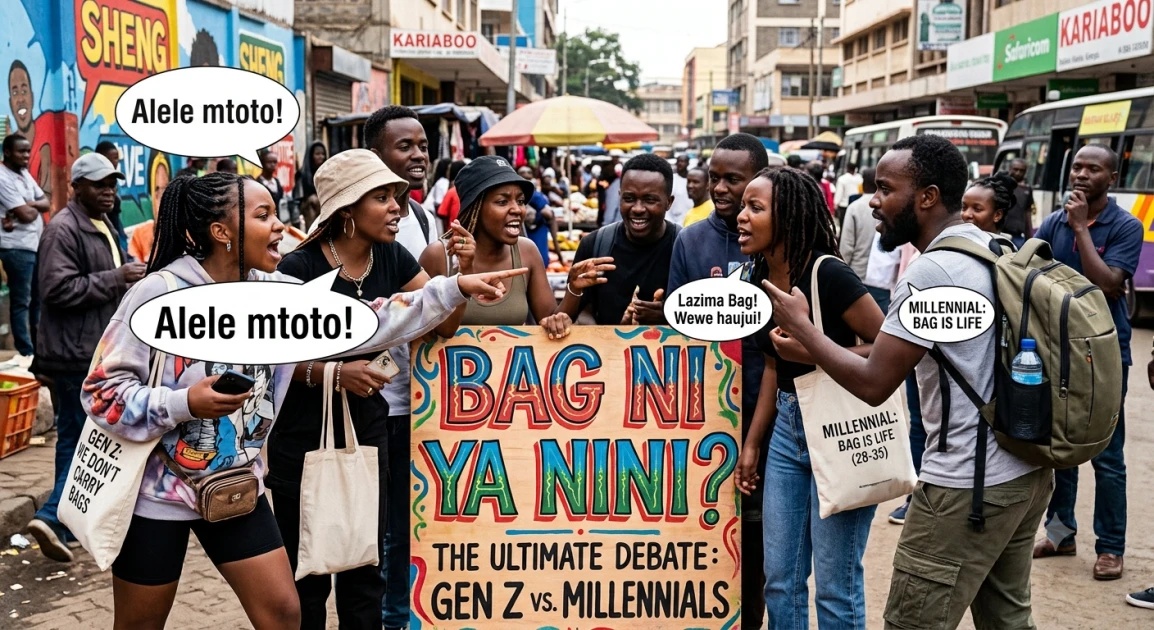
An AI-Generated image of the hilarious "war" between Gen Zs and Millennials over the "Bag ni ya Nini?" phrase.

Audio By Vocalize
The phrase "Bag ni Ya Nini?" - originating from rapper Kapitani's viral street anthem Kitemeo - has transcended TikTok soundbites to become the default slang on every Kenyan’s lips.
The answer for the millennials in the room is "Alele mtoto!"
What began as an energetic dance challenge and casual Sheng query about unnecessary baggage has rapidly transformed into a full-blown pop culture phenomenon, spilling over from online skits into street banter, music remixes, and mainstream media.
As with any viral moment in Kenya, it was only a matter of time before the political class attempted to cash in on the wave.
Prominent leaders and public figures, eager to signal political alignment with the youth, have awkwardly embraced the trend.
Wiper party leader Kalonzo Musyoka and former Chief Justice David Maraga are among the high-profile figures who have stepped into the spotlight to drop the phrase or participate in variations of the challenge.
Posting on his official X account, presidential candidate David Maraga shared a video of himself saying the words, wrapping up with a cheeky laugh.
"Taita Taveta, Bag ni ya nini?" he posted.
On his part, Wiper leader Kalonzo Musyoka also jumped on the trend, posting: "Ati bag ni ya nini? Alele mtoto na Card basi!"
City politician Milicent Omanga also jumped on the trend, posting a video on her Instagram page, singing along to the famous lines.
Whether delivering it during press briefings or staged social media clips, politicians attempting to look relatable have provided a steady stream of comedic fodder for online commentary.
However, the cultural co-optation of the phrase has triggered a massive intergenerational clash between Gen Z and Millennials.
Gen Z creators, who championed the trend from its inception, are openly calling out Millennials for invading their space and diluting the culture.
On platforms like TikTok and X, GenZers have launched a wave of memes castigating their older counterparts for executing stiff, outdated dance moves and using the slang out of context.
According to Gen Z critics, the moment millennials and corporate PR teams adopt a trend, its cool factor immediately expires.
One X user wrote: "Millenials try too hard to fit in, unaingia office asubuhi mtu anakuona umebeba bag anakuuliza “bag ni ya nini?” Akiexpect mcheke cheke na yeye. Mzee peleka ujinga kwa desk yako."
Another one said, "Umekaa tu unafikiria retirement benefits GenZ anakuuliza "Bag ni ya nini", buana who is coming up with all these stupid challenges?"
Popular X personality @Gitz also expressed his dissatisfaction with the trend, writing: "My sister aliniuliza bag ni ya nini Jana nikamshow kubeba laptop na charger. Saa hii ndo naona kumbe ni upus kutoka Tiktok."
This dynamic highlights a recurring theme in Kenyan pop culture: the rapid lifecycle of viral youth trends. What starts as pure, unvarnished creativity in urban neighbourhoods eventually gets adopted by millennials, commercialised by brands, and politicised by elder statesmen.
While political figures like Kalonzo and Maraga may view their participation as a bridge to younger voters, Gen Z sees it as proof that it is time to pack up the phrase and move on to the next trend.
Despite the generational friction, "Bag ni Ya Nini?" remains firmly entrenched in the national lexicon for now, serving as a vivid reminder of how fast urban youth culture moves in Kenya, constantly pushing boundaries while keeping both older generations and political leaders on their toes.
Join the Discussion
Share your perspective with the Citizen Digital community.
No comments yet
This discussion is waiting for your voice. Be the first to share your thoughts!