
Aga Khan Hospital fined Ksh.1 million for Postnatal death in 2019
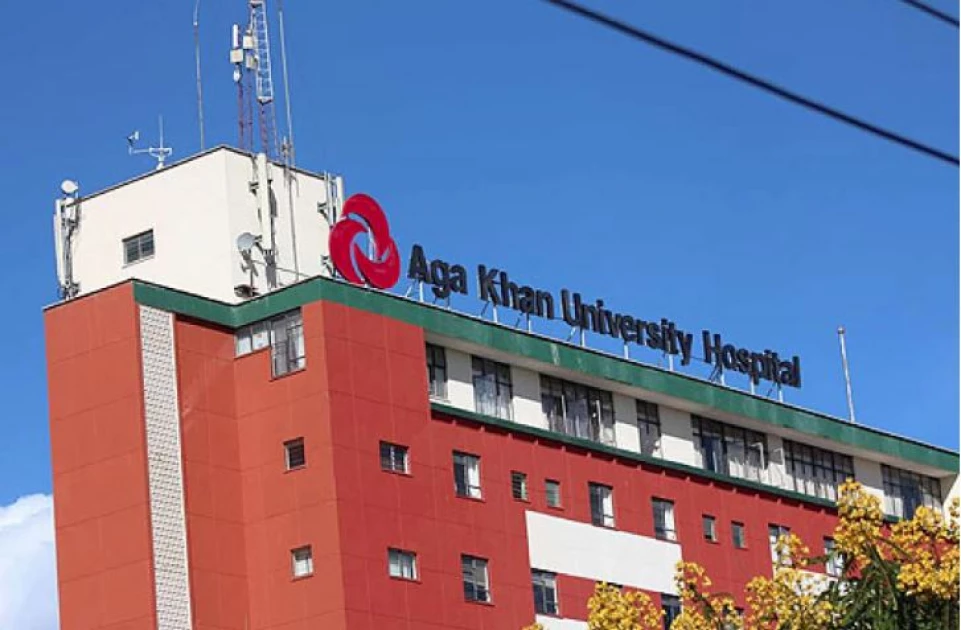
File image of Aga Khan University Hospital in Nairobi.

Audio By Vocalize
The council’s Disciplinary and Ethics Committee found the hospital culpable for shortcomings in the treatment of the late Valarie Cherono Misoi, whose husband, Lawrence Oyaro, lodged a complaint alleging that inadequate medical care led to a hospital-acquired infection that ultimately caused her death.
"The Agha Khan University Hospital is hereby directed to pay a fine of Kenya shillings one million to the council," the court ordered.
In its determination in Disciplinary Case No. 70 of 2022, the committee directed the hospital to pay the fine, review and update its medical protocols, strengthen compliance with maternal and perinatal death surveillance procedures, and engage in mediation with the deceased’s family in an effort to reach an amicable settlement.
The council upheld the committee’s findings at a meeting in January 2026.
The hospital was ordered to demonstrate to the council that its protocols had been reviewed and updated to ensure compliance with emergency obstetric and neonatal care standards. The updated protocols must also be disseminated to hospital staff and medical contractors.
The committee further directed the hospital to implement, monitor and demonstrate compliance with Maternal and Perinatal Death Surveillance and Response (MPDSR) processes, which are intended to identify and address factors contributing to maternal and perinatal deaths.
The hospital was also ordered to enter mediation with Oyaro and report the outcome to the council within 90 days. The committee warned that failure to comply with its directives could result in further orders or directions from the regulator.
In his testimony before the committee, Oyaro said his wife had received antenatal care at the hospital under the supervision of Dr. Mukaindo Mwaniki during her pregnancy in 2019.
He told the inquiry that the couple had been satisfied with the antenatal care, prompting them to choose the same facility for the delivery of their second child.
According to his testimony, Misoi experienced diarrhoea and abdominal pain during a visit to the hospital on August 18, 2019. She underwent investigations and was advised to return for review, but no further investigations were undertaken at that stage to establish whether she had an infection.
Oyaro said his wife went into labour on the evening of August 27, 2019, and delivered a baby girl through normal vaginal delivery in the early hours of August 28.
He was informed that she had sustained a tear during delivery, which was stitched and described to him as minor.
Misoi was subsequently discharged on August 29 after complaining of leg pain and undergoing investigations for a possible blood clot, according to the testimony recorded in the ruling.
The complaint arose from allegations that the hospital failed to exercise reasonable care and skill in treating her, resulting in a hospital-acquired infection and her eventual death.
During the inquiry, Dr Mwaniki, who handled Misoi’s antenatal care, confirmed that he had examined her on August 18 when she presented with diarrhoea, abdominal pain and an elevated heart rate.
He told the committee that the symptoms suggested a possible infection, but the condition was not considered an emergency requiring antibiotics before culture results became available.
He said he collected a sample for investigation, counselled her on danger signs and advised her to return for review within three days. She did not return for that review, according to his testimony.
The doctor also acknowledged that the patient’s earlier symptoms, including gastrointestinal complaints and fatigue, could have warranted closer assessment for a systemic infection, although no such additional investigations were conducted at the subsequent antenatal visit.
He further confirmed that Misoi’s haemoglobin level had fallen from 12.6 grams per decilitre in January 2019 to 11 grams in July and eight grams at readmission.
Dr. Mwaniki told the committee that his involvement was limited to antenatal care and that he was not involved in the patient’s management during delivery, her initial discharge or her subsequent readmission.
While finding the hospital culpable for lapses in the patient’s care and management, the committee absolved Dr. Nyawira, Dr. Umar and Dr. Obare, ruling that they had no case to answer.
Dr Gichuki was admonished for what the committee described as a lack of situational awareness and failure to consult senior team members in a timely manner, contributing to delays in critical care management.
The findings followed an inquiry that considered the complaint, the patient’s medical records, autopsy and medical reports, statements from the parties, and evidence presented during the proceedings.
Separately, Oyaro’s advocates, Githogori and Harrison Associates Advocates LLP, have proposed a Ksh.100 million settlement from the hospital over the death.
In a settlement proposal, the advocates sought Ksh.27.22 million in general damages for pain, loss and suffering, Ksh.53.46 million for lost years, Ksh.17.82 million for loss of dependency and Ksh. 1.5 million in special damages.
The lawyers argued that the compensation should reflect the financial and emotional loss suffered by the family following Misoi’s death.
They said Misoi was 27 years old and earned a net monthly salary of Ksh.165,000 at the time of her death.
The advocates also cited a separate judgment in Naila Gureshi v Aga Khan University Hospital, which they said involved an award of Ksh.157 million, in support of their assessment of damages.
The hospital’s advocates had earlier proposed Ksh.10,000 for pain and suffering, Ksh.10,000 for loss of expectation of life, Ksh.8.48 million for loss of dependency and Ksh.1.5 million in special damages.
The family’s advocates expressed concern over delays in resolving the dispute, saying the family had waited six years for closure. They called on the hospital to participate in mediation and compensation discussions within 60 days to avoid further litigation expenses.
The council’s determination directs the parties to pursue mediation and report the outcome within 90 days, but the available documents do not establish whether a settlement has since been reached.
The regulatory findings concern the hospital’s professional and institutional responsibility. The final amount, if any, payable to the family remains a separate compensation issue to be resolved through mediation or the appropriate legal process.
Join the Discussion
Share your perspective with the Citizen Digital community.
No comments yet
This discussion is waiting for your voice. Be the first to share your thoughts!