
Africans pay the world's highest cost to send money home. Binance wants to change that
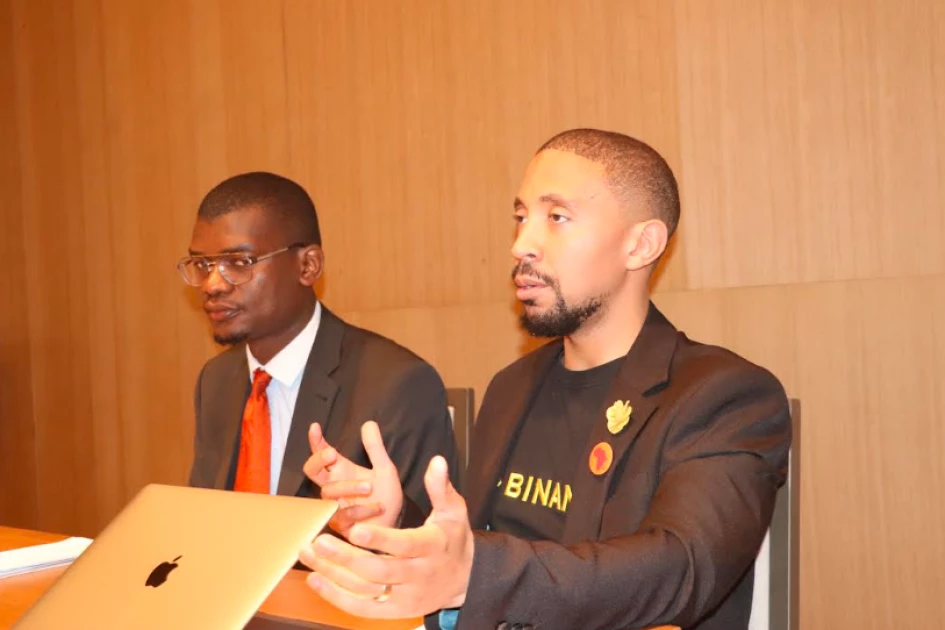
Larry Cooke, Legal Counsel at Binance Africa (right) and Allan Kakai, Legal Chief at Steakhouse Financial and Director at the Kenya Virtual Assets Chamber of Commerce, when they addressed the press in Nairobi. Photo/ Courtesy

Audio By Vocalize
Sending money across a border within Sub-Saharan Africa costs more than anywhere else in the world.
According to the
World Bank, moving $200 between African
countries costs an average of 8.78 percent of the amount sent, nearly 9 cents
of every dollar, compared with a global average of 6.49 percent. For a
continent that sends and receives tens of billions of dollars in remittances
each year, that gap adds up to real money lost by ordinary families and small
businesses.
Binance, the world's leading blockchain ecosystem and cryptocurrency exchange, says part of the answer is already familiar to millions of Africans, even those who have never traded crypto. Long before digital assets, informal savings and trading groups across the continent moved money directly between members without ever routing it through a bank.
In
South Africa, these are called stokvels. In Kenya, chamas. In Ghana, susu. The
mechanics differ slightly by country, but the principle is the same: people
pooling, lending and exchanging money based on trust from person to person.
That same principle underpins Binance's direct trading service, known as P2P. In many African markets banks do not yet offer a direct way to convert cash into crypto or back again. Binance's answer is to connect a buyer and a seller directly.
For example, one person wants to
convert cash via a bank transfer or mobile money into crypto, while another
wants to do the reverse. Binance provides the security, verifying both users
and holding the seller's crypto in escrow until the buyer's payment is
confirmed, releasing it thereafter to ensure that neither side walks away with
both the money and the crypto.
In markets where direct bank deposits into
exchanges are limited, this direct trading has become the standard way users
convert local currency into crypto and back again as it does not depend on the
same banking rails that make cross-border payments slow and expensive
elsewhere.
"For a lot of people, the idea of sending money via another person rather than through a bank is not new. It is how some parents and grandparents have saved and moved money for generations," said Larry Cooke, Binance Africa.
“What this creates is a
digital rail that works across borders, and one that is verified and traceable
at every step. A trader in Nairobi can pay a supplier in Accra using crypto
converted from their own local currency, and the supplier can convert it back
into their own currency on their end. Every transaction is recorded on the
blockchain, and every user completes identity verification before they can
trade. It is not about avoiding oversight, it is about making cross-border
payments visible, secure and accountable in a way traditional channels often
aren't."
The shift is already showing up in the
data. Crypto activity across Sub-Saharan Africa grew by more than 50 percent in
the year to June 2025 according to Chainalysis. Some of the sharpest increases
followed periods of currency instability when households were looking for a way
to protect the value of what they had saved.
Alongside this, is Binance
Earn. While direct trading helps people move money, Earn is designed
to help them hold onto its value. Users can deposit crypto they already own and
earn a return on it over time in the same way a savings account pays interest,
only without being tied to a currency that can lose a significant share of its
value overnight.
"None of this works in
isolation," Cooke added. "It has to be built alongside regulators,
central banks and trade bodies and it must come with real financial education.
This is why we continue to invest in free resources through Binance Academy.
Our approach in Africa is to build tools that extend what people already do
well, rather than ask them to change how they operate."
Binance said it will continue expanding
access to direct trading and Earn across African markets throughout 2026,
working alongside regulators and policymakers on the continent.
Join the Discussion
Share your perspective with the Citizen Digital community.
No comments yet
This discussion is waiting for your voice. Be the first to share your thoughts!