
A botched extraction, a landmark ruling, and the menace of quack dentistry
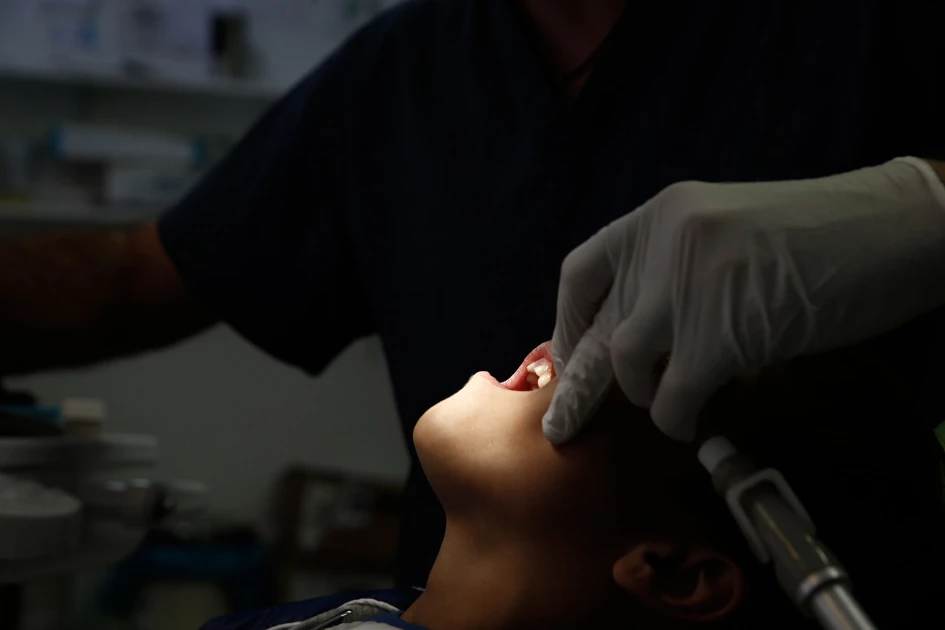
Dentist Christos Naoumis treats a young boy at a Doctors of the World clinic in central Athens last week. The medical humanitarian group helped 7,754 children with free dental care last year. REUTERS/Alkis Konstantinidis

Audio By Vocalize
In Ananda Marga Universal Relief Team (AMURT) & Another v. Lucy Njeri Karanha, the High Court dismissed an appeal by the appellants and upheld the trial court's finding that the patient had proved negligence after suffering a fractured jaw, severed muscles and nerves, trismus, and prolonged disability following the extraction of a wisdom tooth. The Court also upheld an award of KSh605,200 in damages.
The patient had sought treatment at AMURT Health Centre in March 2018 after developing pain in a wisdom tooth. She paid for consultation and extraction services and underwent the procedure. During the extraction, she experienced unbearable pain and repeatedly asked the practitioner to stop, but the extraction continued regardless. Rather than recovering, her condition deteriorated rapidly: she developed severe swelling, persistent pain, an inability to eat or open her mouth properly, and infection.
After several unsuccessful return visits to the same facility, she was eventually referred to Kenyatta National Hospital, where investigations revealed that a portion of her jawbone had been removed during the extraction, resulting in a fractured jaw, severed muscles and nerves, and trismus. The injuries forced her to close her business and undergo prolonged treatment.
On appeal, the appellants argued that the injuries were recognised complications associated with difficult tooth extractions, and challenged the findings of the Kenya Medical Practitioners and Dentists Council. Justice Asenath Ongeri rejected those arguments, finding that the patient had proved all three elements of negligence: the existence of a duty of care, breach of that duty, and resulting injury. The Court concluded that the healthcare providers had failed to meet the standard of care expected of reasonably competent practitioners, and dismissed the appeal with costs.
A significant aspect of the case is that the second appellant was identified in the proceedings as a Community Oral Health Officer—a paraprofessional health worker expected to work under the supervision of dentists or dental surgeons. Beyond the finding of negligence, the case highlights the need for health workers to operate strictly within their approved scope of practice, and it has reignited discussion within the dental profession over which procedures should properly be undertaken by different categories of oral health professionals.
Professional leaders argue that the facts of this case illustrate the dangers that arise when practitioners undertake procedures beyond their competence or authorised scope. They maintain that patient safety depends on strict adherence to statutory scopes of practice, coupled with timely referral whenever a procedure exceeds a practitioner's training or legal authority.
Across many jurisdictions, the dental profession holds that complex wisdom tooth surgery—particularly impacted or surgically difficult third molars—should ordinarily be referred to dental surgeons or specialists such as oral surgeons or oral and maxillofacial surgeons. Unlike routine extractions, wisdom tooth surgery often involves difficult anatomy, proximity to major nerves, and the risk of jaw fracture, excessive bleeding, infection, sinus complications, and permanent nerve injury. Managing it properly requires comprehensive diagnosis, careful interpretation of radiographic imaging, surgical planning, advanced operative skills, and the ability to handle serious complications should they arise. For this reason, professional bodies regard referral as an essential component of patient safety whenever a procedure's complexity exceeds a practitioner's competence or authorised scope, and they emphasise that every practitioner carries both an ethical and legal obligation to recognise the limits of their competence, placing patient safety above convenience, financial gain, or institutional pressure.
The AMURT case is not an isolated incident. In January 2026, Kenyan Amos Isoka died after developing severe complications following a reportedly botched tooth extraction. Public reports indicated that the procedure had been performed at an unlicensed clinic by an unqualified practitioner. He subsequently developed a rapidly spreading infection affecting the jaw, neck, and chest, and despite emergency treatment and multiple surgical interventions at Kenyatta National Hospital, he succumbed to the complications. Although the facts of that case differ from those before the High Court, both incidents underscore the same public health message: invasive dental procedures performed by persons who lack the appropriate qualifications, competence, or clinical support can have catastrophic—and sometimes fatal—consequences.
The dental profession has expressed increasing alarm over the rapid growth of quack dentistry across the country. According to professional bodies, unqualified individuals continue to perform dental procedures illegally in unlicensed premises, residential houses, beauty salons, kiosks, and other unauthorised locations, frequently advertising low-cost services despite lacking recognised qualifications, professional registration, or authority to practise. Procedures reportedly being carried out illegally include tooth extractions, surgical wisdom tooth removal, root canal treatment, dental fillings, denture construction and fitting, orthodontic treatment such as braces, dental implants, teeth whitening and other cosmetic work, crown and bridge work, and various complex restorative and oral surgical procedures.
The profession warns that dentistry is a highly regulated healthcare field requiring extensive university education, supervised clinical training, professional registration, and continuous competence assessment—safeguards that exist specifically to protect patients.
Professional leaders are cautioning members of the public against seeking treatment from unqualified persons simply because their services appear cheaper or more convenient. Patients who turn to illegal practitioners risk grievous bodily harm, severe facial infections, fractured jaws, permanent nerve damage, uncontrolled bleeding, loss of healthy teeth, facial deformity, transmission of infectious diseases, prolonged disability, significant financial losses from corrective treatment, and even death. Indeed, many victims of quack dentistry end up spending far more money correcting poorly performed procedures than they would have spent obtaining proper treatment from qualified professionals in the first place.
The judgment has renewed calls for regulators and law enforcement agencies to intensify action against illegal dental practice. Among the reforms being advocated are stricter enforcement of statutory scopes of practice, stronger inspection and licensing of dental facilities, prosecution of those engaged in illegal dental practice, enhanced supervision of Community Oral Health Officers, mandatory referral of complex wisdom tooth surgery to dental surgeons and oral and maxillofacial surgeons, improved public education on how to identify qualified dental practitioners, and closer collaboration between regulators, professional associations, and county governments to eliminate quack dentistry.
The AMURT judgment is more than an ordinary negligence case. It is a reminder that patient safety must remain the cornerstone of oral healthcare. The High Court reaffirmed that healthcare providers owe every patient a legal duty to exercise reasonable skill and care, and that failure to meet that standard attracts legal accountability. For the dental profession, the case has become a catalyst for renewed calls to strengthen clinical governance, enforce professional scopes of practice, and eradicate quack dentistry before more Kenyans suffer avoidable injury.
The profession urges the public to seek dental care only from registered, licensed, and appropriately qualified professionals working in licensed health facilities, and to feel free to ask about a provider's qualifications or request a referral where a procedure is complex.
Join the Discussion
Share your perspective with the Citizen Digital community.
No comments yet
This discussion is waiting for your voice. Be the first to share your thoughts!