
650,000 refugees in South Sudan could lose food aid within weeks due to funding squeeze, say UN agencies
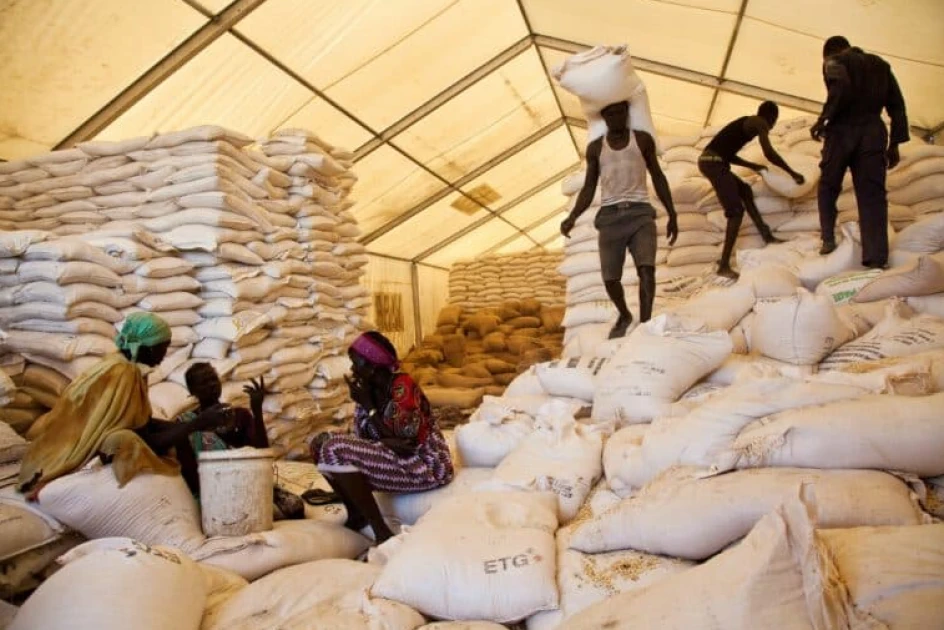
FILE PHOTO: Men carry bags of food while women wait for their rations at the United Nations World Food Programme (WFP) food distribution site in Pibor, South Sudan, June 25, 2012. Picture taken June 25, 2012. REUTERS/Adriane Ohanesian/File Photo

Audio By Vocalize
More than 650,000
refugees and asylum seekers in South Sudan risk losing food aid access within
weeks due to a severe funding shortfall, potentially forcing some to return to
war-torn Sudan in search of help, the U.N. warned on Friday.
South Sudan
faces one of the world’s worst hunger crises, the World Food Programme and
the U.N. refugee agency said. More than 7.8 million people, over half the
country’s population, are experiencing acute food insecurity, while 2.2 million
children are acutely malnourished.
It is also
receiving about 3,000 refugees and returnees a week from neighbouring Sudan,
where a conflict that erupted in 2023 has triggered one of the world’s largest
displacement crises following mass killings, rape and deliberate
starvation, according to the U.N.
The last food
distributions for the most vulnerable 240,000 refugees in South Sudan — out of
the 650,000 who had previously been receiving food support across the country —
would be made in September unless new funding is secured urgently, the U.N.
agencies said.
They are the last
remaining refugee families receiving food support — which is already at
half-rations — after WFP said it was forced to progressively scale back
assistance because of funding constraints.
“This is not a
future scenario. It is sadly a reality that will hold within weeks,” Adham
Effendi, WFP’s deputy country director in South Sudan, told reporters from
Juba.
UNHCR Deputy
Representative Mesfin Degefu said that if funding does not materialise, no
refugees in South Sudan will be receiving food assistance from October.
Families are
already reducing meals, selling belongings, withdrawing children from school
and taking on debt to survive, Degefu said, while women and children face
heightened risks of exploitation and abuse. Some refugees have already asked
the agency to help facilitate returns, even though UNHCR does not consider
conditions in Sudan safe for return.
Further cuts are
expected unless it can bridge its $37 million funding gap for refugee
operations between October and December. From October, food assistance for
about 180,000 internally displaced people will cease, while by November some
600,000 people living in famine-risk areas could lose life-saving support,
Effendi said.
UNHCR, which has received only 28% of the $286 million it requires this year, said the funding squeeze also threatened efforts to help refugees become self-reliant through farming, vocational training and other livelihood programmes.
Join the Discussion
Share your perspective with the Citizen Digital community.
No comments yet
This discussion is waiting for your voice. Be the first to share your thoughts!