
2022: A year of living dangerously
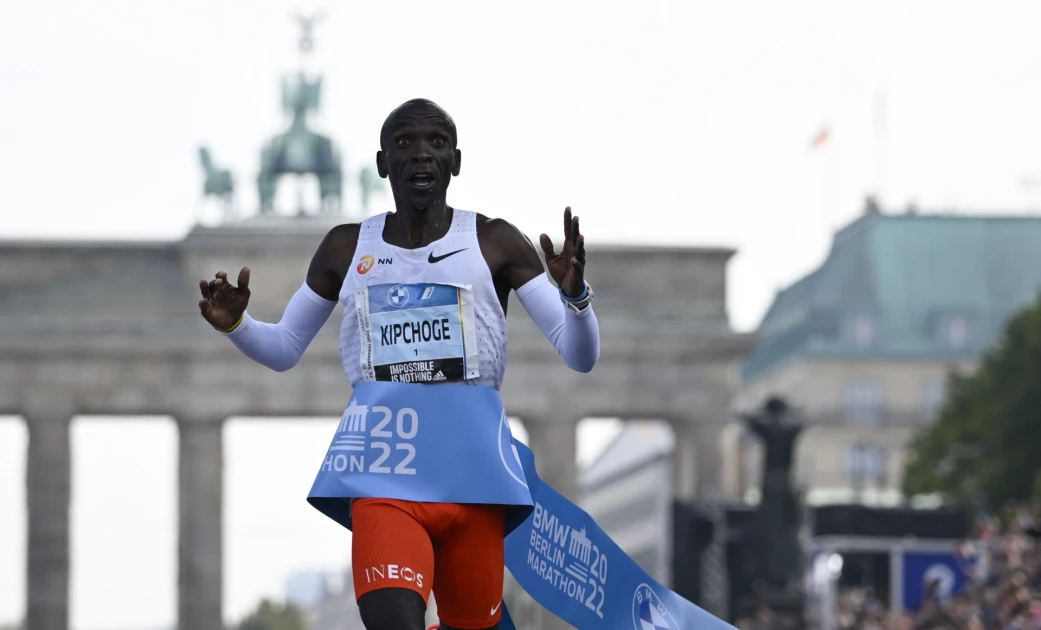
In this file photo taken on September 25, 2022 Kenya's Eliud Kipchoge crosses the finish line to win the Berlin Marathon race. (Photo by Tobias SCHWARZ / AFP)

Audio By Vocalize
From the Russian invasion of Ukraine to the overturning
of abortion laws in the United States, here is a roundup of the biggest events
to mark 2022.
Russian President Vladimir Putin launches the biggest
invasion in Europe since World War II when he sends troops into Ukraine on
February 24, causing millions of Ukrainians to flee abroad.
The West imposes unprecedented sanctions on Moscow and
sends billions of dollars in aid to Ukraine. Russian forces failed to capture
the capital, Kyiv, and topple the government of President Volodymyr Zelensky.
In the south, Russian forces capture most of Ukraine's
Black Sea coastline, including the port of Mariupol, which is destroyed in a
three-month siege.
In April, Russian forces are accused of massacring scores
of civilians in the Kyiv suburb of Bucha.
By September, Ukrainian forces are regaining ground in
the northeast and south. Putin hastily annexes four Ukrainian regions partly
controlled by Russia, a move condemned as illegal by the United Nations.
In November, Russian forces retreat from the southern
port of Kherson, ending an eight-month occupation.
As the year ends, Russian strikes relentlessly batter
Ukraine's energy infrastructure, causing power cuts across the country as
winter sets in.
In December, on his first overseas trip since the
invasion, Zelensky goes to Washington to address US Congress, appealing for
long-term US support.
Britain gets its fifth conservative prime minister in six
years.
Rishi Sunak takes office in October after his tax-cutting
predecessor Liz Truss self-combusts in just 44 days -- the shortest-ever tenure
for a British leader.
Truss's lightning fall from grace, sparked by a
disastrous mini budget, caps a tumultuous 2022 in Britain.
The year is marked by the death of its longest-serving
monarch, Queen Elizabeth II, at the age of 96 and the forced resignation of
Brexiteer premier Boris Johnson after a series of scandals.
The US Supreme Court causes global shock waves in June
when it overturns its landmark 1973 "Roe v Wade" decision, which
enshrined a constitutional right to abortion nationwide, returning the issue to
individual states.
Following the ruling, abortion bans are brought in by
Republicans in 16 US states, home to 26.5 million women.
The issue impacts November's midterms, as US voters in
several states side with candidates advocating access to abortion.
President Xi Jinping cements his control at the helm of
China after winning a historic third term in November as leader the world's
second-largest economy.
But the Chinese lose patience with the snap lockdowns,
mass testing and curbs on movement imposed by the government's signature
zero-Covid strategy.
Hundreds of people take part in protests against the
restrictions in Beijing, Guangzhou, Shanghai, Urumqi, Wuhan and other cities.
Some even dare to call for Xi's resignation.
China's warplane incursions into Taiwan's air defence
zone skyrocket while Beijing holds the largest military exercises in decades
around the self-ruled island, raising alarm in Taipei.
In December, Beijing announces a loosening of its
zero-Covid policy, ending large-scale lockdowns and allowing some positive
cases to isolate at home.
It also says quarantine measures for overseas arrivals
will be scrapped in the New Year.
Europe swelters through the hottest summer in its
recorded history, with the mercury topping 40 degrees Celsius (104 degrees
Fahrenheit) for the first time in Britain.
Parts of the Arctic and Antarctic, China and the US also
experience record temperatures.
Extreme weather events linked to climate change continue
to wreak havoc in developing countries.
Flooding in Pakistan affects vast swathes of the country,
Nigeria suffers its worst floods in a decade and parts of drought-hit Somalia
face the threat of famine.
At the United Nations climate summit in Egypt (COP27),
developing nations finally succeed in getting wealthy polluters to agree to pay
into a "loss and damage" fund to compensate poorer countries for
climate damage.
The invasion of Ukraine and resulting sanctions on Russia
create an energy crisis of a magnitude unseen in half a century, with costs for
gas and electricity soaring globally.
Britain sees its energy bills double over the space of a
year. Soaring energy prices are also a factor in Sri Lanka's cost-of-living
crisis, which in August forces then-president Gotabaya Rajapaksa to flee
abroad.
Inflation soars globally, prompting central banks to
aggressively hike interest rates, raising fears of another major debt crisis.
The far-right makes unprecedented gains in Europe.
Voters in Italy elect their most right-wing leader since
World War II in post-fascist firebrand Giorgia Meloni.
The anti-immigration Sweden Democrats are the big winners
of a general election that brings conservatives to power in that country.
In France, a surge by both the far right and hard left
strips centre-right President Emmanuel Macron of his parliamentary majority.
Veteran left-winger Luiz Inacio Lula da Silva makes a
stunning comeback in Brazil, ousting far-right incumbent Jair Bolsonaro.
Left-wing leaders also come to power in Colombia and Honduras.
In Iran, the death of 22-year-old Mahsa Amini following
her arrest for alleged violations of the country's Islamic dress code sparks
the biggest protests in years.
On the street and on social media women and girls
defiantly remove their headscarves in an unprecedented challenge to the
country's clerical leadership.
Iran seeks to quell the protests by sentencing some of
the protesters to death.
On December 8, Mohsen Shekari, 23, becomes the first
person executed by authorities over the protests. Four days later Majidreza
Rahnavard, 23, is hanged in public.
The Oslo-based monitor Iran Human Rights on December 19
says Iran's security forces have killed at least 469 people in the protests
while at least 14,000 people have been arrested, according to the UN.
After two years of conflict that have killed untold
numbers of civilians and led to near-famine conditions in Tigray, Ethiopia's
government and Tigrayan rebels agree on a landmark peace deal.
The agreement allows critical humanitarian aid to resume
to the northern region.
Controversy mars the run-up to the Middle East's first
football World Cup.
Some fans boycott the tournament in Qatar over concerns
about human rights and the high number of deaths among migrant workers involved
in constructing eight new stadiums.
The decision by the conservative Islamic kingdom to ban
alcohol from stadiums also leaves a bitter taste but as the tournament
progresses, attention shifts to the on-pitch drama.
In an extraordinary finale, Lionel Messi clinches the
title that had eluded one of the greatest players of all time, leading
Argentina to victory against France in a penalty shootout triumph after an epic
match ends 3-3.
Join the Discussion
Share your perspective with the Citizen Digital community.
No comments yet
This discussion is waiting for your voice. Be the first to share your thoughts!