

UN urges use of renewable energy to meet surging demands by AI and data centres
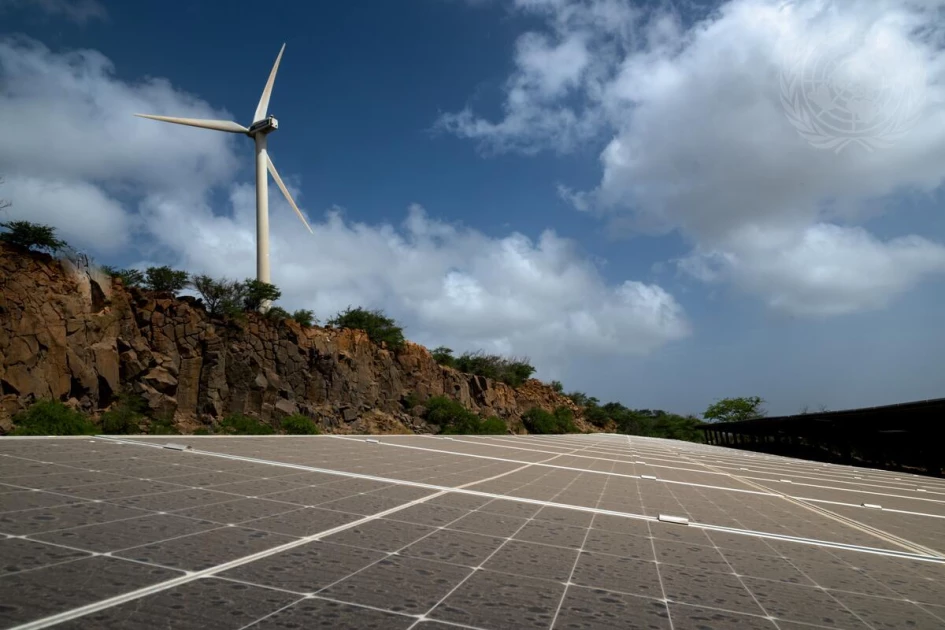
A wind turbine next to solar panels in Carbo Verde. UN PHOTO| Mark Garten

Audio By Vocalize
Amid this increase in power uptake, carbon emissions from the technology sector have also reported a steady increase.
In June 2025, Google, a leader in AI development, reported a 51% rise in its carbon emissions since 2019, and a 27% increase in its annual electricity consumption.
On the other hand, the technology is poised as an enabler in the energy sector as AI-enabled solutions are used to improve grid performance and responsiveness.
The International Energy Agency (IEA) in 2024 found that data centres, which provide computing power and data storage for AI, consumed 1.5% of electricity.
To address this surging energy demand, the United Nations has called for the use of renewable energy to address the thirst for power by AI and data centres.
“Governments must aim to meet all new electricity demand with renewables. AI can boost efficiency, innovation, and resilience in energy systems. But it is also energy-hungry. A typical AI data centres eat up as much electricity as 100,000 homes,” remarked UN Secretary-General António Guterres during the release of the UN Energy Transition report 2025.
The UN urges Big Tech to meet these growing demands with renewable energy and by investing in sustainable, enabling infrastructure.
With the sector now relying on both renewable energy and natural gas, the multilateral body argues that renewables have the potential to mitigate the impact of increased energy demand on energy prices while reducing AI-related greenhouse gas emissions.
At the same time, the energy transition report recognises the potential of AI in decentralizing and digitizing electricity networks.
“AI can help improve the forecasting and integration of variable renewable energy generation and electricity-access mapping,” the report notes.
To meet the electricity demands with renewable energy, the UN challenges technology companies to commit to powering their operations with 100% renewables by 2030. This is while governments and other institutions also commit to meeting emerging energy demands with renewables.
Meanwhile, the International Renewable Energy Agency (IRENA) highlights the potential of AI-enabled asset management in improving operational efficiency across renewable assets.
This is alongside other digital technologies that enable predictive maintenance and real-time performance monitoring.
Today, these AI features have been embedded in Solar PVs, where it enables granular optimisation in performance.
AI algorithms can also be used to forecast congestion, coordinate distributed energy resources and optimise dispatch in near real-time.
“Innovations in digital platforms are also supporting advanced forecasting and grid services, helping to align variable generation with system needs,” IRENA states in its report on renewable power generation costs in 2024.
These digital solutions in power systems also improve forecasting, grid operation and demand-side participation.
Leave a Comment