

OPINION: Why marketers must embrace rather than fear artificial intelligence
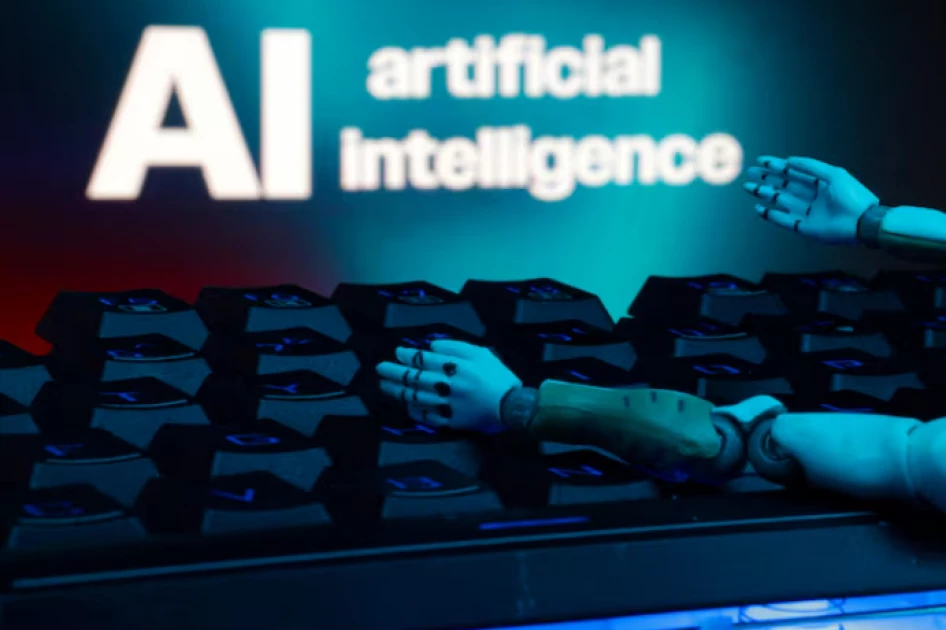
A message reading "AI artificial intelligence", a keyboard, and robot hands are seen in this illustration taken January 27, 2025. REUTERS/Dado Ruvic/Illustration/File Photo

Audio By Vocalize

In the world of advertising and marketing, the evolution toward more
sophisticated and personal engagements with consumers has necessitated a shift
in focus from mere campaign impact metrics to the underlying reasons driving
consumer behaviour.
While traditional marketing models have achieved reasonably in their
simplicity, they often overlook the complex journey a consumer undertakes, from
initial exposure to a brand to the final action of purchase or loyalty.
The introduction of computer vision AI into this landscape offers a
promising horizon for not just understanding but actively shaping this journey.
For marketers aiming to incorporate AI technologies such as
automated content creation, augmented reality (AR) and enhanced personalisation
advertising, starting can seem daunting, but has amazing rewards if employed
ethically. AI is an enabler, rather than a doer.
AI enables marketing professionals to tailor campaigns by analysing
customer behaviour and preferences, delivering highly personalised experiences
from product recommendations to targeted advertisements.
While AI has the above-mentioned capabilities, various marketers are
worried that it will eliminate more marketing jobs than it creates.
Indeed, the latest poll conducted by ADWEEK that sampled 350 marketers reveals
that 46 per cent are worried, a larger percentage than the eight per cent who
think the opposite will happen.
Even though AI is for sure taking some roles like programmatic ad buying
that is fast replacing human media planners, AI copy tools which can now write
basic content, making some junior writing roles less essential and real-time
analytics platforms which have reduced the need for manual data-crunching
teams, AI is automating tasks, not replacing strategic thinking.
Indeed, a new global study from the IBM’s Institute for Business Value
found that surveyed retail and consumer product executives are dramatically
shifting their focus toward AI, with responses indicating that participants
project spending outside of traditional IT operations could surge by 52 per
cent in the next year.
The report, titled "Embedding AI in Your Brand's DNA,"
reveals how brands are preparing for the next phase of AI-driven transformation
across the enterprise.
By end of this financial year, retail and consumer products companies
surveyed say they plan to allocate an average of 3.32 per cent of their revenue
to AI—equivalent to $33.2 million annually for a $1 billion company.
This investment is set to span functions such as customer service, supply chain
operations, talent acquisition, and marketing innovation, highlighting AI's
expansion beyond traditional IT applications.
Over the next three years, 92 per cent of companies plan to increase
their AI investments. But while nearly all companies are investing in AI, only
1 per cent of leaders call their companies “mature” on the deployment spectrum,
meaning that AI is fully integrated into workflows and drives substantial
business outcomes.
The technology has more merits than demerits. If well employed, AI is
likely to help in reducing time spent on repetitive, data-driven tasks like
content marketing, email, social media, or customer relationship management.
This approach not only increases customer satisfaction but also boosts
conversion rates. By automating repetitive tasks such as email marketing and
social media management frees up time for your marketing team to focus on
crafting compelling content and analysing campaign performance.
Customers are becoming more restless. AI automation is vital considering
that a recent study indicates that 82 per cent of consumers consider an
“immediate response” to their marketing, sales, and customer service concerns
to be important or very important.
Furthermore, the majority of consumers define an immediate response as
one that arrives within 10 minutes.
Furthermore, through predictive analytics, natural language processing,
machine learning, and programmatic advertising, AI allows marketers to process
and analyze huge amounts of consumer data quickly. I can also extract insights
about consumer preferences, motivations, and purchasing behaviour, as well as
broader trends.
Businesses are gaining deeper insights into their customers through
social media, reviews, and customer service interactions, and this
understanding allows brands to tailor messaging to inspire greater customer
loyalty.
At least 94 per cent of marketers say AI technologies positively
impacted revenue in 2024, and 95 per cent plan to increase AI investment in the
year ahead, according to a new study of 600 U.S. and U.K. marketers by research
firm Sago and conversation analytics software company Invoca.
This, it does by optimizing campaigns, personalizing customer
experiences, and automating tasks, leading to increased efficiency and
effectiveness in reaching and engaging customers.
The innovation has the ability to analyse data, predict customer
behaviour, and personalize marketing efforts translates to more effective
targeting, higher conversion rates, and ultimately, greater revenue.
Now that you can rest easy knowing that artificial intelligence won’t
replace human marketers, it is now high time marketers take interest and invest
in a digital marketing apprenticeship.
The writer is the Head of
Marketing Jubilee Health Insurance
Leave a Comment