OPINION: Why Kenya needs a soil data revolution to secure its food future

Audio By Vocalize
There is a hidden crisis beneath our feet.
Kenya’s agricultural potential is widely celebrated, yet beneath this promise lies a hidden crisis. Our soils are under pressure, and we don’t know them well enough to nurture and protect them.
For
decades, fertiliser recommendations have been issued using a one-size-fits-all
approach, also known as “blanket recommendations”, often ignoring the
variability in soil properties across the country, regions, and even fields.
The result of this oblivion has been poor
crop yields, worsening soil health, rising costs for farmers, and a growing
threat to national food security.
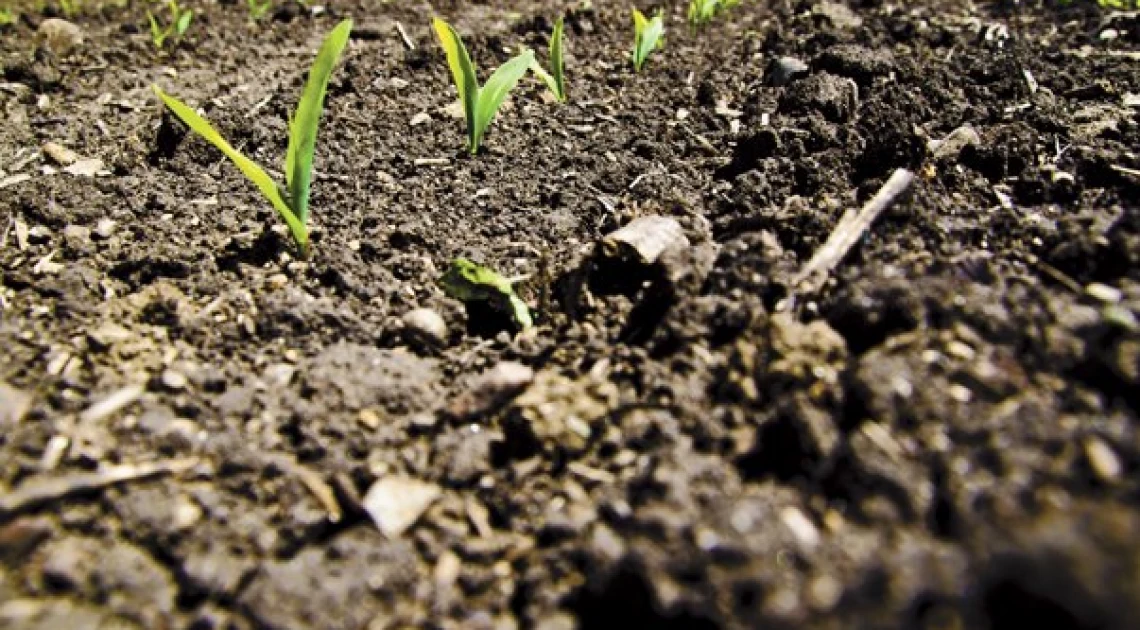
Soil is more than just the supporting “formwork” for the above-ground biomass; it is the foundation of food production. Despite their importance, soils in many parts of the country remain unmapped, untested, and poorly understood.
Studies have shown that
less than 2% of smallholder farmers in Kenya regularly test their soils. For
the few who do, the process is often costly and slow, relying on conventional
laboratory-based methods that can take weeks to deliver results. This makes
routine testing impractical for the majority of the farmers.
Moreover, traditional soil analysis
techniques are not easily scalable. The Kenyan farming landscape is highly
diverse, and there is a growing demand for site-specific, timely soil
information tailored for local conditions and seasonal changes. Unfortunately,
these current methods cannot keep up with this demand in terms of coverage and
frequency.
The consequence of this knowledge gap has been
the application of fertilisers based on guesswork or outdated recommendations.
The result? In some areas, fertiliser is overdosed, leading to wasted
resources, environmental degradation, and higher input costs. In others,
fertiliser is underdosed, resulting in nutrient-deficient soils and poor
yields.
If Kenya is to realise its agricultural
potential, especially under the national push for food and nutrition security,
we must invest in soil intelligence. This means adopting scalable, affordable,
and rapid digital soil testing technologies and building reliable,
high-resolution soil data systems. This will enable farmers to apply the right
inputs, at the right time, and in the right quantities.
Techniques such as laser-induced breakdown spectroscopy (LIBS), visible near-infrared spectroscopy (vis-NIRS), mid-infrared spectroscopy (MIR), and X-ray fluorescence (XRF) are revolutionising how we assess and map soil properties.
These methods allow for
the rapid analysis of thousands of samples without the need for costly reagents
or laborious laboratory procedures. Importantly, they are non-destructive,
environmentally friendly, and more cost-effective than conventional wet
chemistry approaches.
In Kenya, institutions such as CIFOR-ICRAF are already applying some of these techniques in various projects. For example, ICRAF has used vis-NIRS and MIR in mapping soil health indicators across sub-Saharan Africa, including Kenya, to support decision-making in sustainable land management.
For instance, through the Land Degradation Surveillance
Framework (LDSF) aimed at collecting unified biophysical data enabling
comparisons and data aggregation at national, regional, or global scales.
When used independently, these techniques already yield promising results. However, when combined, such as pairing LIBS with vis-NIRS, they become even more powerful, expanding the range of application and improving accuracy.
This multi-technique approach allows for the
development of detailed soil maps, showing critical parameters like pH, organic
carbon, macro and micronutrients, and even contaminant levels with high
precision.
Soil maps, when combined with geospatial data, can empower farmers to make site-specific decisions, such as selecting the right crops, applying the appropriate type and amount of fertiliser, and managing soil health sustainably. In a country where blanket fertiliser recommendations are still common, such tailored solutions are essential for improving productivity while safeguarding the environment.
Moreover, digital soil mapping holds the
key to national and county-level agricultural planning. With the recent launch
of the Africa Fertilizer and Soil Health Action
Plan, Kenya has committed to promoting soil testing and
region-specific fertiliser recommendations. For these ambitions to succeed, we
must adopt scalable soil intelligence systems. Certainly, digital soil mapping
fits the bill.
Recognising the urgent need for better soil intelligence, the Food and Agriculture Organisation (FAO) is currently supporting a national project in Kenya to analyze and map soils across different regions of the country.
In collaboration with key local
partners such as the Kenya Agricultural and Livestock
Research Organization (KALRO), this initiative aims to generate
high-resolution, region-specific soil data that can inform more accurate and
sustainable fertiliser recommendations.
The project involves the testing of a large dataset of soil samples (over 70,000) using both traditional laboratory techniques and modern proximal spectroscopic methods like visible-near infrared spectroscopy (vis-NIRS).
A core component of this work is the development of a
national soil spectral library, a database that links spectral signatures to
reference laboratory data. This library will serve as a critical resource for
enabling faster, cost-effective, and scalable soil analysis in the future. For
example, by enabling robust calibration models for predicting a wider range of
soil properties.
This marks a critical shift from blanket
fertiliser policies to data-driven, location-specific agricultural advisory
services. As this system evolves, it has the potential to significantly enhance
decision-making for farmers, improve crop productivity, and promote sustainable
land management practices. It could very well be a turning point for Kenya’s
food system, placing science and innovation at the heart of agricultural transformation.
To unlock the full benefits of this soil
data revolution, there are critical steps that must be followed:
- Invest in digital soil infrastructure at
national and county levels.
- Equip local laboratories and extension services
with modern tools like portable spectrometers.
- Train the next generation of agronomists,
soil scientists, and farmers in interpreting and using soil data.
- Foster public-private partnerships to
ensure sustainability and wide-scale adoption.
This revolution is not just about science, it
is about economic resilience, food security, and environmental stewardship. It
is a push to nudge young and upcoming scientists to embrace technology as a
main driver for agricultural intensification that cares about the planet.
Kenya stands at the forefront of an
agricultural transformation that can ripple across the continent. If we get our
soil decisions right, we can boost productivity, reduce input waste, build
climate resilience, and restore degraded lands. We stand to reap the benefits
of leveraging on the untapped arable land that Africa possesses while taking
critical steps to do it sustainably.
But it starts with data. In the digital age, soil data is the new oil. The sooner we invest in it, the better we can secure our food future.
Leave a Comment